
TECHi's Analysis
668 words
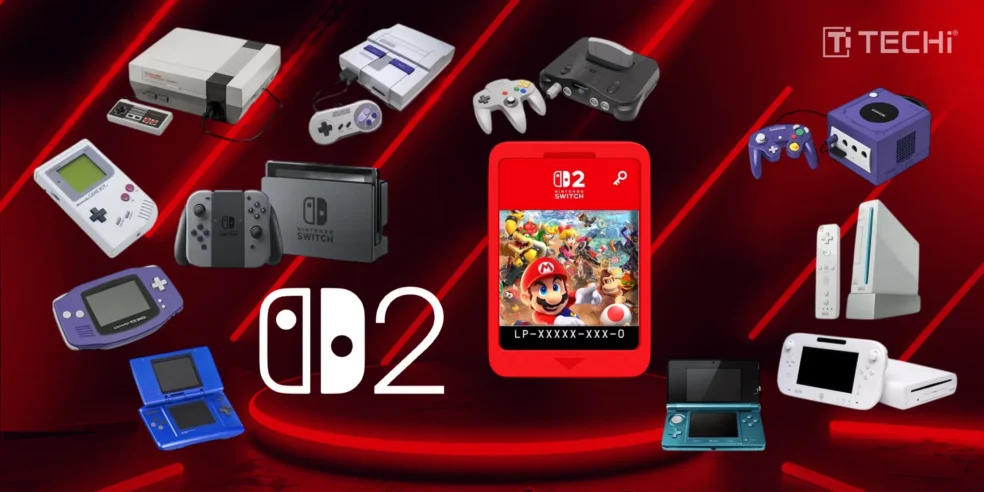
The recent approach of Nintendo to physical media on the Nintendo Switch has sparked a lot of controversy among consumers. The rollout of game key-cards is a significant difference from the use of cartridge-based distribution of the original Switch.
These cards are no longer like traditional physical cartridges. Still, they are not as digital as straight-up downloads, falling somewhere in the middle ground that attempts to balance the physical ownership of physical media with the ease of operation of a digital distribution platform.
Game-key cards come with retail packages similar to traditional titles, but the cartridge inside is not loaded with all the game content. Before players can play the game, they must download the entire software on an online platform by Nintendo. Each successive launch requires reinserting the card; hence, it only acts as a cryptographic license and not a traditional storage medium.
Such a mixed formulation has elicited both positive and negative feelings among the gamers of Nintendo, with one claiming that it is an excellent middle ground, and others claiming it compromises the need to buy a physical version.
In the past, several Switch titles have been released in a boxed format, which only includes a download code, a practice that received significant consumer dissatisfaction because it lacks something to collect or share with others or to sell to others. This limitation is at least partially addressed by the introduction of game-key cards, because the availability of a cartridge allows exchange or lending, as is the case with legacy physical releases.
However, the cartridge does not capture the entire game data, which means that the experience does not fit the traditional definition of an entirely physical product. This semi-digital practice highlights the investigative aspect of Nintendo in balancing between convenience and possession in the modern interactive entertainment.
The list of Switch 2 games that use the game-key card paradigm is not only long, but it is also growing. New formats such as Final Fantasy 7 Remake Intergrade, Hogwarts Legacy, Assassin’s Creed: Shadows, Dragon Ball Sparking Zero, and Street Fighter 6 follow this new format.
It also has proprietary franchises owned by Nintendo, as Dragon Quest 1 and 2 HD-2D Remake and Dragon Quest 7 Reimagined are added to the catalogue. Other such entries as Persona 3 Reload, Little Nightmares 3, Yakuza 0 Director Cut, and Star Wars Outlaws, can also be seen.
Some developers have decided to pursue other forms of distribution. An example is the validated commitment by Limited Run Games that its physical Switch 2 numbered editions will have all the data of the game on the cartridge, thus not utilising the game-key model.
Similarly, Nintendo has announced that its official, physical editions will consist of all the software on the cartridge, making external downloads unnecessary. These assertions suggest that third-party publishers have mainly been using the game-key card system, especially when dealing with significant or cross-platform releases.
The reception of the players is still divided. Proponents are glad that these cards still have some level of tradability or gifting, which cannot be done with the totally digital versions.
Critics recently argue that the cards also serve as a reference list rather than a physical item. Moreover, many users have shown security worries about being able to access them in future, as some titles may become unplayable to new customers as the download servers may be shut down.
On the whole, the game-key cards system is the expression of the ongoing striving of Nintendo to move in a digital-driven market environment, but retain the aspects of the physical media. This half-breed system preserves some of the collectable features, but at the same time pushes the consumers towards a download-driven future.
Whether the fan community will accommodate this compromise is yet to be seen, but there is no doubt that the gaming industry is in the process of massive change. The Switch 2 launch catalogue has clearly shown that physical gaming is in transition, and Nintendo continues to play around with the outlines of its future direction.