Before the market even got to sip its morning coffee, Amazon once more decided to shake the grocery delivery world. The e-commerce titan, through a huge growth of its Same-Day service, sent a loud signal that it is not merely participating in the grocery sector but rather it is targeting to dominate it.
While Amazon was showcasing its delivery power in more than 2,300 cities, Instacart investors were watching anxiously, coming to the conclusion that the rivalry is way too competitive.
Same-Day Grocery Delivery 🔗
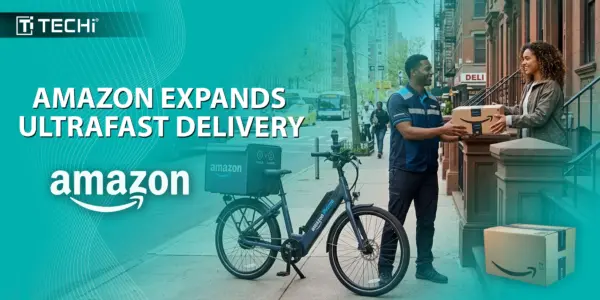
The shares of Instacart experienced a significant drop in value after the announcement of the extensive Amazon Same-Day grocery delivery service, which is now available in more than 2,300 cities and towns across the U.S. There is a new twist in the competitive landscape for Amazon and Instacart, where the operations significantly depend on being the main delivery partner for fresh and perishable goods.
Besides, Amazon has already revealed its plans to further enlarge the area of delivery by 2026, which indicates that this is not a trial but a large-scale campaign.
Sales of groceries on Amazon have gone up to 30x since January, with the fresh grocery products now accounting for nine of the ten most-ordered Same-Day items. Prime customers get free Same-Day Delivery on their orders above $25 in most areas, while non-Prime users can get the service for a standard charge of $12.99 every time.
Amazon claims that the variety of perishables it offers has increased by over 30% since August, and now it also includes whole foods products that are worth thousands of dollars. They also pointed out that customers who include fresh groceries in Same-Day orders are nearly twice as likely to shop regularly than those who don’t.
The CEO of Worldwide Amazon Stores, Doug Herrington said,
“The selection, value, and convenience of Same-Day Delivery from Amazon makes grocery shopping that much easier for families across the country”.
The mission is very straightforward, which is to make grocery shopping simpler, quicker, and more convenient.
Market Reaction 🔗
The investors’ swift reactions caused a 7% drop in Instacart’s stock as the concerns regarding Amazon’s fast-tracked dominance in logistics, fulfillment, and customer loyalty grew stronger. Instacart is already in a high-pressure market with low margins, expensive customer retention, and easy switching. The scenario where Amazon ties the Prime benefits, the Whole Foods inventory, and its own massive delivery network is simply hard to beat by independent platforms.
The market viewed Amazon’s expansion as not just a new offering, but as a strategic move, one that could change the entire grocery delivery scenario. For Instacart, which depends on protecting its small area from the big ones, this event makes investors rethink its long-term sustainability.
Bottom Line 🔗
The competition for Instacart is not new, but competing with the logistics giant Amazon is another story altogether. In the bullish scenario, Instacart will continue to reap the rewards of working with a large number of supermarket chains, which gives customers access to a wide range of products that Amazon cannot provide. It also has a very strong presence in the market among the people who like doing their shopping at a particular store.
On the contrary, even if all that is true, it will not count if Amazon is going to keep on getting faster, making it inexpensive, and at the same time incorporating delivery of groceries to be more of a Prime thing. Deals on perishables are booming, and new areas of the market are all set for the year 2026. The fate of Instacart will depend on its ability to innovate quickly, through pricing, service differentiation, or deeper retail integrations. Instacart is still in the race as the delivery competition intensifies, but Amazon’s latest strategy has moved the ground.