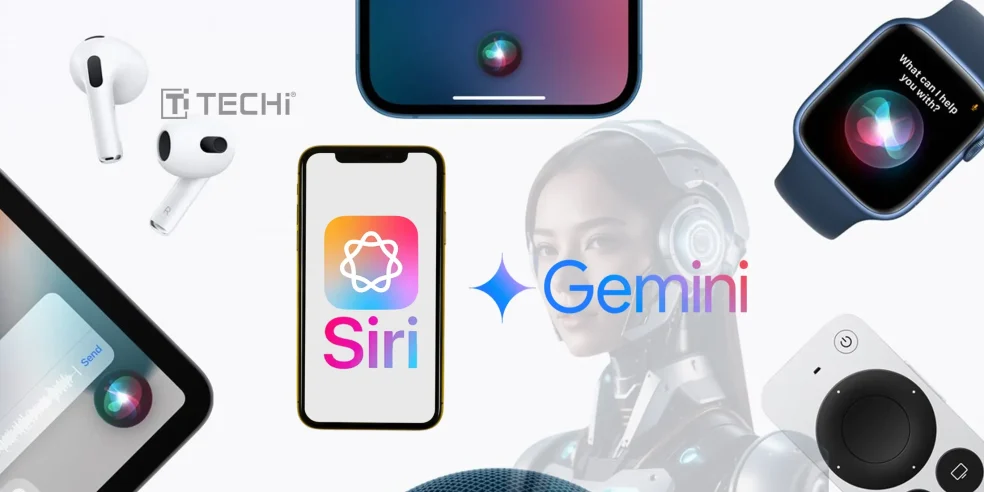

Apple has been undergoing a significant change where the company decided to introduce Google Gemini to Siri. Apple has been riding on the self-image that it has had over the years of its products being self-reliant. Also, it’s the role of the company to ensure that it has control and it takes care of the privacy of the people who have been using its products.
However, as AI evolves at a fast pace, Apple has been accused of lagging behind other companies such as Google, OpenAI, and Perplexity, whose AI solutions have already become resources used by millions of people every day. This type of collaboration demonstrates that Apple can be open-minded enough to remain relevant in an AI context.
The report points out that it will take Apple until 2026 to upgrade its Siri, a long time after its competitors, who are advancing relatively fast. By putting Google Gemini into Siri, Apple would provide the user with a far more capable assistant with the time to work on its own AI models. This is a viable step, particularly because current AI assistants are no longer evaluated based on voice commands but on their capability to give correct, summarized, and personalized responses.
There has been a great deal of criticism that Siri is inferior to Google Assistant or Alexa. The built-in search engine on Apple, called Spotlight, used to appear like it could become a true competitor to Google Search, as it allows users to quickly locate an answer without visiting the web.
But now AI chatbots have taken the next level to provide individuals with immediate summaries, explanations and personalized recommendations. With a working implementation of Gemini, Siri can bridge the gap and become helpful in real life once again. The collaboration might also have an expanded impact on iPhone software.
In addition to Siri, there are other applications, such as Safari and Spotlight, that can utilize Google technology to enhance the search results. It is meant to be a combination of text, photographs, videos, and local suggestions that will make information seeking more meaningful.
More to the point, it might enable its users to engage with their devices in a more natural, streamlined manner by integrating search with personal information and voice navigation. This trend is a larger one in the world of tech: no individual company can afford to be left behind in the context of AI.
The decision to collaborate with Google shows that the AI race is no longer about developing everything on its own, but providing the best experience to users as fast as possible.