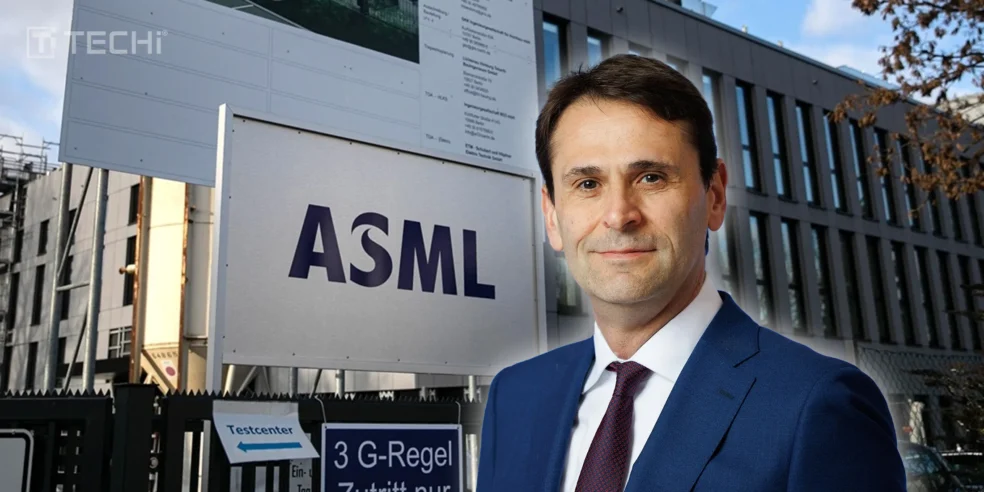

ASML’s third-quarter 2025 results reaffirmed its technological leadership in the semiconductor equipment industry, yet the muted stock reaction underscores a shift in investor expectations. While the company continues to post robust earnings and maintain strong order flow, concerns over geopolitical exposure, customer demand volatility, and margin pressures appear to be capping enthusiasm. This dynamic reflects a broader recalibration in the semiconductor sector, where even strong financials are no longer enough to drive immediate valuation gains.
The company reported higher revenue and profit than expected, driven by strong demand for its extreme ultraviolet (EUV) lithography systems used in advanced chip manufacturing. These tools remain essential to clients like TSMC, Intel, and Samsung, all of whom are investing in next-generation node transitions. However, despite this strong performance, investors appear to be weighing other factors more heavily, such as the uncertain demand outlook for 2026 and the ongoing U.S.-China export restrictions that continue to complicate ASML’s global deliveries.
One key issue is the delayed recognition of some high-value shipments. ASML’s customers are adjusting their production timelines amid a volatile recovery in end markets like smartphones, PCs, and data centers. This has led to lumpy order patterns, with some investors concerned that revenue growth may plateau in the near term. The company has also signaled that while long-term demand for its EUV systems remains strong, the pace of deliveries could vary quarter to quarter. This variability makes short-term results harder to interpret and often dampens share momentum even after solid earnings.
Another factor is the scale of ASML’s reinvestment in research and development. The company is pushing forward with its next-generation High-NA EUV technology, which aims to extend Moore’s Law further. While this strategic investment strengthens its future competitiveness, it also compresses operating margins in the near term. Investors tend to react cautiously when capital intensity rises faster than revenue growth, particularly in cyclical industries like semiconductors.
Geopolitical risks also continue to shadow ASML’s valuation. The company remains restricted from selling its most advanced systems to Chinese clients, which previously represented a notable portion of its growth pipeline. Although ASML has diversified its customer base toward Taiwan, South Korea, and the United States, these export controls reduce flexibility and add uncertainty to long-term revenue forecasts. The stock’s limited upside reaction thus reflects market caution toward potential policy tightening rather than doubts about the company’s technological edge.
From a strategic perspective, ASML remains one of the most critical enablers of the global semiconductor ecosystem. Its near-monopoly in EUV technology ensures it will continue to play a central role in advanced chip fabrication for the foreseeable future. However, the muted stock movement following strong results suggests that investors are looking for signs of sustained demand acceleration rather than quarterly outperformance.
In essence, the subdued reaction to ASML’s “stellar” Q3 shows that the market has already priced in its technological dominance. Future share performance will likely depend less on beating earnings forecasts and more on clarity around export rules, production ramp-ups at major clients, and the commercialization timeline for High-NA EUV systems. The company’s long-term outlook remains positive, but investor patience will be tested by near-term volatility and macro uncertainty.