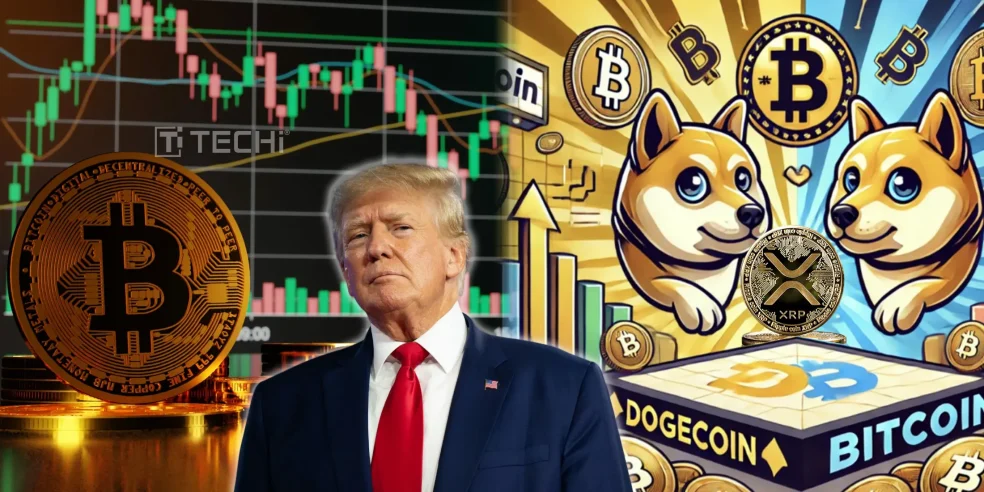
The Treasury Secretary Scott Bessent’s hint about upcoming trade deals sent Bitcoin soaring past $109000 on Sunday, with other major cryptocurrencies following suit. However, this isn’t just another crypto rally. It’s a sign of how digital assets are becoming tied to real world economic policy.
Why This Matters 🔗
Crypto markets used to dance to their own beat. Not anymore. When Bessent told CNN that the U.S. is close to finalizing trade deals before the July 9 deadline, Bitcoin jumped over 1% and briefly touched $109,000. XRP gained 2.1%, Solana climbed 2.3%, and even Dogecoin surged 3.2%.
This indicates that Crypto has grown up. It’s no longer just a speculative playground for tech enthusiasts. It’s becoming a legitimate financial asset that responds to the same economic forces that move stocks and bonds.
However, there is some real trade-deal drama happening as well. The Trump administration set a July 9 deadline for trade negotiations. If countries don’t make deals by then, the harsh tariffs announced in April will kick in on August 1.
Bessent made it clear: ‘If you don’t move things along, then on August 1, you will boomerang back to your April 2 tariff level.’
This creates a high stakes game of pool. Countries want to avoid those tariffs, so they’re more likely to make concessions. Investors see this as good news for the U.S. economy, which is why both traditional markets and crypto are rallying.
The way different cryptocurrencies perform tells us what investors are really thinking. XRP’s strong gain makes sense because it’s designed for international payments. If trade deals smooth out global commerce, payment cryptocurrencies could benefit.
Solana’s rise suggests institutional investors are still bullish on decentralized finance infrastructure. Meanwhile, Dogecoin’s 3.2% jump shows retail investors are feeling confident enough to buy meme coins again.
Ethereum’s more modest 1.5% gain is actually interesting. It suggests money is flowing toward riskier, higher-reward assets rather than staying in the ‘safer’ established platforms.
What This Means for Your Portfolio 🔗
If you’re investing in crypto, this trend has big implications. The good news is that crypto’s mainstream acceptance is growing. When the Treasury Secretary’s comments can move Bitcoin markets, it shows the asset class has real legitimacy.
The challenging news is that crypto may not be the portfolio diversifier it once was. If Bitcoin moves up and down with trade policy and economic news, it’s becoming more like a traditional risk asset. That means it might not protect your portfolio during market crashes the way it used to.
The Bigger Picture 🔗
Remember when Bitcoin crashed to $75,000 in April after the tariff announcement? That panic created a buying opportunity. Since then, U.S. markets have been on fire, and crypto has followed along.
This “America First” economic policy is creating winners and losers. Dollar-based assets, including crypto, are benefiting as international money flows into U.S. markets. But it also means crypto traders now need to watch Washington policy as closely as they watch Silicon Valley innovation.
What Happens Next 🔗
The next 25 days are crucial. If trade deals get done before July 9, this rally could have legs. If negotiations fail and tariffs return, expect volatility.
Watch for Bitcoin to hold above $105,000. If it does, the psychological $110,000 level becomes the next target. If it doesn’t, profit taking could push prices back down.
Also keep an eye on how payment tokens like XRP perform compared to store-of-value assets like Bitcoin. Their relative performance will tell us whether the market believes trade deals will actually happen.
In Conclusion 🔗
Crypto is becoming part of the regular financial world, not just a way to make fast money. For better or worse, Bitcoin and other digital assets are becoming more connected to economic policy and global trade.
This evolution brings opportunities for bigger gains when policies go right, but also risks when they go wrong. The crypto market’s reaction to Bessent’s comments shows we’re entering a new era where Washington matters as much as the blockchain.