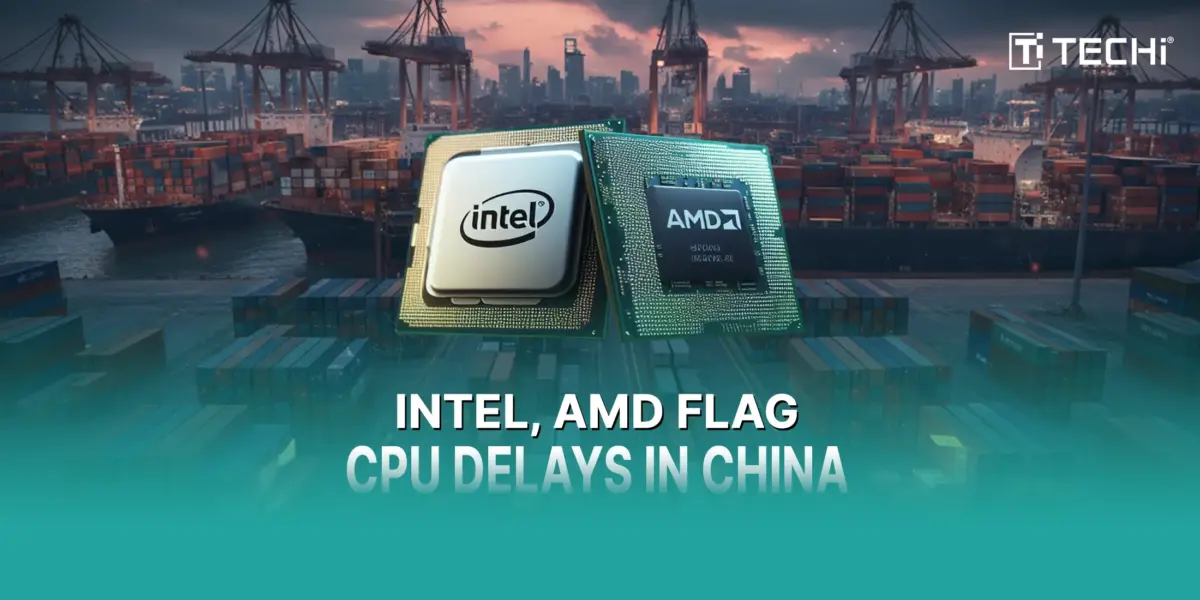
Intel and AMD have posted warnings on the dire shortages of server CPUs, which have an imminent negative effect on the Chinese buyers; the lead-time is now reaching about 6 months.
Intel products prices have increased by over 10% hence adding more competitive demand caused by the artificial intelligence boom.
Scarcities Spark Chaos 🔗
Fourth and fifth generation Xeon CPUs are enjoying a significant backlog in China, which is one of the markets that have grown to deliver more than 20% of the revenue at the Intel Company.
Intel has also started shipment-rationing, and thus left leading customers like Alibaba and Tencent in a state of uncertainty.
The condition of AMD is a bit alleviated, although it has already warned that the major products will take a delay of up to eight to ten weeks.
Artificial Intelligence Growth Increases Needs 🔗
Not only does it drain Nvidia GPUs, the infrastructure demand is also draining traditional CPUs.
Installation of agentic AI systems which perform more complicated tasks than those of chatbots necessitate further processing power.
Memory chip prices have been rising, and this trend has been enhanced by panic buying of the past year when the prices had decreased.
Intel keeps battling with low output results in its fabrication factories, whereas TSMC has focused on the manufacturing of AI chips by AMD at the cost of CPUs.
The Fall of Intel market share and the rise of AMD 🔗
The UBS data show that Intel has lost its 90% share in the market by 2019 and has gone down to 60 % in 2025 whereas AMD has gained more than 20 % share in the market.
Intel has commented that the rapid growth of the use of AI has created a strong need to use traditional computing resources, remarks that in the case of the first quarter of 2026, the level of inventory reached a low, but in the second quarter, it will experience improvement.
Expert Saying 🔗
AMD said in a statement to Reuters
“We remain confident in our ability to meet customer demand globally based on our strong supplier agreements and supply chain, including our partnership with TSMC,” .
Intel, which flagged CPU supply constraints in its earnings call in January, said in a statement to Reuters that the rapid adoption of AI had led to strong demand for “traditional compute”.
The statement said. The company expects
“inventory at lowest level in Q1, but we are addressing aggressively and expect supply improvement in Q2 through 2026,”
Future Outlook 🔗
It is expected to stabilize in the middle of 2026 with further acceleration of manufacturing on Intel side and dependency on partnerships with TSMC on AMD.
However, the long-term losses of memory and long-term demand of AI might prolong the price rise and thus pressures on the cloud service providers.
Buyers may seek better alternatives; however, the top Intel-AMD duo remains in that position albeit provisionally the business savvy organizations keep on piling up the stock at present.