Anthropic has developed an AI tool, which functions as a constant workplace companion that permanently operates without taking any breaks. With its new product Claude Cowork, the product on behalf of the users can read files, organize folders, and create documents, while using special industry plugins, which are now available for sales, finance, marketing, and legal applications.
The analyst response showed immediate intensity, which caused software stocks to decline, because investors feared that the software-as-a-service business model has received a warning.
Analysts are Suddenly Nervous 🔗
The concern about Claude Cowork exists because people find its practical uses more important than its flashy design. Companies that use AI to create internal tools achieve faster results with lower costs, which makes them less dependent on third-party software solutions.
So, AI automation will have a negative financial impact on companies that provide data analytics, research, and legal software solutions, according to analysts. Thomas Shipp of LPL Financial explained that AI enables non-technical users to create existing workflows, which ultimately decreases the value of subscription-based external software solutions.
Thomas Shipp said,
“Why do I need to pay for software, the thinking goes, if internal development of these systems now takes developers less time with AI? Furthermore, with the release of offerings like Anthropic’s Claude Cowork, an application with access to read and edit files, (fewer) technical users are now empowered to replace existing workflows”.
Software Stocks Feel the Shockwave 🔗
Investors did not stay to wait for the final decision. The ETF that tracks software stocks experienced a 5.69% drop on Tuesday, which marked its worst performance since April. On Wednesday, it was down 1%. Also, the individual names experienced more severe declines.
Thomson Reuters experienced its most significant single-day decline ever of 15.83%, while LegalZoom saw its stock drop 19.68%, and European data company RELX faced similar losses and declined 14% on Tuesday, and 1.5% on Wednesday.
All companies which had indirect connections to software investments also suffered financial damage when funds that were heavily invested in software started selling off their assets. FactSet declined 10.51%, and Blue Owl shares decreased to 9.76%. The market showed a small recovery, but traders operated from fear instead of actual business performance.
Jobs are at Risk 🔗
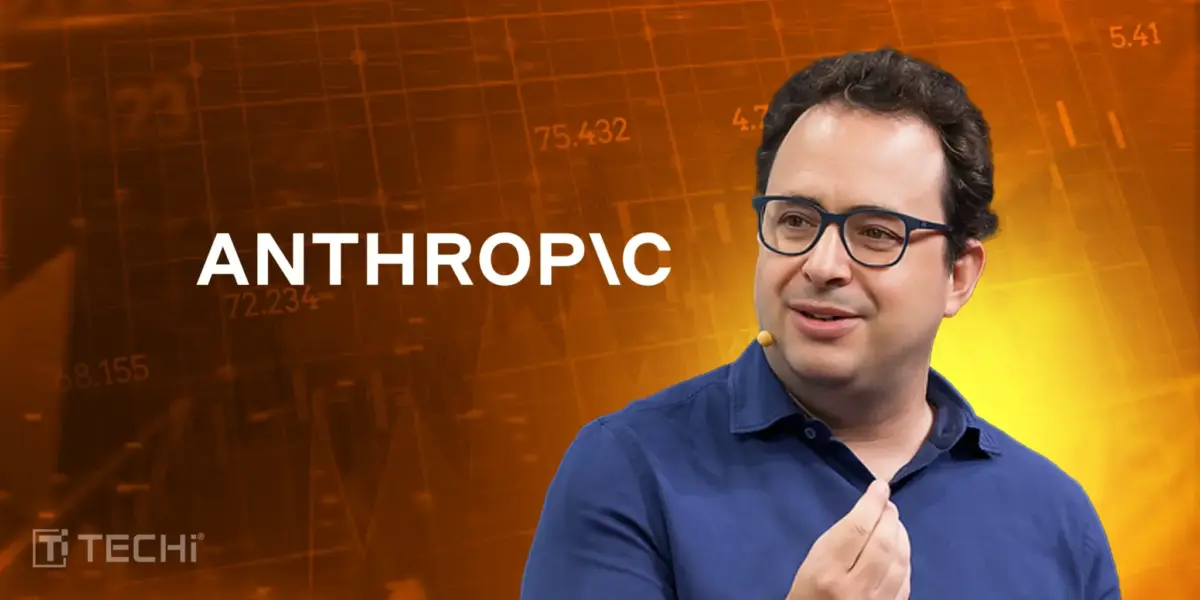
The sell-off demonstrated to markets that AI technologies will result in widespread workforce reductions. Anthropic CEO Dario Amodei said that artificial intelligence would replace 50% of entry level white-collar positions within a few years, which will create fear among both employees and investors.
He said,
“AI could displace half of all entry-level white-collar jobs in the next 1–5 years”.
Other technology executives demonstrate a more moderate approach, yet they acknowledge that the transition to new employment methods has already begun.
Salesforce CEO Marc Benioff announced that the company would not require any further recruitment for engineers, lawyers or customer support positions because of AI tools, which has created a major impact on employment.
Is This Another AI Overreaction? 🔗
It seems like panic appears to lack justification at the moment. Some analysts believe that the current sell-off shows strong resemblance to previous AI-driven market collapses, which failed to deliver their predicted outcomes. Nick Dempsey from Barclays declared that general AI systems still require deep domain expertise, because they cannot provide a complete replacement.
However, Aurelion Research analyst explained the market movement to be driven by investor feelings, which resulted from uncertainty about upcoming earnings reports. The historical record shows that Nvidia lost almost $600 billion in market value when investors feared Chinese AI competition, but the company somehow recovered its losses after several months.
Bottom Line 🔗
Claude Cowork has the potential to transform work methods, but it remains uncertain whether it will have an impact on the software industry. Anthropic has demonstrated to Wall Street that AI disruption currently operates as an immediate threat that exists in the office spaces at the moment.
The actual evaluation of these tools will show whether they can generate new software revenue streams or they will function as another component in existing technology systems. The market will experience unpredictable behavior, extreme viewpoints, and investors will repeatedly check their performance in today’s market conditions.