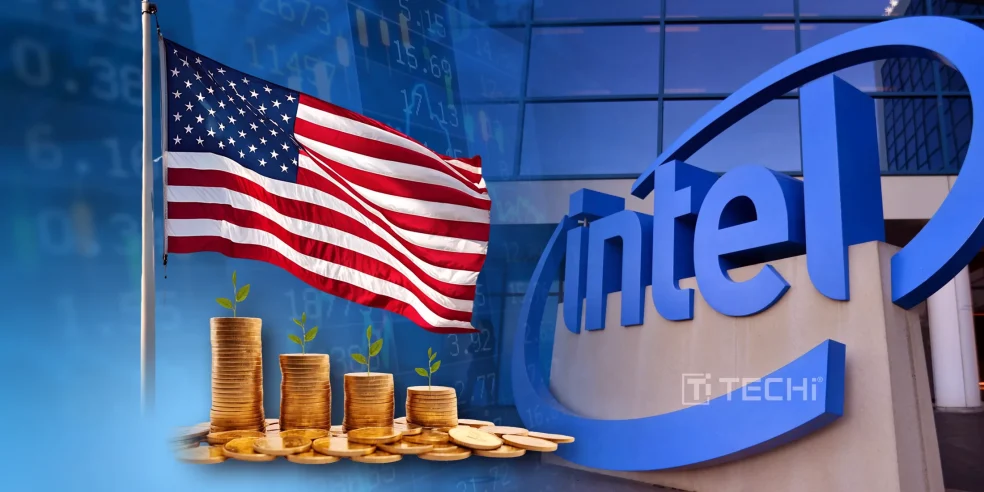

Intel’s government sponsored lift seems more like politics than a market victory. The U.S taking almost a 10% stake in Intel is a message that Washington believes the company is too big to fail. Investors find this reassuring and alarming at the same time. They find it reassuring because government backing adds stability, and alarming because it means that Intel still can’t compete on its own.
While the agreement is something to be hailed as a “great deal for America,” it also highlights Intel’s dependence upon political muscle over its complete market performance.
This move is quite strange. Instead of disbursing new grants, the U.S converted money that was already committed under the CHIPS Act into an equity investment. This gives Intel some freedom but also ties the success with the government.
It does increase Intel’s ability to create domestic manufacturing and reduce supply chain risk and it supports tech independence for the United States as well. However, Intel is becoming too reliant on the federal government, which is quite the opposite of TSMC or NVIDIA.
The broader thing to wonder upon is that does it set a standard where U.S taxpayers are literally experiencing risk for those corporate giants that appear to be down under the excuse of national security. On the other hand, investors are all thrilled by the momentum being created by Intel recently, which has rallied an excess of 25% this year. This just proves that markets still reward confidence even if it comes through the government channel and not by pure execution.
Intel’s boost serves as a reminder that semiconductors are not only a business anymore, rather they’re a geopolitical treasure as well. For investors, the stock is now accompanied by more government support, along with increased political baggage.
Whether Intel succeeds as a strengthened manufacturing powerhouse or falters under the burden of state control will determine not only its stock tale, but America’s semiconductor strategy in the upcoming decade.