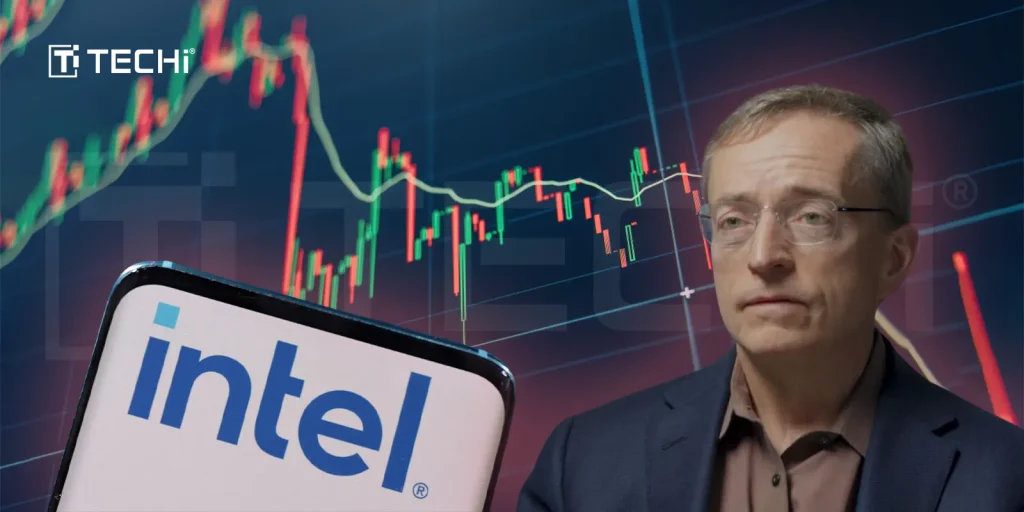
Intel shares fell more than 8% on Friday, lost in the shuffle of disappointing revenue and profit forecasts for the chipmaker on the first investor pitch by newly appointed CEO Lip-Bu Tan. While Tan spoke about preliminary steps in his strategy to rejuvenate the chipmaker’s competitive edge, it did not seem to convince analysts or shareholders of any meaningful near-term results.
The new CEO Tan, who started in the seat last month, has the difficult task of reversing years of stagnation and miscalculation that have allowed the iconic chipmaker to fall behind in the AI race. In the first quarter, short-term sales were boosted by customers stockpiling chips despite U.S-China trade tensions. However, Intel’s Q2 revenue and profit guidance fell short of analyst expectations, raising doubts about its ability to maintain momentum.
New Challenges 🔗
In his first public statement as CEO, Tan made strong assurances regarding operations, core engineering, and management layers. The company is planning to reduce $1.5 billion in operational expenditure over the next two years, $500 million in this current year and the remaining $1 billion in 2026.
Evercore ISI analysts said,
“Intel is so huge that shifting its course is like turning a battleship, it cannot be done on a dime.”
J.P Morgan analysts had a similar view, pointing out that even as Tan emphasized restoring Intel’s innovation culture, he provided very few details on how he intends to re-establish its manufacturing dominance or scale its contract foundry business. However, Tan’s willingness to engage the competitors, even going so far as to meet the CEO of TSMC just recently, signifies that perhaps Intel is examining all avenues for restoring growth.
An Opportunity or a Missed Opportunity? 🔗
Tan’s emphasis on tweaking Intel’s mandatory products to make them more aligned with AI trends brings in fresh questions about the company’s strategy going forward. Analysts remain skeptical about Intel’s ability to compete really effectively against the well-entrenched market leaders such as Nvidia, particularly considering that they have no advanced IP on GPU. Stifel analyst Ruben Roy said,
“Intel needs to streamline fast – they have a lot of investments to make to catch up in AI.”
Traditionally, Intel has attempted to buy its way into AI space, most famously with Mobileye. Other than that one, the rest fell rather short of giving them a competitive advantage. Anshel Sag, principal analyst at Moor Insights & Strategy, said,
“Intel should have always had its own internal solution, but it missed the boat and tried to acquire its way into AI.”
Evaluation VS Reality 🔗
However, despite the dismal news, Intel stocks have risen by 7.2% this year, outperforming both Nvidia and AMD, which have dropped by almost 20% in total. Intel also trades at a 12-months forward P/E ratio of 31.37, considerably higher than Nvidia’s 22.70 and AMD’s 19.24, a premium that analysts say is unjustified in view of the company’s uncertain growth path
The real challenge posed to Intel is not really to catch up with Nvidia, rather to prove that it can still lead. Tan’s early promises are good signals that the company is starting to make progress, but investors might be speedy to lose faith without a tangible roadmap strategy for AI revival. . Given that Intel’s future is now wholly intertwined with AI relevance and global supply chain dynamics, the next few quarters under the leadership of Tan will be of utmost importance.