
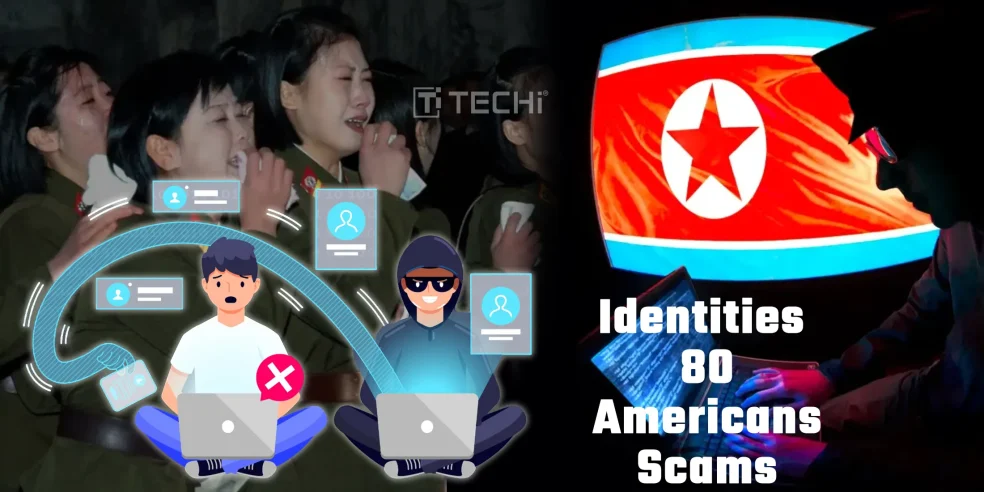
North Korean IT Workers Stole Over 80 American Identities
Screen display shows a hacker stealing U.S. identities as North Korean IT workers profit from global scams.

The North Korean IT Workers Stole more than 80 American Identities

TECHi's Author
Opposing Author Wired Read Source Article
Last Updated
TECHi's Take
Saba Javed
Saba Javed
  • Words 248
  • Estimated Read 2 min

In this hyper-connected world, stealing someone’s identity is not just cybercrime; it’s now becoming a source of profit and power. The US Justice Department recently exposed an identity theft operation led by the North Korean regime. There were 80 Americans whose identities were hacked and used to secure jobs in 100 U.S companies. They successfully stole at least $900,0000 worth of cryptocurrency from a company. 

The worst thing is that two Americans were also involved in it, who helped them set up laptop farms in North Korea. It’s like how we focus on defending against external threats to stay safe, yet sometimes the greatest harm comes from those closest to us. Anyhow, one of them got arrested. Moreover, the involvement of six Chinese nationals and two Taiwanese citizens shows that it was a global-level planning to support the so-called IT-worker program. Experts warn that North Korea has hundreds to thousands of stolen American identities. 

As fast as law enforcement shuts them down, they find a new way to adapt. This phenomenon is becoming more common day by day. Our documents are not just a piece of paper; they are our digital identity and a doorway to opportunities for these hackers. As our world becomes more connected through apps, websites, social media, cloud storage, and remote work, the chances of hacking, scams, and identity theft have increased significantly. Therefore, to stay safe, we need stronger defence systems and close monitoring of our accounts on a regular basis.

Wired

Wired

  • Words 58
  • Estimated Read 1 min
Read Article

For years, the North Korean government has found a burgeoning source of sanctions-evading revenue by tasking its citizens with secretly applying for remote tech jobs in the West. A newly revealed takedown operation by American law enforcement makes clear just how much of the infrastructure used to pull off those schemes has been based in the United States.

Source

NOTE: TECHi Two-Takes are the stories we have chosen from the web along with a little bit of our opinion in a paragraph. Please check the original story in the Source Button below.

Balanced Perspective

TECHi weighs both sides before reaching a conclusion.

TECHi’s editorial take above outlines the reasoning that supports this position.

More Two Takes from Wired

Here’s how to use Spotify to its full potential

Spotify is pretty much a must-have for anyone who even remotely enjoys music, which is basically everyone, but even those…

New Orleans has actually become a fairly lively tech hub

It's hard to imagine New Orleans popping up in any conversation about tech hubs in the United States, but that's…

TuneIn thinks Internet radio still has a chance against Spotify

Radio was dying well before the rise of music streaming services like Spotify, but their rise has definitely hastened its death,…

Bill Gates wants to bring electricity and water to Africa using… poop?

Sanitation in some of the world's least developed nations is a serious issue, one that Bill Gates wants to solve in…