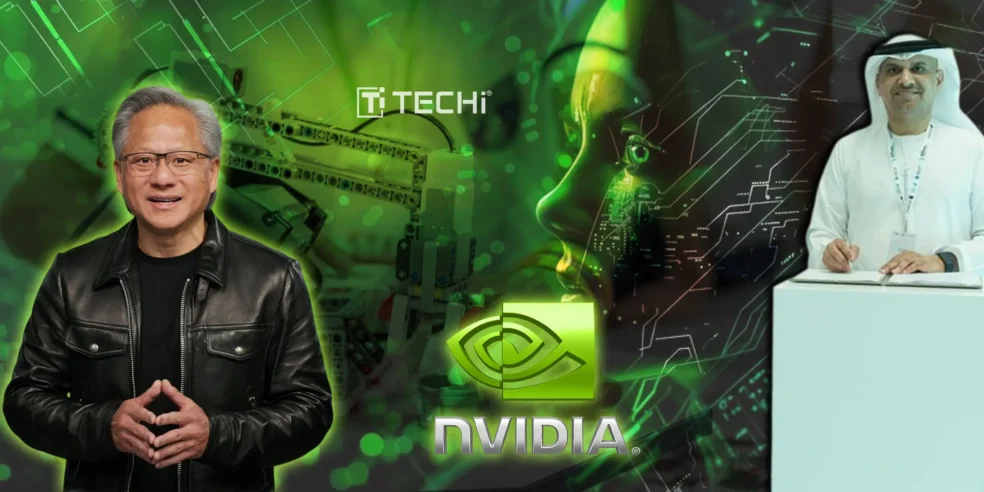

The incorporation of Abu Dhabi’s Technology Innovation Institute (TII) serves as an essential milestone in the partnership with Nvidia, in the context of the ongoing competition for dominance in artificial intelligence and robotics in the world. The establishment of the joint centre in the UAE is as much about the technological capabilities of the region as it is about how the Gulf states align themselves in the new era of the global technological arms race.
As for Nvidia, the centre enhances the company’s footprint in a region that is equally enthusiastic about artificial intelligence. As for the UAE, it reflects the country’s growing willingness to invest resources, in addition to global collaborations, to ensure that the UAE remains at the forefront of artificial intelligence innovation.
This centre will also serve as the first Nvidia AI Technology Centre in the Middle East, a region that has invested billions in building its AI and technology infrastructure. The first region in the Middle East to host the centre demonstrates Abu Dhabi’s ideology, ambition, and innovative potential, serving as a conduit for global technology leaders. The centre will also provide TII with some of the more advanced computing resources, which are instrumental in building large AI models and robotic systems.
The partnership has a unique feature in that the integration of Nvidia’s Thor chip will unlock new computing capabilities integral to advanced robotics. Some targeted projects for applying this technology include humanoid and quadrupedal robots, as well as robotic arms. These are not futuristic ambitions but rather active projects.
With this hardware, TII researchers are provided with the means to rival top laboratories from around the world. It also expands the range of industry applications of immediate relevance to the UAE, including logistics, transportation, energy, and climate change.
It is also this focus on robotics and AI that is particularly compelling. AI arms with advanced robotics to see how the systems work in practice. For example, with logistics, AI could reimagine the movement of goods through ports and warehouses.
In the energy sector, AI could fundamentally change how inspection and maintenance are executed in difficult-to-access locations. In the field of healthcare and genomics, the introduction of more autonomous robotic systems could help streamline automated processes in complex laboratories. Such examples highlight the widespread positive impact.
The joint lab, along with other projects, is also directed at a broader geopolitical economic context. The UAE has been reducing its dependence on oil by adopting innovative technologies. AI is one of the most attractive opportunities.
Simultaneously, the Gulf country has been keen to maintain its strong relations with the United States, while also fostering close ties with China. Such a balancing act has caused anxiety in Washington, particularly regarding advanced chips and data infrastructure.
A previous data centre deal involving Nvidia chips was delayed because of such security concerns. In this context, the new partnership demonstrates the sensitivity and strategic nature of AI.
The benefits of this partnership are evident for Nvidia as well. The company is already a leader in the AI boom, with its chips used in everything from chatbots to data centres. Through the partnership with TII, Nvidia would gain entry into a region that has expressed a determined resolve to lead AI technology adoption and investment.
Moreover, it would enable Nvidia to demonstrate the versatility of its chips beyond data centres that are expected to fuel the fastest growth in robotics in the coming decade. Besides the technology, what is most remarkable is that this partnership also focuses on building talent.
TII’s CEO, about the project, explained that, ‘Both sides will have teams working in parallel, and will make new project appointments. This indicates that some of the project’s learning will, inevitably, be domestically sourced, developing skills and expertise in the UAE.
This might enable the country, in the long run, to diminish its dependence on external partners and develop its own self-sustaining ecosystem of robotics and artificial intelligence talent.
Most notably, in this context, the joint lab serves as a landmark achievement. It demonstrates how companies in the Gulf can leverage their assets to procure high-value collaborators, and conversely, how partnerships with Gulf counterparts enable companies such as Nvidia to further their international business development.
Research output from this lab has the potential to transform not only the UAE but also international logistics and new approaches to climate change. It serves as a reminder that AI and robotics are advanced technologies that leading nations and companies are integrating into their strategic plans for the future.