Nvidia and Samsung are turning up the heat in the consumer robotics arena with bold investments in rising star Skild AI Inc. Their move to grab minority stakes signals a powerful push toward shaping the future of intelligent machines. Samsung is putting in $10 million to support Skild’s development of software for robots. Nvidia, a leader in AI chips, is investing an additional $25 million to push forward the idea of physical AI, which means smart robots and autonomous vehicles that can operate on their own.
This investment comes as part of Skild AI’s Series B funding round, which values the company at around $4.5 billion. Leading the round is Japan’s SoftBank Group Corp. (9984.T, SFTBY) with a huge $100 million stake. Samsung’s move isn’t just about the money. Internally, it’s a strategy to keep close tabs on Skild’s talent and technology without making a full commitment. It also helps Samsung keep up with other South Korean companies like LG, Hanwha, and Mirae Asset, who have also invested in Skild.
Here’s a quick look at how the investments stack up: 🔗
| Company | Investment Amount | Purpose/Notes |
| SoftBank | $100 million | Leading Series B round |
| Nvidia | $25 million | Pushing “physical AI” tech (robots, autonomous cars) |
| Samsung | $10 million | Strategic visibility, keeping pace with competitors |
| LG | $5-10 million | Keeping up in robotics race |
| Hanwha | $5-10 million | Investing in future robotics tech |
| Mirae Asse | $5-10 million | Part of South Korean investment group |
Nvidia’s “Physical AI” Push Reshapes Robotics Future 🔗
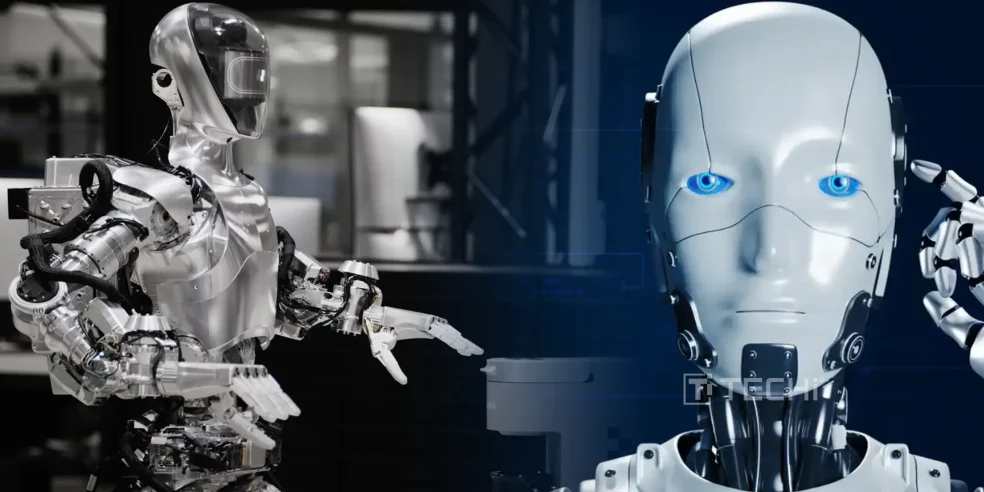
Nvidia is aiming to make “physical AI” a major source of future revenue by providing semiconductors, AI software, and tools that speed up robots’ ability to think independently. While Samsung recognizes some of Skild’s tech isn’t yet the best on the market, it still sees enough promise to invest. Neither Samsung nor Nvidia have publicly commented on the deal, and Skild AI has not responded to requests for comment.
The robotics industry is heating up fast, with big players like Apple (AAPL), Meta (META), Amazon (AMZN), Google (GOOG, GOOGL), and Tesla (TSLA) all investing heavily. Tesla’s humanoid robot Optimus has been in the works for some time.
Samsung has also invested recently in Physical Intelligence, a startup focusing on robotics algorithms, which has raised around $400 million and was valued at about $2.4 billion. Nvidia’s other robotics investments include companies like Figure AI and Serve Robotics. Samsung’s ambitions go beyond robot vacuums to include humanoid robots and smart home devices. Later this year, in partnership with Google, it plans to launch Ballie, a small, soccer-ball-sized robot that can project video on walls.
Samsung is also the largest shareholder in Rainbow Robotics, a company developing humanoid robots that forms a central part of its robotics efforts. With deep-pocketed investors piling in, the race to dominate physical AI is no longer science fiction, it’s a high-stakes corporate frontier.