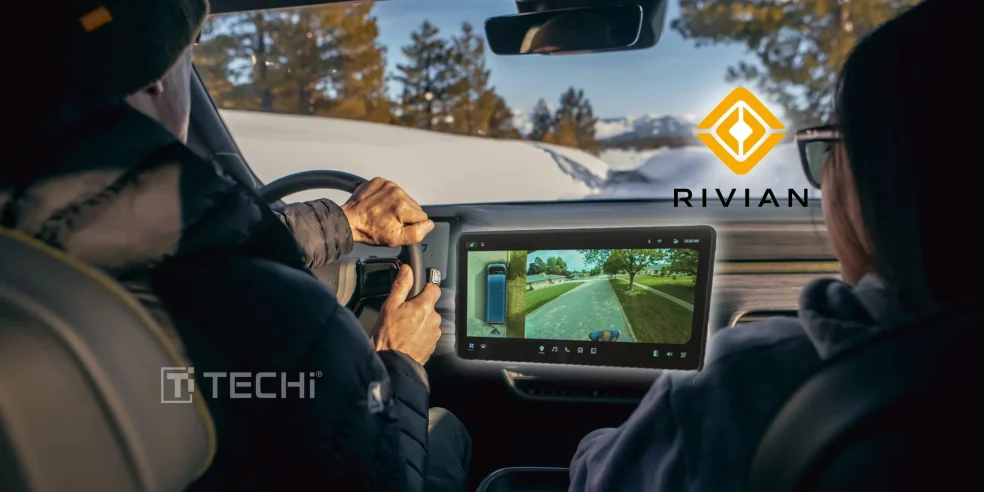

Custom Google Maps Navigation
A Rivian driver navigates with the automaker’s custom Google Maps interface, bringing smart routing and EV-focused features to the in-car experience.

Rivian Taps Google to Bring Custom Maps into Its EVs and App

TECHi's Author Fatimah Misbah Hussain
Opposing Author Techcrunch Read Source Article
Last Updated
TECHi's Take
Fatimah Misbah Hussain
  • Words 356
  • Estimated Read 2 min

In the electric vehicle world, where performance and range tend to be the big highlight, Rivian is keeping everyone’s feet on the ground by reminding us that software is just as important, perhaps even more so.  The electric vehicle startup’s aggressive move to revamp its in-car navigation with a custom-flavored Google Maps is not merely a technological enhancement; rather, it’s a point of distinction where user experience is the new horsepower. 

Rivian didn’t opt for a plug-and-play solution; it went in for working with Google at the API level to incorporate its own EV-centric capabilities directly into the map. That level of control isn’t just unusual in automotive technology; rather, it’s forward-thinking.

Rivian's custom in-car navigation screen powered by Google Maps, showing route planning and charging station info.

Perhaps one of the most common criticisms from EV buyers across brands is bad navigation, particularly range anxiety and charging stops.  Rivian’s decision to blend Google Maps with its own EV reasoning (such as charging scores and trip planning) specifically addresses those issues. Drivers now enjoy the familiar comfort of Google Maps with Rivian added intelligence of less app-switching headache and more driving confidence. It’s a strategy that is in keeping with what made Tesla successful in the first place, a software that was ahead of the competition. 

Although, as opposed to Tesla’s closed system, Rivian is embracing strategic openness and is inviting Google along, but on its own terms. That blend of control and cooperation might be its actual innovation.

From Google’s point of view, if this model succeeds, we may see a shift in the way Google scales its Maps across industries outside of auto. However, there is a concern about the privacy implications of greater Google integration. But as cars turn into rolling computers, that’s the cost-benefit compromise consumers are being asked to make more and more. 

With this alliance, Rivian is not only playing catch-up with others in the industry, it’s attempting to set a new standard for EV software ecosystems. Through combining its own capabilities with Google’s mapping expertise, the company is building an experience designed not only for drivers, but for the road itself. 
Techcrunch

Techcrunch

  • Words 191
  • Estimated Read 1 min
Read Article

For 18 months, Rivian and Google engineers worked together. Today, they’re showing off their work. Rivian is pushing out a software update that will bring a unique version of Google Maps into its EVs. It’s the latest step in Rivian’s continued effort to distinguish its vehicles with software — an effort that has helped it strike up a joint venture with one of the world’s biggest automakers, Volkswagen. This isn’t a typical the Google Maps integration and it’s unlike the tech company’s other collaborations in the automotive sector. For years, Google has pushed into automotive through its smartphone projection app called Android Auto as well as Google built-in, an Android Automotive operating system that integrates Google services directly into the vehicle and is used by automakers like Volvo. The collaboration with Rivian is neither. Instead, Rivian customers who use the in-car navigation will no longer see the Mapbox-based maps. Now, they’ll see Google Maps, but with a lot of Rivian DNA sprinkled on top, including its trip planner, user interface and design, and EV charger locations, according to Rivian’s chief of software Wassym Bensaid.

Source

NOTE: TECHi Two-Takes are the stories we have chosen from the web along with a little bit of our opinion in a paragraph. Please check the original story in the Source Button below.

Balanced Perspective

TECHi weighs both sides before reaching a conclusion.

TECHi’s editorial take above outlines the reasoning that supports this position.

More Two Takes from Techcrunch

James Cameron’s Caution on Generative AI Reflects Industry Concerns and Future Challenges

James Cameron, the acclaimed director known for pioneering visual effects in movies like Avatar, has expressed strong reservations about generative…

ChatGPT Voice Mode Now Integrated for Natural Conversations and Better User Experience

ChatGPT's voice mode has been integrated directly into the main chat interface, making it easier and more natural to use. …

X New About This Account Feature Reveals Account Details including Country Location but it faces Trust Issues

X has rolled out a new ‘About This Account’ feature showing when an account joined, username changes, and importantly, geographic…

WhatsApp is Getting its Own Version of a Status Update Feature, Similar to Instagram Notes

WhatsApp has relaunched its "About" feature, which functions similarly to Instagram Notes, allowing users to post short text updates visible…