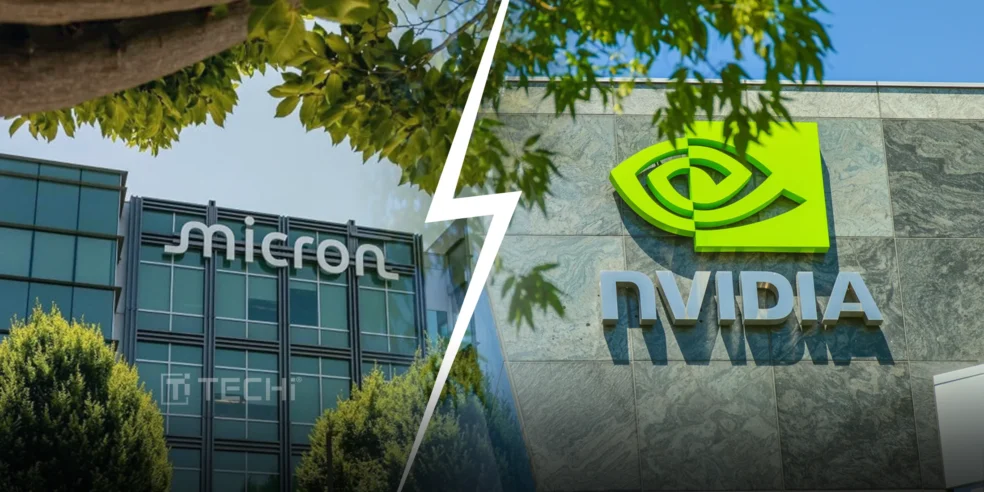

When you compare Nvidia and Micron, it is like seeing two guys from the same team but with completely different approaches. Nvidia is the star that is controlling the AI chip market, breaking records, and charging up premiums. On the other hand, Micron plays the steady game, it is stealthily fueling the AI revolution with memory solutions that are just as crucial to the game but it goes unnoticed.
Both have parabolic potential, but for different reasons. Nvidia is fueled by hype and innovation cycles, while Micron builds strength quietly from rigid demand for memory. Also, Micron is the gem investors may regret overlooking.
Nvidia is unstoppable and its Blackwell chips are gaining traction faster than any other product. Even with export bans to China, the company is positioning itself with speculated new chips. Also, Nvidia’s premium valuation is justified since it’s not only a hardware firm, it’s creating an ecosystem with software such as Omniverse and AI Enterprise. On the other hand, there are dangers of geopolitical risks, dependence on cyclical demand, and the risk of overvaluation.
Micron has a different investment narrative. The fundamental optimism is based on its revenues increasing 37% year over year, HBM3E chip demand being booked out through 2025, and AI infrastructure’s appetite for the memory puts it in an ideal position. Its fairly low valuation as compared to Nvidia also resonates with value-oriented investors. However, Micron is working in an industry that is extremely prone to cycles where margin-destroying pricing pressures and oversupply threats can attack it quickly.
The actual takeout is that both Nvidia and Micron are two different ways of surfing the AI wave. Nvidia provides shareholders with the excitement of a high-growth tech titan, and Micron provides the surety of critical infrastructure at a better valuation. In an economy where AI adoption will transform industries for years to come, wagering on both, the dominant player and the behind the scenes go-to player, may be the wiser bet.