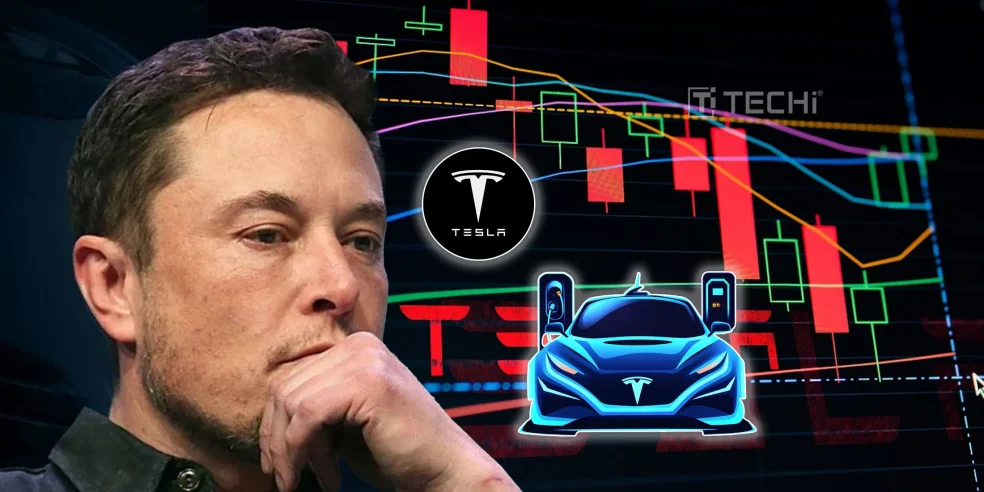
Tesla shares dropped 6.8% on Monday, erasing $79 billion in market value after CEO Elon Musk announced the formation of his new ‘America Party’. But this isn’t just another story about volatile stock prices. It’s a case study in how a CEO’s political activities can destroy shareholder value in ways that traditional risk assessments completely miss.
Real Cost of Political Distraction 🔗
The $79 billion loss is more than just investor sentiment. It’s the market pricing in an important shift in Musk’s priorities during Tesla’s most critical growth phase. With the company fighting for market share against Chinese EV makers like BYD and struggling to maintain its autonomous driving lead, investors needed their CEO to be focused on execution and not electoral politics.
“Over the years, Musk’s behavior has become more outrageous,”
says Charles Elson, founding director of the Weinberg Center for Corporate Governance at the University of Delaware.
“The board’s lack of response makes you wonder, ‘Who are these people? Why are they there?'”
Trump’s response was swift and damaging. He called Musk a ‘TRAIN WRECK’ on Truth Social, while Treasury Secretary Scott Bessent publicly suggested that Tesla’s board should intervene. This public feud produces regulatory uncertainty that goes far beyond stock price volatility. Federal agencies oversee everything from vehicle safety standards to environmental permits for Tesla’s factories. This makes political relationships a big part of operational success.
Three Immediate Risks for Tesla Shareholders 🔗
Tesla and SpaceX depend heavily on federal contracts and regulatory approvals. A hostile White House could delay permits for new factories, slow down autonomous driving approvals, or even reduce EV tax credits that benefit Tesla buyers.
Political polarization directly impacts Tesla’s customer base. Tesla’s core demographic (wealthy, environmentally conscious consumers) increasingly twists liberal, making Musk’s political activities a direct threat to sales growth. Corporate buyers like Hertz, which initially ordered 100000 Tesla vehicles, have since put back commitments specifically due to concerns about Musk’s public statements.
Top engineering talent increasingly avoids politically controversial employers. Tesla’s ability to compete with Apple, Google and other tech giants for AI talent could suffer if Musk’s political activities dominate headlines. An overwhelmingly liberal workforce sees political activism as particularly problematic when it conflicts with their values.
Governance Wake-Up Call 🔗
This incident brings to the surface a critical flaw in modern corporate governance. Boards struggle to control celebrity CEOs whose personal brands are twisted with company value. Tesla’s board includes several Musk allies and family connections, which creates potential conflicts of interest when addressing his behavior.
“It is difficult to get a man to understand something when his salary depends on his not understanding it,”
says Nell Minow, a corporate governance expert. “That’s this board.”
Institutional investors are taking notice. CalPERS and Norwegian sovereign wealth fund Norges Bank have expressed concerns about Tesla’s board effectiveness. These institutional voices carry significant weight and can pressure boards to act through shareholder votes.
When asked whether Tesla’s board should fire Musk to protect shareholders, Charles Elson was blunt: “They should. But they won’t.”
The pattern of inaction has become predictable.
“There have been so many ‘Now the board has to do something moments,’ and they have failed every time,”
“I no longer feel that there is such a thing as ‘Now they have to do something.'”
Smart investors should demand clearer CEO accountability measures, including specific time allocation requirements and potential compensation clawbacks for activities that demonstrably harm shareholder value. Some governance experts suggest Tesla should split the CEO and Chairman roles (currently both held by Musk) to improve oversight.
What This Means for Your Portfolio 🔗
If you own Tesla stock, this political party launch isn’t just a distraction. It’s a warning sign that your investment is increasingly tied to one person’s political ambitions rather than business fundamentals. Consider the opportunity cost. While Musk focuses on political messaging, Tesla faces intense competition from Chinese manufacturers, who are rapidly gaining global market share.
For current shareholders, this creates difficult decisions. Tesla’s long-term prospects remain strong, but execution risk from distracted leadership is real. Options include reducing position size, hedging with puts or setting strict stop-losses to limit downside risk.
When it comes to wider market implications, this case study shows how CEO political activities can create systemic risks that traditional financial analysis doesn’t capture. When the world’s richest person can wipe out $79 billion in value with a weekend political announcement, it’s time to reconsider how we evaluate leadership risk in our portfolios.
I believe that moving forward, investors should factor ‘political risk’ when they’re analyzing CEO driven companies. This includes evaluating their management’s history of controversial statements along with the board’s ability to provide effective oversight. The days of ignoring CEO political activities as irrelevant to business performance are clearly over.