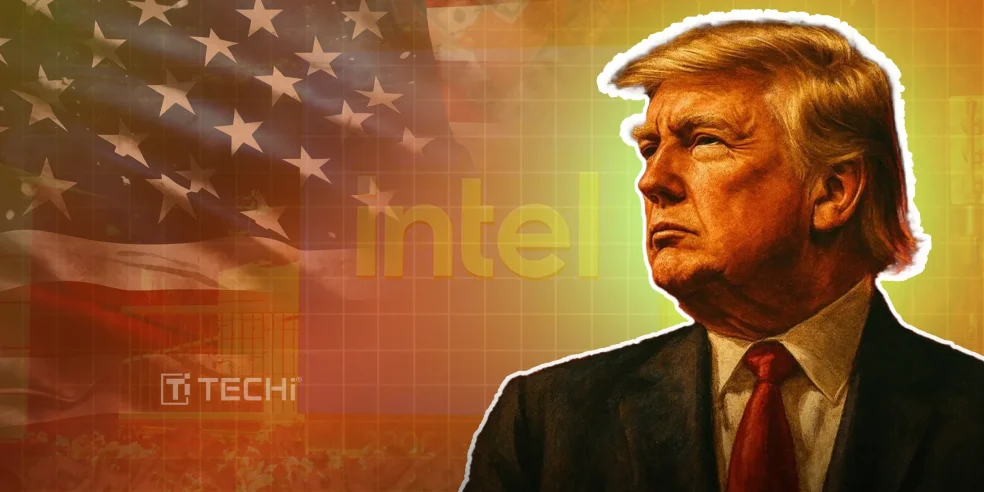

A recent announcement by President Donald Trump that he wants the U.S. government to own a piece of Intel has caused a sharp debate within the American business community. The government converted the grants to share in the ailing chipmaker, which amounted to close to a 10% equity stake. Whereas Trump cast the deal as an example of how to conduct investments in key industries, a significant concern that critics have against it is that it represents a metamorphosis in how the American economy runs.
Government ownership in a so-called privately owned industry has, over the years, been very uncommon and only in times of crisis like the 2008 financial meltdown. Although Intel has challenges, the company maintains a high market value and still has a lot of cash reserves. This involvement of the government proves to be anything but typical, and to others, it can be not comforting.
Critics cite that after the government has become a shareholder, companies are no longer able to make decisions in a flexible way. They worry that new political pressures will inhibit innovation and skew natural competition in the marketplace.
People who support the policy of Trump view this step as a way to keep essential sectors of the economy free of excessive dependence on international production. Recovering domestic production capacity particularly in semiconductors and rare earths has repeatedly been touted by the White House. In this view, such direct investments into companies such as Intel, MP Materials, or transactions including Nvidia and AMD represent attempts to achieve the technological and economic sovereignty of the United States.
Nevertheless, dangers are evident. Intel even cautioned that government ownership might be a disadvantage in competing to win international accounts or grant aid in other localities.
Analysts are also questioning whether customers may feel harassed into buying Intel products due to the power of Washington. The concerns of state involvement caused even political fervour, with the words of Senator Rand Paul that the Intel deal was a step toward socialism.
And the extent to which Trump is intervening in the affairs of the companies is far beyond semiconductors. His eagerness to interfere in the sale of U.S. Steel to cheering advertising employed by the fashion industries is considered to be unique.
The ability to get into the white house is valuable to many CEOs, but the unpredictability of policies, particularly in matters related to tariffs, has left industries shaky.
The question which arises out of this debate is how much control the government should exercise over the private companies. Though Trump argues that such transactions make the American economy even stronger, his opponents call them a grey zone between a free market and state functioning. The Intel affair could establish the atmosphere of a new period of economic policy in the U.S.