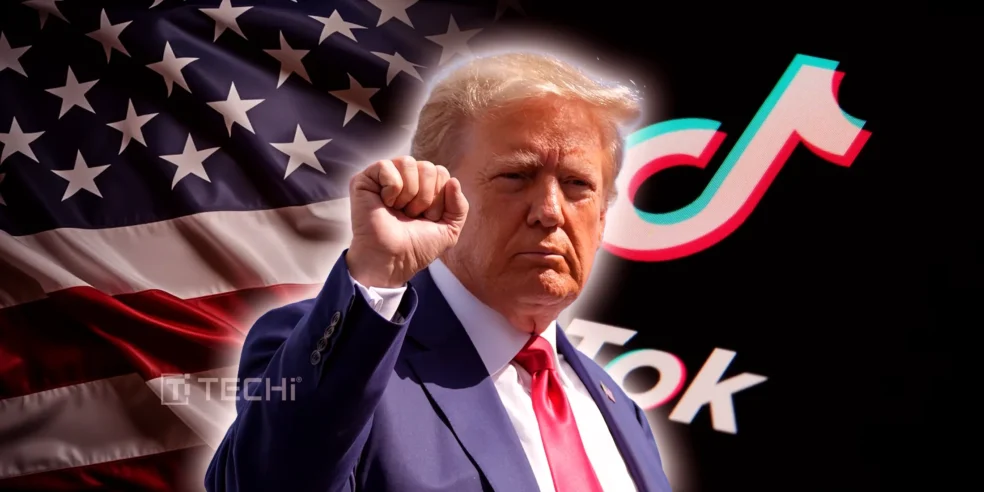

Recent news that TikTok is nearly ready to conclude a transaction involving its operations in the United States is one of the most significant developments to occur in the long-standing conflict, not only between Washington and Beijing on the issue of technology, security, and data control. President Donald Trump is expected to announce that the deal meets the requirements spelt out in the legislation of 2024, requiring that ByteDance sell the American assets of TikTok or face a ban. It is not just another corporate re-engineering, but rather a manifestation of the growing inter-connection between politics and business in the technology field.
The key point in the deal is a change of ownership. The Chinese parent company of TikTok, known as ByteDance, will own under 20% stakes in the new US company, with the rest of the shares equally owned between existing global investors and new American partners. The prominent parties are Oracle and Silver Lake, and there are indications that some individuals, such as Larry Ellison, Michael Dell, and Lachlan Murdoch, may also be interested in the opportunity. This arrangement is a calculated effort to firmly embed TikTok in the American business context in opposition to the Chinese.
Information security has long been a primary concern of US legislators. The agreement includes strict clauses to address this issue. All information of the American users shall be stored in cloud servers managed by Oracle in the United States resolving any concerns that the personal information may become available to Chinese authorities based on the national security laws. The new organisation aims to calm regulators and the rest of the world by outsourcing data warehousing and management to an American technology firm.
The agreement of the divestiture order, which Trump has chosen to place on a one-hundred-and-twenty-day moratorium, is a balancing activity. On the one hand, he will have to abide by the congressional requirement that does not allow ByteDance to retain possession of the U.S.-based assets of TikTok; on the other hand, a total ban on a platform that $170 million US users cannot use will hardly be a sustainable political choice. The deadline creates room to close the deal, but retains the urgency for ByteDance and its shareholders to finalize the deal.
The ramifications of this acquisition are not limited to TikTok. Over the years, China has been in a trade war and has had an extended technological superiority over the United States. The officials of America argue that Chinese ownership of mainstream websites poses an economic risk and a national security threat, and Chinese leaders think their firms are being unfairly shut out of the Western market, which is politically oriented. Therefore, it is considered a breakthrough that may ease the tensions in the course of the tense bilateral relations.
However, there are several grey areas. The actual price of TikTok’s assets in the United States remains unknown, but according to authorities, it will be measured in billions of dollars. There is also uncertainty on whether the US government would insist on financial compensation as a condition of approval. Additionally, the Chinese official stance remains unclear, as US officials claim a tacit agreement, but China has not openly confirmed it. There is a threat of political retaliation by either of the two countries.
In terms of investment, the transaction illustrates how geopolitical wrangles can directly influence the courses of MNCs. Conventionally, the choice of investments is motivated by market forces, revenue capacity or user interaction. In this case, the strategic outcomes depend on the ownership structure and the adherence to national security legislation. The role of Oracle is also notable, as a conventional leader in enterprise software, it is now a key gatekeeper of information to millions of social media users and can be the first to enter a new paradigm where technology companies can create governmental coalitions to gain power.
To users, the deal guarantees business continuity. Instead of being banned, TikTok will continue to exist in the US and will still deliver short-format videos and culture that has become an inseparable part of online life. The hidden agenda is that political forces shall not today interfere with the daily lives of millions. However, the episode also highlights that social media websites are not just sources of entertainment but also resources that governments consider particularly important strategically.
To conclude, the TikTok deal is a case of politics, business, and technology coming together in modern society. It demonstrates how governments can shape the future of private industry in response to security concerns, as well as how corporate leaders and investors can reconcile conflicting interests when market imperatives and political objectives intersect. If the deal is concluded without incident, it would set a precedent for resolving similar disputes regarding technology ownership. On the other hand, delays and opposition would likely become another point of contention between the US and China.