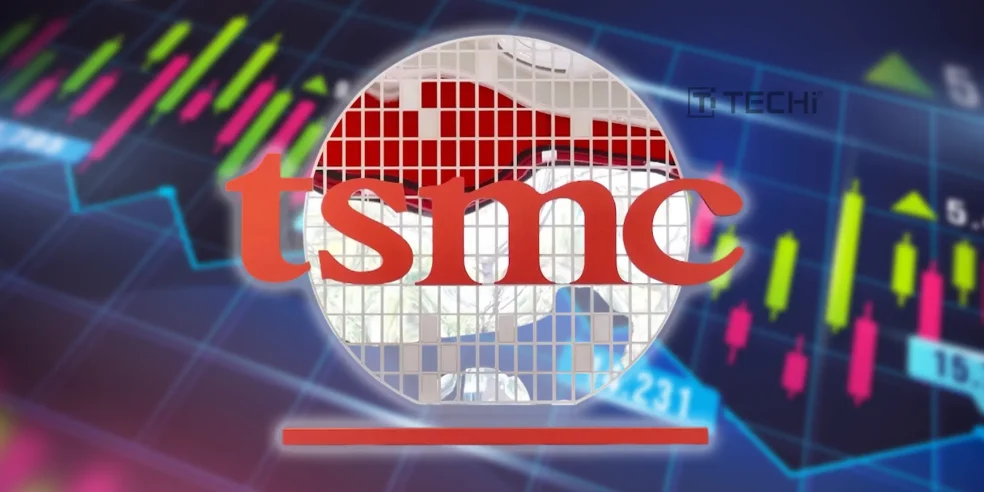
Taiwan Semiconductor Manufacturing Company (TSMC) has reported its highest-ever quarterly profit, driven by the surge in artificial intelligence chip demand. The company’s second quarter earnings rose 60.7% year-on-year, hitting T$398.3 billion ($13.5 billion).
TSMC is making double-digit growth in the recent four quarters, and now it has maintained its legacy in the fifth quarter as well. It represents how AI is driving the global semiconductor industry’s worth.
But even as the company rides the AI wave, concerns over U.S. tariffs are rising. A stronger Taiwan dollar and potential weakness from major clients like Apple can affect its performance, due to which the company’s growth in 2026 is not guaranteed.
The company produces advanced processors for top players, including Nvidia, which recently gained U.S. approval to resume selling its H20 AI chip in China. These chips had been previously restricted under export rules.
China is one of the world’s biggest AI markets, and this decision has been seen as a win for Nvidia and TSMC. TSMC CEO C.C. Wei highlights how the Chinese market remains a key growth channel despite ongoing U.S. – China tensions. He said:
“It’s very positive news for my customer and for us.”
TSMC expects its third-quarter revenue to rise by as much as 40% due to the continuous surge in AI development. The company also raised its full-year growth forecast to 30% in U.S. dollar terms, up from its earlier projection in the mid-20% range. This confidence reflects not only continued AI demand but also TSMC’s ability to maintain production power.
Tariffs and Currency Pressure Could Slow Momentum 🔗
Despite its impressive results, TSMC is not taking its growth for granted. The Taiwan dollar has strengthened about 12% this year against the U.S. dollar, which directly impacts how much profit the company retains when converting overseas earnings. It means when they convert the U.S dollar into Taiwan, it’ll yield them a significant drop in revenue.
In addition, the specter of tariffs also increases. Earlier this year, U.S. President Donald Trump suggested a 32% reciprocal tariff on Taiwanese exports, including semiconductors. He has also directly told TSMC it could face a 100% tax on shipments to the U.S. if it fails to expand production within the country. Trump said in April at a congressional event:
“TSMC, I gave them no money… All I did was say, If you don’t build your plant here, you’re going to pay a big tax.”
He also criticized the previous Biden administration for granting $6.6 billion to TSMC’s U.S. unit, claiming the company did not need subsidies. While no final figures have been confirmed yet. However, TSMC executives have warned that if these measures are applied, it could hit revenue and force the company to reassess pricing for global customers.
TSMC has committed $100 billion to building five additional facilities in the United States; tariff threats underscore how closely the company’s growth is tied to U.S. political demands.
Trump, TSMC announce US$100 billion investment
Chief Executive Wei emphasized that so far, customer behavior has not changed, but the company is growing more conservative in its outlook for the fourth quarter.
“We are considering the possible impact of tariffs and other uncertainties,”
Wei said, pointing out that politics could be a significant challenge compared to technology growth.
How Apple’s Progress Strengthened TSMC 🔗
Apart from political concerns, TSMC has an eye on its biggest commercial customers. Apple, one of its largest buyers, has struggled with weak sales in China throughout 2025. It could hurt TSMC’s fourth-quarter results if the condition persists. Apple will definitely avoid purchasing chips with the drop in its sales percentage.
Market analysts have declared Apple’s struggles a key reason behind TSMC’s cautious earnings for the second half of the year, despite the strength of its AI-related sales.
TSMC’s international expansion also comes with financial strain. Alongside its $100 billion commitment to U.S. facilities, the company has pledged $65 billion for three plants in Arizona.
These factories are crucial for diversifying production and meeting U.S. policy goals, but will significantly raise TSMC’s operational costs.
As a result, its gross margin is projected to fall in the third quarter to 55.5–57.5%, down from 58.6% in the second quarter. The stronger Taiwan dollar and the expenses of bringing new factories online are the main reasons for the decline.
Should you invest in TSMC Shares 🔗
TSMC is making significant profits, but its stock hasn’t risen much this year. After jumping 80% in 2024, its Taiwan-listed shares are only up 5% in 2025. Worries about tariffs, politics, higher costs, and fewer orders from Apple have cooled investor interest, even though AI demand is still strong.
For now, AI sales are helping TSMC to grow, but the latter half of 2025 could be a tough time if tariffs and client slowdowns knock at the same time. They need to build a strong strategy to combat this situation, as the competitors are always ready to gain an edge.