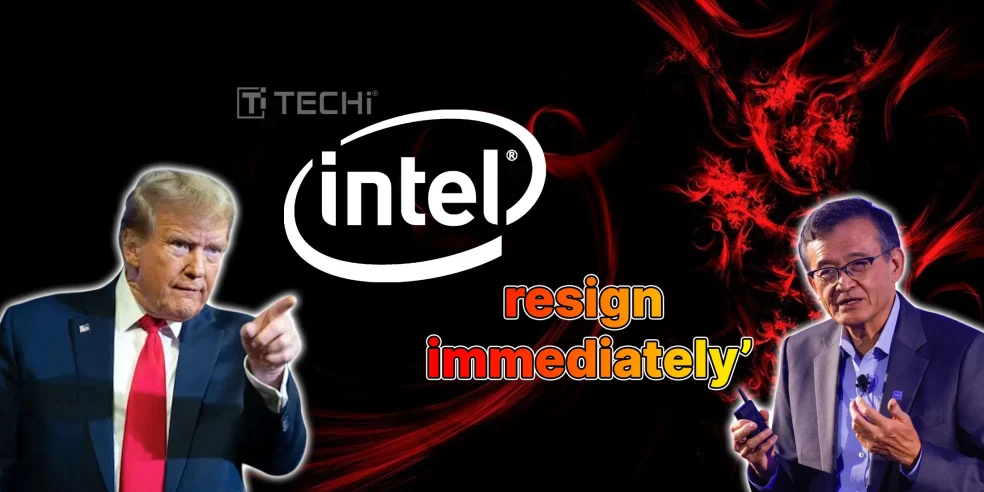

Donald Trump has directed President Lip-Bu Tan of Intel’s immediate resignation due to a claim that he had serious conflicts of interest. This request was executed in posts on his social media service, Truth Social, although he did not offer any particular data to support his arguments. The predicament has cast a cloud of doubt over one of the largest chipmakers in the world at a time when there is high tension between the U.S and China.
The remarks by Trump came after a letter by Republican Senator Tom Cotton who doubted the ties between Tan and China. Tan was previously CEO of Cadence Design Systems, which at one time had a Chinese military university as a client, and the letter used that to cast aspersions on Tan. Although these allegations are still not substantiated, they have riled political leaders who consider semiconductor manufacturing to be a national security matter.
In March of 2025, Lip-Bu Tan was appointed as the CEO of Intel and he undertook sweeping changes in the company. Intel, under his watch, has retrenched thousands of workers, scrapped the idea of building new plants and started to dispose of non-core operations. One of Tan’s objectives therefore is to restore Intel to being one of the chip innovators especially in the dynamic world of AI, which arguably now is dominated by Nvidia and AMD.
This is an important transition to create Intel leadership at a time when it is an essential member of the Biden administration concerning the CHIPS Act. The government has pledged the company about $8 billion dollars to increase chipmaking in America. This being the case, a change in the leadership of Intel would have massive implications not only to the company but also to the direction of the country as far as technology is concerned.
Intel has not yet reacted to the allegations and request of Trump. This is a developing situation and it indicates the extent to which politics and international competition are affecting the tech world. It is unknown whether Tan will resign; however pressure is building and the focus is now on what Intel will do next.