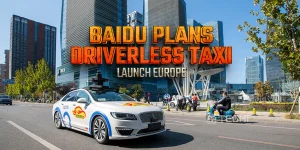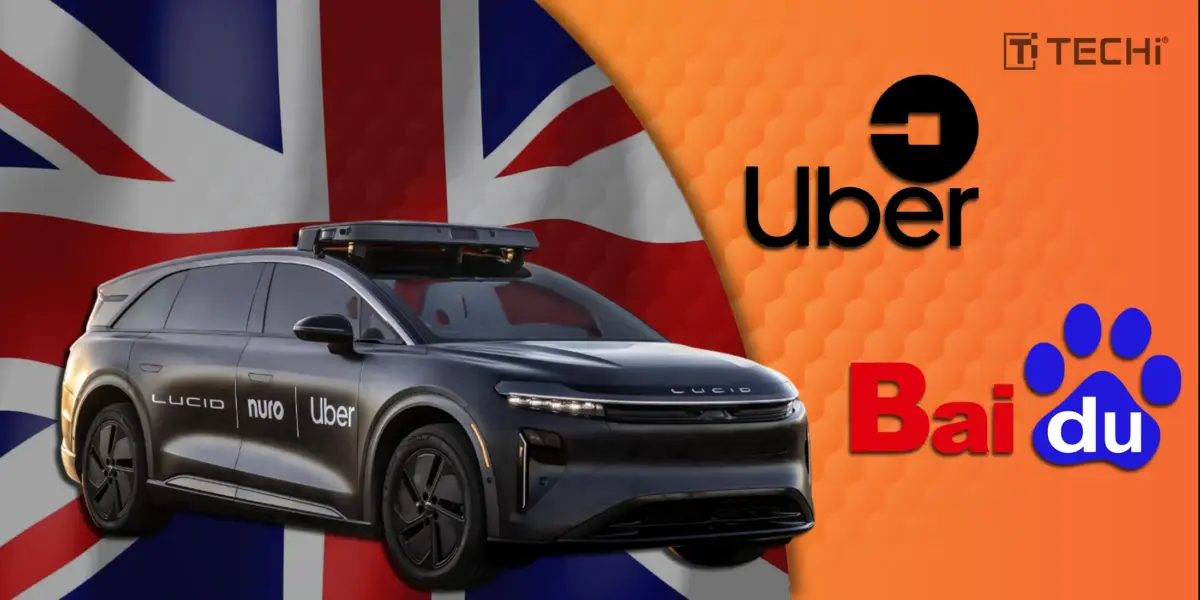
Uber is also preparing the future of taxi-sharing through the collaboration with the Baidu corporation of China to introduce the tests of Robotaxi in the United Kingdom.
The trials will start in early 2026 based on Baidu’s smooth Apollo Go RT6 automobiles, as a continuation of their current international collaboration.
Partnership Roots
The move increases the collaboration of Uber and Baidu, wherein the latter utilizes the autonomous technology of Baidu to run rides on the Uber platform in China.
Apollo Go’s total autonomous driving mileage has exceeded 240 million kilometers, with a global footprint spanning 22 cities and more than 17 million cumulative rides completed as of Oct 31, and it demonstrates the superiority of Baidu in high-density urban navigation.
Uber does not need to develop its own technology, but by cleverly utilizing the AI capabilities of Baidu, the ride hailing service will get a higher technological advantage as the UK demand to drop mobility increases with driverless cars.
Market Momentum
Last month, Alphabet Waymo competitor Waymo only began testing in London, which made it more competitive.
According to the McKinsey 2025 Autonomy Report, Robotaxi would reduce the cost of human drivers by 40-60%. BIDU shares rose 2.76% to $123.82 on December 22, and UBER fell 0.43% to $79.31 as the market continued to move in the wrong direction.
The market size of global Robotaxi would be worth $45.7 billion by 2030, Globally, at a CAGR of 91.8%, Says MarketsandMarkets™. According to ARK Invest Analyst Sam Korus, Uber will be in a position to win the race of autonomy in Europe by blending size and novel AV technology.
Future Outlook
More importantly, the outcome depends on the UK policies-vigorous safety testing, with widespread doubts after recent AV accidents.
Startline Motor Finance CEO Paul Burgess said:
“There has been news of autonomous vehicles in the press for some years that has prompted a great deal of public interest but the situation will get real with tests starting on our roads next year.
The November Startline Used Car Tracker revealed that 64% of motorists feel uneasy about sharing roads with autonomous vehicles once testing starts.
“Findings show there is a high degree of nervousness around their arrival, which is very much understandable. Suddenly finding yourself sharing a road with a vehicle that has no driver will be a new and unnerving experience for most motorists. Responding to that situation by driving more cautiously is a very human response.”