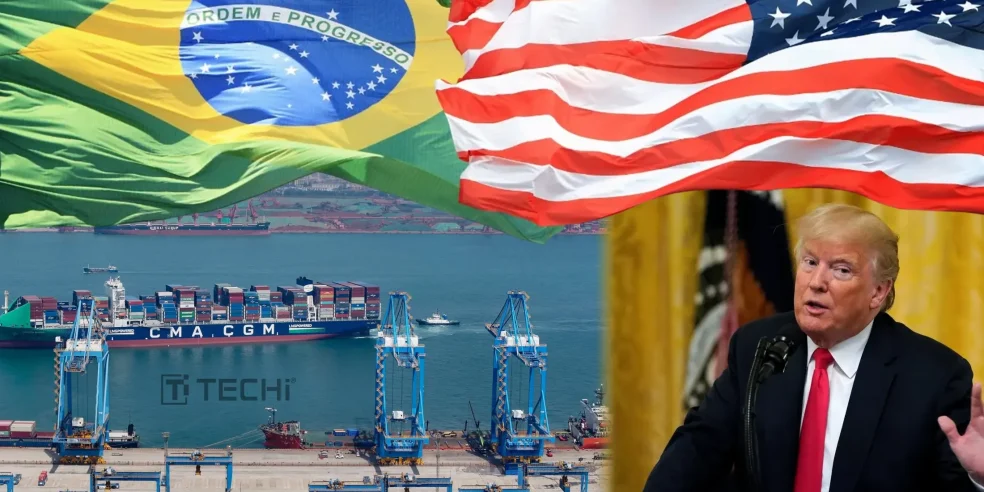
The United States has blamed Brazil’s trade practices and accused the country of creating unfair barriers for American companies. This shows a new barrier in the relationship between the two countries, which have avoided major trade clashes many times. But due to the politics involved, things are now heating up quickly.
The investigation is being carried out under Section 301 of the U.S. Trade Act. This law is often used when the U.S. believes that another country is treating its businesses unfairly. This same law was implemented when the trade war with China happened in Trump’s first term. Now, it’s being turned toward Brazil, even though the U.S. actually makes more money from Brazil than it spends on it.
U.S. Trade Ambassador Jamieson Greer says Brazil is harming American companies in multiple ways, like blocking access to digital markets, raising tariffs on ethanol, giving better deals to other countries, and allowing courts to target U.S. tech firms.
There’s also concern about Brazilian courts pressuring platforms to remove political content. In particular, they asked to remove the posts in support of former President Jair Bolsonaro, who’s on trial for trying to overturn the 2022 election. Bolsonaro, a Trump ally, is a major personality in this dispute.
Trump accused Brazil’s government of political censorship and sent a personal letter to President Lula, saying that this case is a witch hunt. This makes the investigation more than just about trade; it’s about defending political allies.
The Ethanol Market Access 🔗
One key issue is that Brazil earlier promised the U.S. free access to its ethanol market, but recently, it reversed that decision and raised taxes on ethanol trade. The U.S. has noticed that Brazil is failing to protect American intellectual property, which is affecting software companies, creative industries, and even the agriculture sector.
At the same time, U.S. officials claim Brazil favors some countries with lower tariffs, while American exporters face higher costs. These moves could violate international trade rules.
President Lula da Silva didn’t hold back in his response. He said the U.S. is using trade as a weapon to interfere with Brazil’s internal affairs, especially the trial against Bolsonaro.
“The United States does not have a trade deficit with Brazil. It’s Brazil that has a deficit with the U.S.,”
Lula said.
“I should be the one taxing them.”
Last year, Brazil bought more goods from the U.S. than it sold to them, making it a trade deficit for Brazil. On the other hand, the U.S. made a profit of $6.8 billion from trade with Brazil in 2024.
In fact, the U.S. has had this trade advantage for the past 18 years. That’s why Brazil believes the U.S. investigation is not really about trade, but more about politics.
Lula says he’ll fight back, not only through public remarks but by filing a complaint with the World Trade Organization (WTO) and rallying support from other BRICS nations.
Trump’s Warning to All BRICS Nations 🔗
Trump’s threat isn’t limited to Brazil. He has also suggested a 10% tariff on all BRICS countries, including China, India, Russia, and others, claiming it’s needed to protect the U.S. dollar from being weakened by alternative trade systems.
There are no details that have been shared about when or how this tariff would be applied, but the idea shows how Trump is linking trade policy directly with global political strategy.
Many BRICS countries, including Brazil, are already discussing ways to reduce reliance on the U.S. dollar, such as using local currencies or launching a shared payment system. If that happens, America could lose its influence in global trade deals.
Another part of the investigation focuses on illegal deforestation. This related with the older trade agreements where environmental promises were made. If Brazil is found breaking those terms, it could lose deals not just with the U.S. but also with Europe, which has strict green trade policies.

Brazil’s way of handling the Amazon rainforest has already caused problems with the European Union and environmental groups. Now, it’s also becoming a trade issue with the United States.
For Brazil, new tariffs could hit steel, agriculture, ethanol, and other exports. For the U.S., American tech and energy companies operating in Brazil may face tighter rules or public backlash.
There’s also the risk that Brazil will start working more closely with China or India. They will focus on using alternative platforms to reduce dependence on American technology.
Final Thoughts 🔗
This situation isn’t just about taxes or trade balances. It’s turning into a broader political clash with Trump. Brazil is trying to protect its own decisions and stand up against what it believes is unfair pressure from the U.S. What started as a trade complaint is now tangled with issues of free speech, legal systems, and international alliances. The next few weeks will reveal that this is just posturing or the start of something much bigger between two powerful economies.