

When this page first ran in 2013, the self-driving car story was framed as a future-car fantasy: fewer crashes, less congestion, and cleaner commutes. The better 2026 angle is sharper. Autonomous vehicles are becoming AI infrastructure on wheels: sensor-rich fleets, generative simulation, edge-case training, safety reporting, compute-heavy model updates, and city-by-city operating data all reinforcing one another.
This TECHi refresh uses public data available as of May 24, 2026. The original published date remains January 11, 2013, but the article has been substantially updated with a new AI-first thesis, a new TECHi-watermarked infographic, and current safety, emissions, and autonomous-driving data.
- The new angleSelf-driving cars are no longer just a vehicle feature story. The strongest 2026 frame is embodied AI: fleets collect road data, world models simulate rare scenarios, and software policy improves before deployment.
- The safety baselineNHTSA estimated 36,640 U.S. traffic deaths in 2025, down 6.7% from 2024, with a fatality rate of 1.10 deaths per 100 million vehicle miles traveled.
- The regulation layerNHTSA continues to publish Standing General Order crash data for ADS and Level 2 ADAS systems; the latest public data window covers June 16, 2025 through April 15, 2026.
- The AI unlockWaymo’s 2026 World Model shows where autonomy is heading: generative simulation that can create camera and lidar scenes for long-tail events that fleets may rarely encounter in the real world.
The New Self-Driving Thesis: AI Infrastructure, Not Just Autopilot
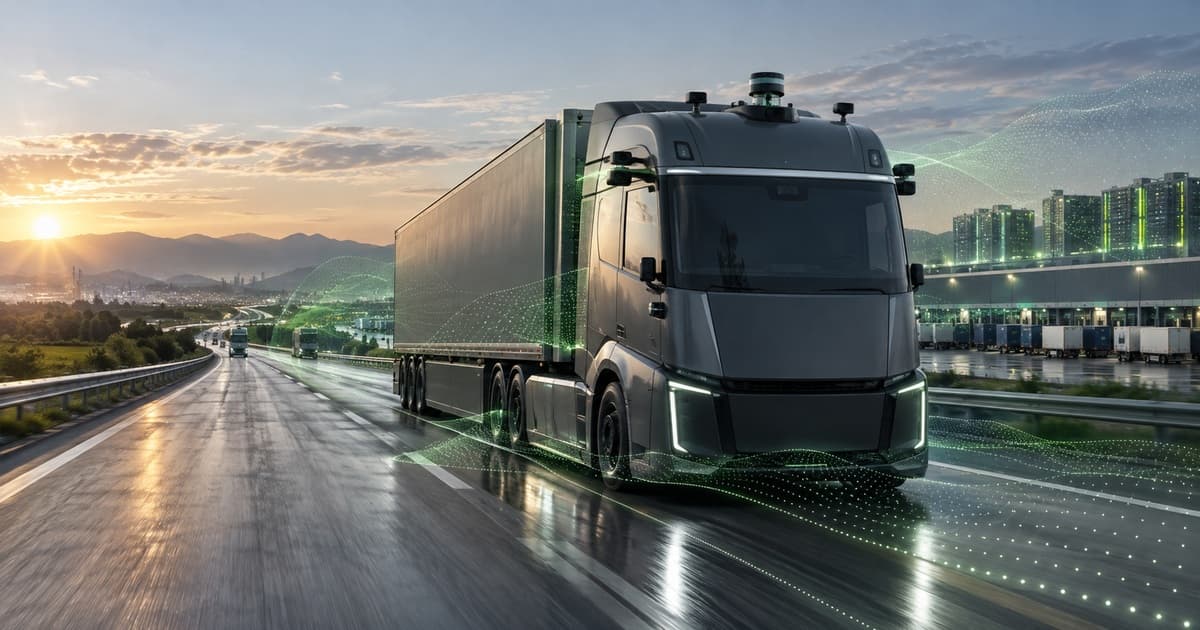
A modern self-driving stack looks less like a driver-assistance option and more like a vertically integrated AI system. Cameras, radar, lidar, maps, driver policy, fleet operations, remote assistance, safety cases, and regulatory reporting all become part of the same data loop. The economic prize is not one clever car. It is the operating system for urban mobility.
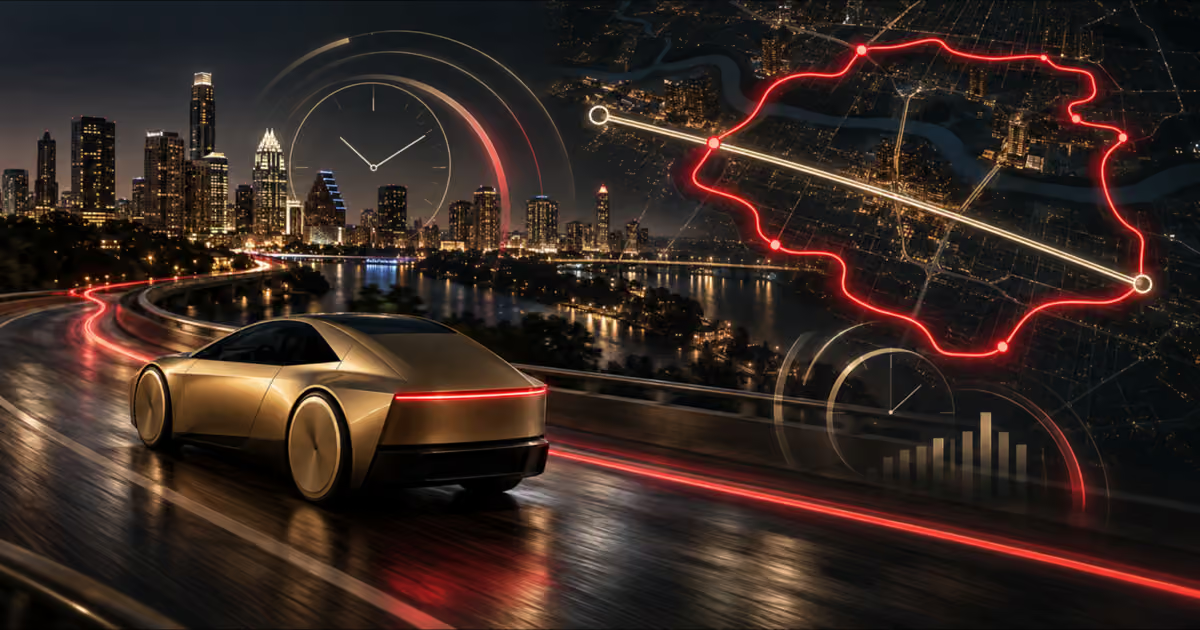
That is why the most useful comparison is now between companies that own the whole loop and companies that only rent pieces of it. Tesla wants robotaxi density to make the fleet economics work; TECHi has covered that angle in Tesla Robotaxi’s New Test: Vehicles Per Square Mile. Uber’s story increasingly depends on AI dispatch and autonomous partners, a frame we explored in Is Uber Stock Becoming an AI Dispatch Bet?. Nvidia sits upstream as the compute supplier to the broader autonomy race, which is why NVIDIA vs Tesla: AI Infrastructure vs Robotaxi Bet in 2026 matters to this discussion.
Why World Models Changed the Autonomy Story
The hard part of autonomy is not the sunny-lane demo. It is rare, ambiguous, high-consequence driving: the wrong-way vehicle, the temporary lane closure, the pedestrian hidden by a truck, the road user behaving irrationally, the weather that corrupts perception, and the local rule that is obvious to a resident but invisible to a generic model.
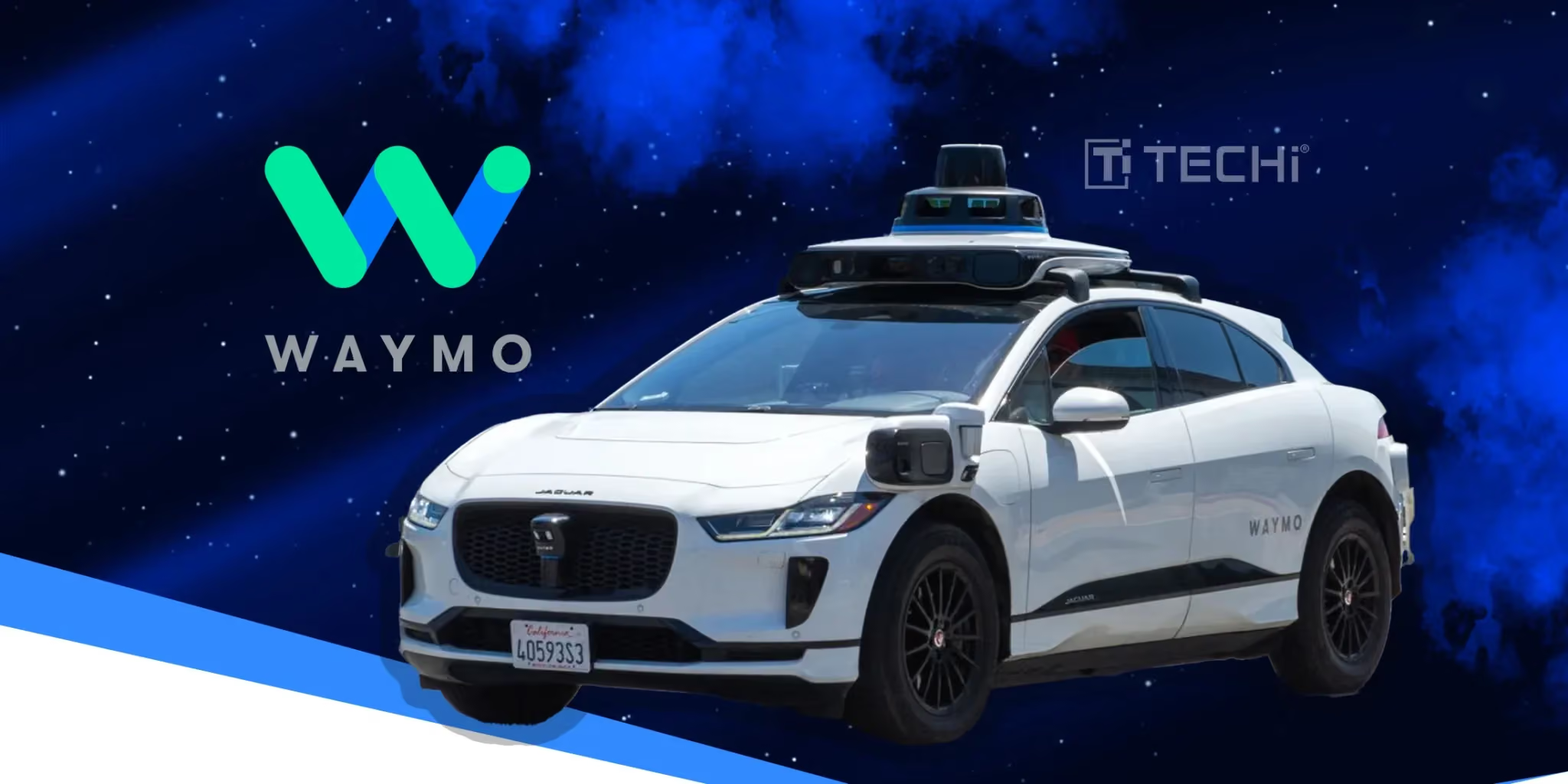
That is why Waymo’s February 2026 World Model disclosure is important. Waymo says its generative model is adapted from Google DeepMind’s Genie 3 and can produce high-fidelity camera and lidar simulations for driving scenes, including rare events that are difficult to capture at scale. In plain English: autonomy companies are starting to train road intelligence the way frontier AI companies train general intelligence, with a mix of real data, synthetic environments, and safety evaluation.
That does not make every claim credible. It makes the evidence standard higher. A company claiming autonomy in 2026 needs to show miles, crash data, disengagement context, fleet operations, software update discipline, and a defensible safety case. A demo video is not enough.
Safety Is the First Product
The public baseline remains brutal. NHTSA’s 2025 estimate shows 36,640 U.S. traffic deaths, down meaningfully from 2024 but still a major public-health problem. That is the reason the self-driving promise survived so many hype cycles: human driving is expensive, inconsistent, distracted, impaired, and often fatal.
But safety claims must be auditable. NHTSA’s Standing General Order crash-reporting page now anchors part of that audit trail by publishing incident files for automated-driving systems and Level 2 driver-assistance systems. Its latest public files cover reports from June 16, 2025 to April 15, 2026. The data is imperfect, but it gives regulators, researchers, and journalists a common starting point instead of relying only on company PR.
Waymo’s own Safety Impact dashboard reports 170.7 million rider-only miles through December 2025 and compares its rider-only crash rates to human benchmarks in operating cities. Waymo says the Driver had 92% fewer serious-injury-or-worse crashes and 82% fewer injury-causing crashes than the benchmark. Those are company-reported comparisons, but they are more useful than vague claims because the methodology and caveats are public.
The Climate Argument Is About System Design
Self-driving cars will not automatically solve emissions. They could reduce waste through smoother routing, higher utilization, fewer cold starts, and better fleet management. They could also increase miles traveled if robotaxis make car trips cheaper and more convenient. The emissions outcome depends on electrification, dispatch efficiency, occupancy, grid mix, and how cities regulate curb space.
The scale is large enough to matter. The IEA’s 2025 road-transport analysis says road-sector emissions were just over 6 Gt CO2 in 2024, with passenger cars and vans producing more than 60% of that total. Any autonomy thesis that ignores energy use is incomplete. The best case is not simply driverless cars; it is electric, high-utilization fleets coordinated by AI systems that reduce deadhead miles and smooth demand.
What This Means for Investors and Builders
The companies with the strongest position will own more than a vehicle. They will own the data path from road event to model update to operational rollout. That favors organizations with deep AI teams, real-world fleet scale, compute access, safety culture, regulatory muscle, and the patience to run city-by-city deployments. It also explains why autonomy belongs in the same conversation as AI capex. TECHi’s Tesla AI capex analysis is the related market question: how much cash can a car company turn into AI infrastructure before investors demand proof?
The updated infographic above is the short version: self-driving cars now sit at the intersection of safety data, simulation, fleet learning, and energy efficiency. That is the angle that makes the old 2013 forecast worth revisiting in 2026.
Bottom Line
Self-driving cars still promise safer, cleaner, less stressful transportation. What changed is the mechanism. The future is not one magic car that knows how to drive everywhere. It is an AI infrastructure stack that learns from real fleets, synthetic worlds, regulator-visible incident data, and city-scale operations. The winners will be the companies that can prove the loop works safely, repeatedly, and economically.
Data note: this article was refreshed on May 24, 2026 using public data from NHTSA traffic-death estimates, NHTSA SGO crash reporting, Waymo’s World Model disclosure, Waymo Safety Impact, and the IEA road-transport transition data.

About the Author
Brian WallaceBrian Wallace is the President of NowSourcing, Inc., a premier social media firm specializing in infographic design, development, and content marketing promotion. The company is based in Louisville, KY, and works with companies that range from small businesses to Fortune 500. Brian Wallace contributed articles on software and cloud computing and consumer technology to TECHi.



Comments