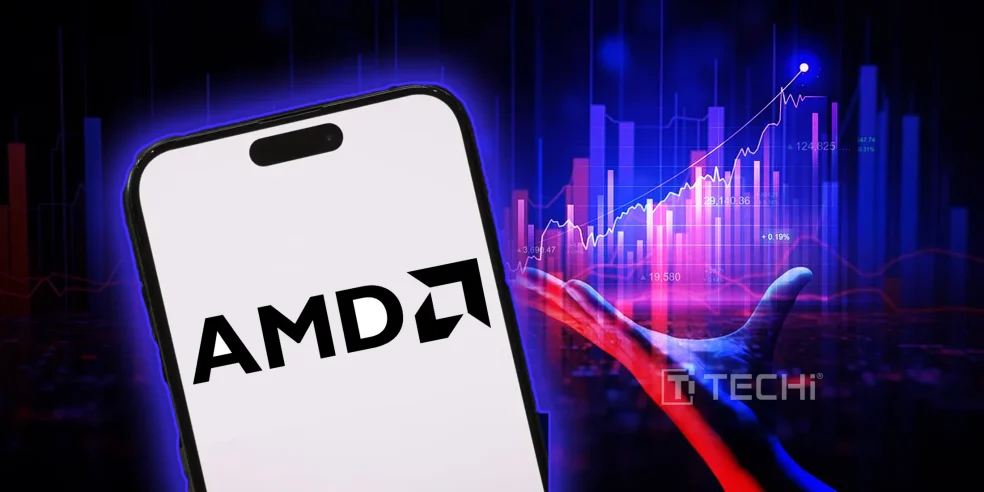

AMD’s recent momentum isn’t only the outcome of surfing the AI wave, rather it’s the result of several years of clever positioning, aggressive R&D, and calculated risk-taking in a brutally competitive semiconductor landscape. The company is successfully walking the line between two giants, which is Intel in CPUs and Nvidia in GPUs.
While Nvidia is ruling the AI-acceleration at the moment, AMD is also showing that it’s possible to have a legitimate second dominating force in the line, particularly with its open-source ROCm strategy and deep collaborations with cloud titans. However, investors who are investing in AMD are not only risking current earnings, but they are also betting that AMD can innovate and outsmart larger, wealthier competitors without making any mess in its execution.
AMD’s power comes from its diversified product portfolio, execution excellence in CPUs, and legitimate AI aspirations supported by the MI350 and future MI400 series. Its deals with Microsoft, AWS, Meta, and OpenAI are not just logos, they’re pipelines into an enormous AI infrastructure spending. If AMD can continue scaling GPU performance at competitive pricing points, it has the potential to gain double-digit share in AI accelerators, which is a market expected to exceed $500 billion in 2028.
AMD is in a fortunate but a delicate position. Its valuation already accounts for a good amount of AI growth, with not much room left for significant execution mistakes. It won’t necessarily overthrow Nvidia in AI, as it doesn’t need to, but even a small share gain in the booming AI market would meaningfully increase revenue and margins.
AMD’s AI aspirations may be the beginning of its most revolutionary period to date, but only if it is able to convert its technical advancements into market position ahead of the rivals. The game of semiconductors has no permanent winners, and currently AMD has the unique opportunity to transition from an aggressive follower to a market leader. Whether it acts on that moment or falters under competitive stress will decide whether today’s optimism is tomorrow’s legacy or is it just another wish in the archives of the tech industry.