Kalanick's Atoms Raised $1.7B to Own the Machines, Not Sell Them
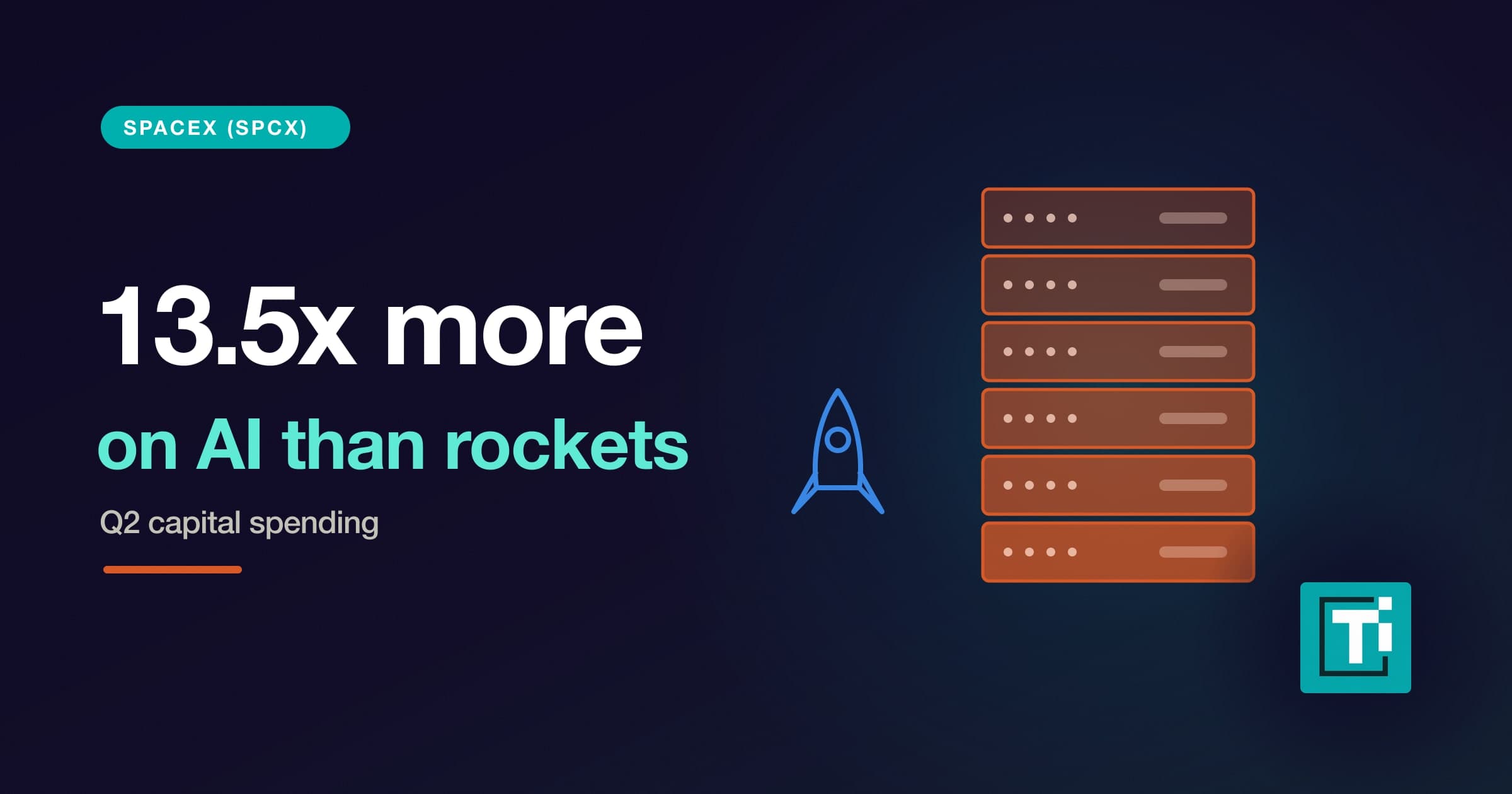
Kalanick's Atoms raised $1.7B led by a16z, with no valuation disclosed — a bet that physical-AI profit belongs to whoever owns the kitchens, mines and trucks.
Recent
quick returnPopular searches
live pathsWhere machine intelligence meets capital
Frontier AI analysis — model benchmarks, infrastructure deep-dives, and the strategy notes that connect new architectures to investable theses.
464 stories · Page 1 of 20

Kalanick's Atoms raised $1.7B led by a16z, with no valuation disclosed — a bet that physical-AI profit belongs to whoever owns the kitchens, mines and trucks.

Alphabet posted record Q2 2026 net income and its first negative free cash flow together. Why $44.9B of AI capex — not the profit — is the real story.

Black Forest Labs' FLUX 3 puts image, video, audio and robot-action prediction in one model — and holds the open weights back. Here's the market read.

Upper90 will lend General Compute up to $400 million secured by SambaNova inference chips, not Nvidia GPUs. Why inference silicon as loan collateral is an untested bet.

Fireworks AI raised $1.505B at a $17.5B valuation. The number that matters is 95%: nearly all its tokens come from customer-specialized models, not raw open weights.

Tesla fell 14.5% to an 11-month low after Q2 margins hit 1.4%. Post-earnings analyst price targets now split from $130 to $600 — here's what it means for TSLA.

Tesla's Q2 2026 revenue rose 26% to a record $28.24B, but operating income fell 57% and margin sank to 1.4% as robotaxi and AI capex hit $5.79B. What it means for TSLA.

Moonshot AI's Kimi K3, the largest open-weight model ever, opens July 27. It's cheap per token but needs ~1.4TB resident — here's who can really run it.

OpenAI, Meta, NVIDIA/ServiceNow, and Google shipped enterprise agent platforms in a month — and disagree on what the product is. The market-structure read for buyers.

Google shipped Gemini 3.6 Flash, 3.5 Flash-Lite, and a restricted 3.5 Flash Cyber model. Why the gated cybersecurity variant is the real signal in the release.

Palantir stock fell about 6% on July 22 as NHS scrutiny, an open-source tool, and valuation nerves converged. Why the real test is the August 3 earnings print.

From August 2, 2026 the EU's AI Office can audit GPAI models, demand fixes and fine up to 3% of turnover. Who is exposed — and what to verify now.

LangChain now standardizes reasoning effort across OpenAI, xAI and Fireworks, but identical labels still hide different cost, latency and model behavior.

GPT-5.6 is on Amazon Bedrock, but pricing, context limits, caching and contract terms determine whether AWS commitments create real enterprise savings.

Replit says AI agents lifted same-cohort code output 2.9x. Its architecture looks credible, but the productivity case still needs a controlled cost test.

Kimi K3’s API is live, but its weights, license and self-hosting stack are not. TECHi audits the 64-accelerator gap behind Moonshot AI’s claims today.

OpenAI now alerts parents when linked teen accounts are banned for violent activity. Here is what ChatGPT parental controls do—and what they cannot see.

Grok 4.3 reaches Bedrock through Mantle, but runtime incompatibility, regional limits, retention, and retry behavior make enterprise portability conditional.

NVIDIA says its 32GB Jetson T3000 can match T5000 inference. TECHi examines the missing methodology, memory economics and 2027 hardware timeline for buyers.

Thinking Machines Lab's Inkling publishes open weights, but its 600 GB VRAM floor, limited fine-tuning contexts and launch-day gaps complicate ownership.

AWS gives AI agents authenticated OpenSearch access. Here is how IAM, approvals, data-plane audits, and recovery determine production safety.

AWS added a guided SageMaker UI for AI inference recommendations. TECHi explains why workload assumptions, not the button, still decide cost and speed.

Meta says its Louisiana AI data center could reach 5 GW and exceed $50B. TECHi separates the expansion claim from the power assets regulators have approved.

TCS plans a forward-deployed AI engineering team of up to 8,900 people, testing whether client-embedded delivery can turn AI skills into durable revenue.