

The people moving compute, capital, models, and belief.
Database-backed rankings of AI leaders — founders, operators, researchers, and investors — sorted by TECHi influence score.
Tracked leaders
26
Active profiles
Companies
21
Connected orgs
Founders
10
Builder-operators
Researchers
7
Science & models
Ranked by influence
26 leaders tracked· top score 99
 #1
#1Jensen Huang
Founder and CEO, NVIDIA
NVIDIA
NVDA+2.54% today
Jensen Huang co-founded NVIDIA in 1993 and has run it ever since, turning a graphics-chip company into the dominant supplier of AI training and inference compute. His projection of $1 trillion in Blackwell and Vera Rubin platform orders through 2027 has become the reference number for the entire AI buildout.
 #2
#2Sam Altman
CEO, OpenAI
@sama
Sam Altman runs OpenAI, the company whose ChatGPT put a frontier model in front of more than 900 million people a week. His current bet is that owning compute matters more than winning any single model release — a stance he doubled down on after publicly conceding the GPT-5 launch was botched.
 #3
#3Dario Amodei
CEO, Anthropic
@DarioAmodei
Dario Amodei co-founded Anthropic after leading research at OpenAI, and has built it into a $47 billion revenue run-rate business on the Claude models and Claude Code. He is also the frontier-lab CEO who lost the entire U.S. federal government as a customer on principle, refusing the Pentagon unrestricted military use of Claude.
 #4
#4Demis Hassabis
Co-founder and CEO, Google DeepMind
@demishassabis
GOOGL+1.30% today
Demis Hassabis co-founded DeepMind, shared the Nobel Prize in Chemistry for AlphaFold, and led Google DeepMind until handing day-to-day command to Koray Kavukcuoglu. He is now chair of Google DeepMind and Alphabet's chief scientist — a move up, sideways, or out, depending on whom you ask.
 #5
#5Satya Nadella
Chairman and CEO, Microsoft
@satyanadella
MSFT+1.52% today
Satya Nadella is chairman and CEO of Microsoft, where he converted an early OpenAI partnership into roughly 27% ownership of the restructured company, $250 billion in committed Azure purchases, and IP rights running through 2032. Under his AI push, Azure passed $100 billion in annual revenue for the first time and Microsoft 365 Copilot passed 30 million paid seats.
 #6
#6Sundar Pichai
CEO, Google and Alphabet
@sundarpichai
GOOGL+1.30% today
Sundar Pichai is CEO of Google and Alphabet, the company whose search business was supposed to be AI's first casualty. Instead he pushed Gemini into Search, Android, Workspace, and Cloud — and Alphabet crossed a $4 trillion market cap after Apple agreed to run future Siri features on Gemini.
 #7
#7Lisa Su
Chair and CEO, AMD
@LisaSu
AMD+6.36% today
Lisa Su is chair and CEO of AMD, which she took from near-irrelevance in 2014 to a record $11.5 billion quarter with data-center revenue of $6.7 billion — more than double the prior year. Her Instinct GPUs and Helios rack systems are the merchant-silicon alternative that hyperscalers and OpenAI are now ordering at scale.
 #8
#8Mark Zuckerberg
Founder and CEO, Meta
@finkd
META+1.34% today
Mark Zuckerberg is the founder and CEO of Meta, where a disappointing Llama 4 launch pushed him to tear up his AI org chart and rebuild it around outside talent. He paid $14.3 billion for 49% of Scale AI, installed its founder Alexandr Wang as chief AI officer, and folded Meta's AI work into Meta Superintelligence Labs.
 #9
#9Andy Jassy
President and CEO, Amazon
@ajassy
AMZN+2.13% today
Andy Jassy is president and CEO of Amazon, and the founding head of AWS before that. He is directing roughly $200 billion of annual capital spending into AI infrastructure — data centers, power, and Amazon's own Trainium chips — with an expanded Anthropic partnership anchoring the demand for it.
 #10
#10Elon Musk
Founder, xAI
@elonmusk
Elon Musk folded xAI into SpaceX in an all-stock deal that valued the AI startup at about $250 billion and created, by valuation, the largest corporate merger on record. He now runs Grok, X, and a space-and-AI conglomerate on the thesis that AI's power constraint ultimately gets solved in orbit.
 #11
#11Aravind Srinivas
CEO, Perplexity
@AravSrinivas
Aravind Srinivas co-founded Perplexity in 2022 after research stints at OpenAI and DeepMind, betting that search should return cited answers instead of ten blue links. Three years in, that bet is worth a $20 billion valuation — and an open fight with Google.
 #12
#12Arthur Mensch
Co-founder and CEO, Mistral AI
@arthurmensch
Arthur Mensch left Google DeepMind — where he co-authored the Chinchilla scaling-laws paper — to co-found Mistral AI in 2023 with Guillaume Lample and Timothée Lacroix. The Paris lab is now Europe's answer to OpenAI, with revenue past a $400 million run rate and chipmaker ASML anchoring its cap table.
 #13
#13Yann LeCun
AI researcher and Turing Award winner
@ylecun
META+1.34% today
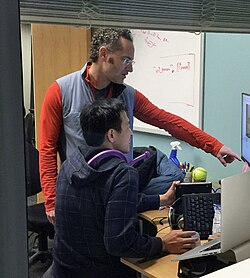
Yann LeCun invented the convolutional neural network that modern computer vision is built on, shared the 2018 Turing Award, and spent 12 years as Meta's chief AI scientist. He left in November 2025 to found AMI Labs, a Paris-based startup building world models — his long-argued alternative to large language models.
 #14
#14Alex Karp
Co-founder and CEO, Palantir
Palantir
PLTR+1.09% today
Alex Karp is the co-founder and CEO of Palantir — a philosophy PhD whose company nearly doubled revenue year over year, to $1.94 billion in a single quarter, on demand for its Artificial Intelligence Platform. He has run the company since founding it with Peter Thiel and others in 2003.
 #15
#15Fei-Fei Li
Co-founder and CEO, World Labs
@drfeifei
Fei-Fei Li's ImageNet made a heretical claim stick: that data, not algorithms, was computer vision's real bottleneck — and AlexNet's 2012 breakthrough on her benchmark proved it. She now leads World Labs as co-founder and CEO, where the Marble model generates persistent, editable 3D worlds, alongside her Stanford professorship and co-directing role at Stanford HAI.
 #16
#16Jared Kaplan
Co-founder and Chief Science Officer, Anthropic
Anthropic
Before Anthropic existed, Jared Kaplan wrote the scaling-laws paper showing model performance improves as a predictable function of compute, data, and parameters — the curve every frontier lab now budgets against. A Harvard-trained theoretical physicist who spent years on quantum gravity, he co-founded Anthropic and serves as its Chief Science Officer, where he helped create Constitutional AI.
 #17
#17Andrew Ng
Founder, DeepLearning.AI
@AndrewYNg
Andrew Ng founded Google Brain, put the Stanford machine-learning course online that seeded Coursera, and now runs DeepLearning.AI alongside the venture studio AI Fund. His courses remain the default on-ramp for working engineers moving into machine learning.
Andrej Karpathy
Founder, Eureka Labs
@karpathy
'Software 2.0' — the claim that neural networks are replacing hand-written code — was Andrej Karpathy's phrase before it became industry consensus. An OpenAI co-founder and former Tesla AI director, he taught a generation of engineers through nanoGPT and nanochat, ran the education startup Eureka Labs for about 22 months, then joined Anthropic's pretraining team in May 2026.
 #19
#19Michael Truell
Co-founder and CEO, Anysphere (Cursor)
@mntruell
Michael Truell co-founded Anysphere in 2022 with three MIT classmates and built Cursor, the AI-native code editor that forked Microsoft's own VS Code and sold it back to developers. The result: past $1 billion in annualized revenue within about three years and a $29.3 billion valuation.
 #20
#20Ilya Sutskever
Co-founder, Safe Superintelligence
@ilyasut
Three eras of deep learning run through Ilya Sutskever: AlexNet, which proved neural networks worked; the GPT scaling bets he drove as OpenAI's chief scientist; and Safe Superintelligence, the lab he now runs as CEO on one premise — build safe superintelligence and ship nothing else first. He took the CEO seat after Meta hired away co-founder Daniel Gross.
 #21
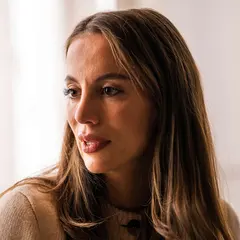
#21Mira Murati
Founder, Thinking Machines Lab
@miramurati
Mira Murati was OpenAI's chief technology officer through the ChatGPT era — and its interim CEO during the days after Sam Altman's ouster — before leaving to found Thinking Machines Lab. Her startup raised a $2 billion seed round, the largest on record, before shipping a product.
 #22
#22Mustafa Suleyman
CEO, Microsoft AI
@mustafasuleyman
MSFT+1.52% today
Mustafa Suleyman is CEO of Microsoft AI, his third act after co-founding DeepMind and the assistant startup Inflection AI. Microsoft brought him aboard through a $650 million licensing deal that absorbed most of Inflection's staff, and has since narrowed his mandate to the part he cares most about: building Microsoft's own frontier models and its superintelligence effort.
Clement Delangue
Co-founder and CEO, Hugging Face
@ClementDelangue
Clement Delangue is the co-founder and CEO of Hugging Face, the platform where the open AI ecosystem hosts its models and datasets. Under him the company has pushed past hosting into hardware, selling the $70,000 Reachy 2 humanoid and a $299 desktop robot.
Aidan Gomez
Co-founder and CEO, Cohere
@aidangomez
Aidan Gomez co-authored 'Attention Is All You Need' — the paper that introduced the Transformer — as a Google Brain intern, then co-founded Cohere to sell language models to enterprises. Cohere's North platform now deploys AI agents inside banks, governments, and other buyers who keep data on their own infrastructure.
 #25
#25Alexandr Wang
Founder, Scale AI
@alexandr_wang
Alexandr Wang founded Scale AI at 19, built it into the data-labeling and evaluation backbone of the frontier labs, then left in 2025 when Meta invested $14.3 billion in Scale and made him its first Chief AI Officer. He now runs Meta Superintelligence Labs.
Thomas Wolf
Co-founder and CSO, Hugging Face
@Thom_Wolf
Thomas Wolf co-founded Hugging Face and, as chief science officer, created the Transformers library — the open-source package most machine-learning engineers use to load and run models. He now steers the company's research into small models and robotics.