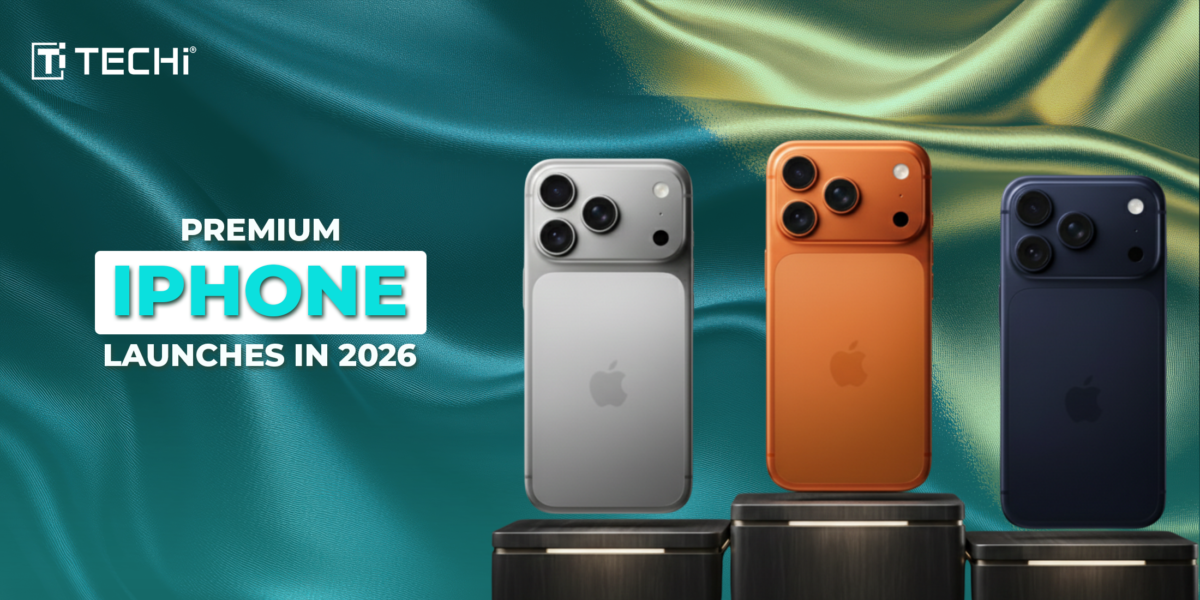
It is a radical redesign of how Apple is launching the iPhone in 2026, with the priciest models leading, and the standard iPhone 18 not coming out until the first half of 2027.
In January 2026, a report by Nikkei Asia said that the company would now focus on producing three high-end iPhone models at the end of 2026, including its first foldable iPhone, and delay the launch of the base model iPhone 18 to the first half of 2027.
Why the Shift? 🔗
The change is driven by two key influences; a tightening shortage of memory-chips, and a reshaping of the marketing policy.
Apple also depends on DRAM and NAND provided by Samsung and SK Hynix, though they in turn are focusing on the high-bandwidth memory needed by artificial-intelligence servers, which are in tremendous demand in applications in Nvidia, Google, and Amazon among others.
An executive at an iPhone supplier with direct knowledge of the plan told Nikkei Asia.
Supply chain smoothness is one of the key challenges for this year, and the marketing strategy change also played a part in the decision (to prioritize premium models).
What’s Coming in 2026 ? 🔗
In 2026, the company will make three high-end iPhones the central product of its flagship models that will be released in the second half of the year. The highlight is the first foldable iPhone produced by Apple, which implies increasingly complicated production procedures and the innovative materials, thus increasing the risk of production.
It will be accompanied by two high-end non-folding models that will be fitted with high-end camera systems and have bigger displays, with a clear mission of addressing the premium market segment.
Conversely, the regular version of the iPhone 18 will be pushed back and currently is estimated to be released in the first half of 2027, which is significantly unlike the yearly schedule of Apple. Such a strategy would enable Apple to assign its limited resources in memory and luxury materials into the models that generate the largest average selling price and gross margins.
Industry Environment and Prognoses 🔗
The memory scarcity is putting pressure on the greater electronics industry. Samsung and SK Hynix have warned that the smartphone and personal computer companies will be the major victims of the shortage and multiple Chinese suppliers, such as Xiaomi, Oppo, Vivo, and Transsion, have already reduced their 2026 shipment projections.
The strategy used by Apple reflects a speculation that strong demand in its flagship products would continue to be experienced, despite the increasing prices. In Q1 2026, Apple registered higher revenue than was forecasted by Wall Street which was helped by rebounding demand of the recent iPhones, especially after making a strong recovery in China.
Apple is virtually selling volume in 2026 instead of 2027 and displacing the standard model, which is, in fact, a cleaner way to boost profit margin and an easier transition to volume production. Going forward, the move indicates that Apple believes that most of its growth and profitability can be derived through the high-end market particularly with more sophisticated features such as foldable and AI driven functionalities becoming differentiators.
Even though some mid-end customers will be irritated by the fact that the standard iPhone is delayed, investors will be inclined to compensate for the focus Apple places on profitability and stability of the supply chain since by 2026 the price of memory will still be high.