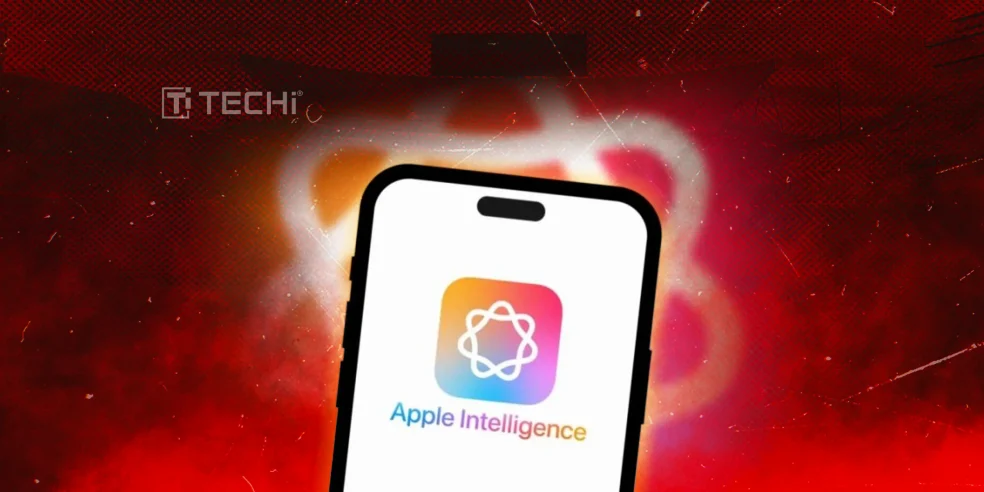
Apple’s latest AI initiative, unveiled at WWDC 2025, takes a unique approach by prioritising user privacy. Instead of relying heavily on the cloud, Apple runs most AI features directly on the device. While this approach might limit some competitive advantages that rival companies, which focus more on cloud-based AI, can leverage, it sets Apple apart in an increasingly crowded AI landscape.
A privacy-first AI experience 🔗
At its Worldwide Developers Conference, Apple introduced a suite of new AI-powered features across its devices, including the iPad, Mac, Apple Watch, and Apple Vision Pro, collectively branded as Apple Intelligence. Unlike competitors that often rely on the cloud for AI processing, Apple runs several of its AI models directly on its latest chips, like the A18 and A18 Pro. This local processing ensures that user data stays on the device, significantly reducing privacy risks.
For example:
- Messaging App: Apple Intelligence now automatically filters texts from unknown senders, prioritizing important messages (like login codes) in the main inbox, while sending suspected spam to a separate folder.
- Call Screening: The updated feature automatically identifies potential spam calls, asks the caller for information, and processes the response locally on the device, allowing users to decide whether to answer.
- Live Translation: Conversations can be translated in real time directly on the device, without any data being sent to the cloud, enabling seamless multilingual communication.
This approach emphasizes privacy and security, with AI tasks handled locally on the device rather than relying on cloud services.
Balance power and privacy 🔗
Apple’s integrated hardware-software ecosystem allows it to ban Apple intelligence for new devices with powerful chips, ensuring smooth local AI performance. It is contradictory with other companies that must accommodate a wide range of older devices, often relying on Cloud AI to bridge the performance interval. Apple’s private cloud computing service AI supplements it by securely handling tasks, requiring cloud resources, which guarantees strict privacy and no data sharing with Apple.
Developers Foundation also receives new equipment with the model framework, making them able to embed the on-device AI abilities of Apple Intelligence in their apps. The Foundation Models framework is a new Apple developer tool that lets apps use powerful AI models directly on Apple devices. This means AI features like text generation, image creation, and personalized suggestions run locally without sending data to the cloud, ensuring user privacy. It’s easy to integrate with just a few lines of Swift code and works offline, enabling faster, secure, and smarter app experiences within the Apple ecosystem. This step can highlight a wave of privacy-focused AI innovations in the Apple ecosystem.
Market reaction and future approach 🔗
Wall Street analysts said the keynote represented a “critical opportunity” for Apple to reassure investors and fans that it can stay competitive on AI. Last year, Apple unveiled its AI software suite, Apple Intelligence, which has suffered setbacks and delays. Apple did show off some new Apple Intelligence capabilities, but it also reiterated that it needed more time to develop some of its features, which would be arriving in the next year.
Further, Apple planned to expand language support and pursue AI features with availability for this decline. The company’s privacy-centred AI can reopen the expectations of the user, forcing the contestants to reconsider data handling practices. As AI becomes integral to everyday technology, Apple’s gamble on privacy can prove to be not only a moral stance but a business strategy.
Writer’s take: 🔗
Apple’s focus on local AI processing is a smart move that aligns with increasing privacy concerns. Although this feature can slow down the rollout, as it specifically puts Apple in competition with Cloud giants who dominate AI.