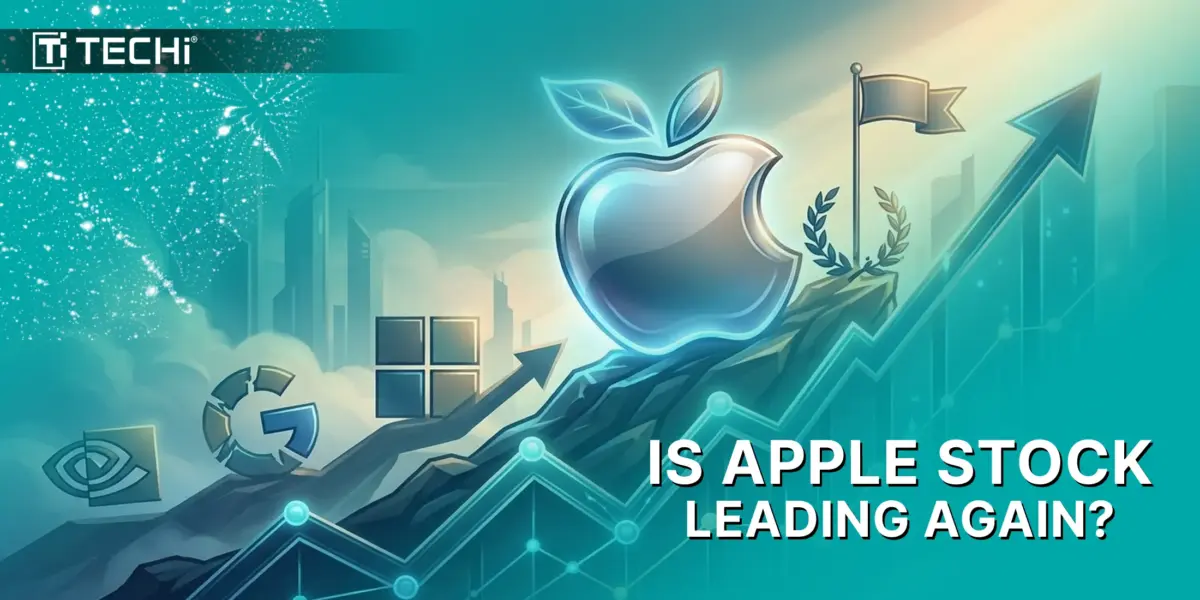
Apple Inc. (NASDAQ: AAPL) is the world’s most valuable publicly traded company, commanding a market capitalization of $3.73 trillion as of March 2026. As a cornerstone of the Magnificent 7 and a generational wealth compounder with returns exceeding 900% over the past decade, Apple stock remains one of the most widely held and closely analyzed equities on Wall Street. But with a forward P/E ratio north of 29x, investors need to understand whether AAPL can justify its premium valuation heading into the next phase of growth.
This comprehensive guide breaks down everything investors need to know about Apple stock in 2026 — from earnings performance and analyst price targets to the company’s AI strategy, Services growth engine, and iPhone super-cycle dynamics. Whether you’re evaluating AAPL as a buy, hold, or sell, this analysis provides the data-driven insights to make an informed decision.
Apple Stock Overview: Key Metrics at a Glance 🔗
Before diving into the analysis, here are the essential financial metrics every Apple investor should know:
| Metric | Value |
|---|---|
| Ticker | AAPL (NASDAQ) |
| Stock Price | ~$250 (March 2026) |
| Market Cap | $3.73 trillion |
| Trailing P/E | 31.75 |
| Forward P/E | 29.04 |
| TTM Revenue | $435.6 billion |
| TTM EPS | $7.87 |
| Dividend Yield | 0.42% |
| 52-Week Range | $169 – $275 |
| Active Devices | 2.5 billion |
| Analyst Consensus | Buy (avg. target ~$298) |
Q1 FY2026 Earnings: Record-Breaking Quarter 🔗
Apple’s fiscal first quarter of 2026 (ending December 2025) delivered results that silenced many skeptics. The company reported revenue of $143.8 billion, a 16% year-over-year increase and a record for any quarter in Apple’s history. Earnings per share came in at $2.84, beating the consensus estimate of $2.67 by 6.3%.
The standout performer was iPhone, which generated $85.3 billion in revenue — a staggering 23% increase year-over-year. CEO Tim Cook highlighted “double-digit growth in switchers” from Android and record iPhone upgrades during the earnings call, with demand described as “simply staggering.”
Greater China, a region that had been a persistent source of concern for Apple investors, delivered a stunning turnaround. Revenue from the region surged 38% to $25.5 billion, marking the biggest sales quarter there in four years and handily surpassing Wall Street’s estimate of $21.8 billion.
Services revenue set a new all-time record of $30 billion, up 14% year-over-year, while operating cash flow reached $53.9 billion for the quarter. Apple returned $28.9 billion to shareholders through $25 billion in stock buybacks and $3.9 billion in dividends.
The iPhone 17 Super-Cycle: What Investors Need to Know 🔗
The iPhone 17 launch in September 2025 has proven to be a pivotal catalyst for Apple stock. Data from Counterpoint Research showed that iPhone 17 outsold the iPhone 16 by 14% in its first 10 days post-launch in both the United States and China — numbers that caught even the most optimistic analysts by surprise.
Several factors drove the strong demand:
- Value proposition: The base iPhone 17 retained the same $799 starting price while delivering significant upgrades including a faster chip, improved display, more storage, and an enhanced front-facing camera
- China resurgence: Sales of the base model in China nearly doubled compared to the iPhone 16, driven by competitive pricing and strong promotional support from local retailers
- Carrier incentives: U.S. carriers increased trade-in discounts by approximately 10%, pushing consumers toward higher-priced Pro and Pro Max models
- iPhone 17 Air: The new ultra-thin model, positioned at $999, attracted buyers looking for a premium form factor
Multiple analyst firms responded positively. Loop Capital upgraded Apple from Hold to Buy with a $315 price target, while Wedbush’s Dan Ives maintained his bullish $310 target, calling the iPhone 17 cycle “better than expected.” Evercore ISI noted that consumer polling showed more than half of prospective buyers were gravitating toward the Pro or Pro Max models, which carries positive implications for average selling prices.
The cycle appears to have staying power. Unlike the tariff-driven “pull-forward” effect that temporarily boosted sales in mid-2025, the iPhone 17 demand reflects genuine consumer enthusiasm for the hardware improvements — a distinction that analysts say supports multi-quarter growth through 2027.
Apple’s AI Strategy: The Gemini Partnership and Apple Intelligence 🔗
The biggest strategic development for Apple in 2026 is its landmark partnership with Google to integrate Gemini AI models into Apple Intelligence and the long-awaited Siri overhaul. Announced in January 2026, the multiyear agreement positions Google’s Gemini as the foundational AI model powering Apple’s next-generation intelligent features.
Apple stated that “after careful evaluation, we determined that Google’s technology provides the most capable foundation for Apple Foundation Models.” Bloomberg reported that Apple is paying approximately $1 billion per year for the Gemini integration, after previously evaluating partnerships with OpenAI and Anthropic.
The AI rollout is happening in stages:
- iOS 26.4 (March/April 2026): Enhanced Siri with better personal context understanding, on-screen awareness, and deeper per-app controls
- WWDC 2026 (June): A fully conversational Siri powered by Gemini, capable of running on Google’s cloud infrastructure
- iOS 27 (Fall 2026): Full ecosystem-wide AI integration across all Apple devices
Critically for investors, Apple’s approach differs from the massive capital expenditure strategies pursued by Alphabet, Meta, and Microsoft. While those companies are spending tens of billions on AI data centers, Apple’s capital expenditure remains comparatively modest, focused on consumer-facing technology rather than infrastructure. This capital-light approach to AI has actually become a selling point among investors who are increasingly skeptical about the returns on massive AI infrastructure spending.
The non-exclusive structure of Apple’s AI partnerships is worth noting. Apple already works with OpenAI to integrate ChatGPT with Siri and Apple Intelligence, giving users the option to route complex requests to ChatGPT. This multi-model approach gives Apple flexibility while avoiding the risk of being locked into a single AI provider — a strategy consistent with Apple’s historical pattern of eventually bringing core technologies in-house.
Services: Apple’s $109 Billion Growth Engine 🔗
Apple’s Services segment has evolved from a side business into the company’s most important growth and margin driver. For fiscal year 2025, Apple reported Services revenue of $109.2 billion — up 14% from the prior year — with the segment now generating approximately 76% gross margins compared to roughly 37% for hardware products.
The Services ecosystem includes the App Store, iCloud+, Apple Music, Apple TV+, Apple Pay, AppleCare, and advertising. Key growth metrics include:
- App Store: Over 850 million average weekly users globally, with developers earning over $550 billion on the platform since 2008
- iCloud+: Subscriptions grew 15% year-over-year to more than 900 million active accounts
- Apple TV+: Subscriber base grew to 58 million, with Apple having invested $20 billion into original content
- Installed base: 2.5 billion active devices worldwide provide a massive monetization runway
CFO Kevan Parekh guided for “services revenue to grow at a year-over-year rate similar to what we reported in fiscal year 2025,” which analysts interpret as conservative language that could indicate acceleration.
The potential monetization of Apple Intelligence through a premium subscription tier represents a significant upside catalyst. With 2.5 billion active devices, even modest adoption rates could generate billions in additional recurring revenue. Analysts at Morgan Stanley estimate that an “Apple Intelligence+” subscription priced at $10-20 per month could add $10-20 billion in annual Services revenue at margins exceeding 80%.
However, investors should monitor regulatory headwinds. Apple’s voluntary reduction of App Store commissions to 25% in China (from 30%) and U.S. court rulings mandating “reasonable commission” structures could pressure Services margins by 100-150 basis points in 2026. The U.S. DOJ antitrust lawsuit, headed for trial in 2027, represents a structural threat to Apple’s services business model.
Apple Stock Price History: A Decade of Compounding 🔗
Understanding where Apple stock has been helps contextualize where it might go. The stock has delivered extraordinary returns across multiple time horizons:
- 10-Year Return: Over 940%, compounding at approximately 26.4% annually
- 2021: +34%
- 2022: -27% (broader tech selloff)
- 2023: +49% (recovery and services growth)
- 2024: +31% (AI optimism and strong iPhone demand)
- 2025: Volatile — peaked near $275, dipped below $170 during tariff crisis, recovered to $260+
The 2025 tariff crisis deserves special attention. Between April 8-9, 2025, Apple shed $638 billion in market capitalization as Trump imposed tariffs as high as 145% on Chinese imports, with China retaliating at 125% on American goods. Apple stock plunged from $225 to below $170 in a matter of weeks — a 23% drawdown that created what several analysts later called the buying opportunity of the year.
The recovery was equally dramatic. A tariff pause in mid-April sparked an initial bounce, and the iPhone 17 launch in September catalyzed a sustained rally back above $260. For investors, the 2025 price action demonstrated both Apple’s vulnerability to geopolitical risk and its remarkable resilience as a long-term holding.
Analyst Price Targets and Wall Street Consensus 🔗
Wall Street remains broadly bullish on Apple stock, with the consensus firmly in Buy territory. Here’s how the major tracking services break down current analyst sentiment:
| Source | Rating | Average Target | Range |
|---|---|---|---|
| TipRanks (55 Buy / 21 Hold / 4 Sell) | Buy | $305.18 | $248 – $350 |
| MarketBeat | Buy | $297.58 | — |
| StockAnalysis (25 analysts) | Buy | $297.10 | $200 – $350 |
| TradingView (52 analysts) | Buy | $298.90 | $205 – $350 |
| TickerNerd (77 analysts) | Buy | $300.00 | $215 – $350 |
Notable individual analyst positions include:
- Wedbush (Dan Ives): $310 target — Sees iPhone 17 cycle as a multi-year growth catalyst with “golden installed base” driving upgrades through 2027
- Citi (Atif Malik): $330 target — Raised from $315, citing accelerating Services revenue and AI monetization potential
- J.P. Morgan (Samik Chatterjee): $315 target — “Resilient margins, expanding services, and emerging AI upside”
- Loop Capital: $315 target — Upgraded to Buy following strong iPhone 17 launch data
On the bearish side, Jefferies downgraded Apple following the iPhone 17 launch, arguing that the sales surge was driven by pricing stability and promotions rather than genuine technological leaps. They suggested consumers might delay upgrades in anticipation of a foldable iPhone in the iPhone 18 cycle.
Can Apple Stock Reach $350 in 2026? 🔗
The $350 price target — the highest on Wall Street — represents approximately 40% upside from current levels. While ambitious, the bull case isn’t without merit. Apple has delivered 30%+ annual returns in three of the last five years, and the convergence of several catalysts could drive such a move:
- iPhone 17 cycle extends: If the iPhone 17 sustains its sales momentum through multiple quarters (not just the initial launch), revenue growth could surprise to the upside
- AI monetization: A premium Apple Intelligence subscription could add billions in high-margin Services revenue
- China recovery: The 38% revenue growth in Greater China suggests a structural recovery, not a one-quarter blip
- Share buybacks: Apple spent $91 billion on buybacks in fiscal 2025 alone, systematically reducing the share count and boosting EPS
However, several factors argue for caution. Apple’s forward P/E of 29x is significantly above its 10-year average of 24.6x, leaving little margin for error. Revenue growth over the past three years averaged just 2.4% annually — the recent acceleration needs to prove durable, not just cyclical. And while the Gemini partnership is exciting, Apple has yet to demonstrate that AI can meaningfully move the revenue needle.
Our assessment: $350 by year-end is possible but requires multiple catalysts firing simultaneously. A more realistic base case puts AAPL in the $280-$320 range by December 2026, representing 12-28% upside from current levels.
Risks to the Bull Case 🔗
Investing in Apple isn’t without risks, and prudent investors should weigh the following headwinds:
Tariff and Geopolitical Risk 🔗
Apple’s heavy reliance on Chinese manufacturing makes it uniquely vulnerable to U.S.-China trade tensions. The company absorbed $800 million in tariff-related costs in Q3 FY2025, with projections of $1.3 billion the following quarter. While Apple has accelerated its supply chain diversification to India (Foxconn invested $1.5 billion in Indian iPhone production), China remains the primary manufacturing hub. Any escalation in trade tensions could pressure both margins and supply.
Valuation Premium 🔗
At nearly 32x trailing earnings, Apple trades at a premium even by tech stock standards. If growth disappoints or market sentiment shifts away from mega-cap tech, a multiple compression to the 10-year average of 24.6x would imply roughly 23% downside. This is the foundation of the bear case that Apple “could fall 40%” — while extreme, it’s not impossible in a scenario combining slowing growth with multiple compression.
AI Execution Risk 🔗
Apple has repeatedly delayed its AI rollout, and the partnership with Google’s Gemini, while strategically sound, represents an unusual dependency for a company known for in-house control. If the Gemini-powered Siri fails to impress consumers relative to Google Assistant or Samsung’s Galaxy AI, Apple could lose its technology leadership narrative — which currently supports its premium valuation.
Regulatory Headwinds 🔗
The EU has already fined Apple for Digital Markets Act violations, and the U.S. DOJ antitrust case targets Apple’s App Store ecosystem. Mandatory reductions in App Store commissions or forced sideloading requirements could structurally impair the Services segment’s premium margins.
Memory Chip Supply Constraints 🔗
Growing memory chip prices — driven by AI data center demand diverting DRAM and NAND supply — could increase iPhone component costs and pressure hardware margins. IDC projects global smartphone shipments may decline 0.9% in 2026 as average selling prices reach record highs.
Apple vs. Other Magnificent 7 Stocks 🔗
How does Apple compare to its Magnificent 7 peers as an investment? Here’s a side-by-side look:
| Company | Forward P/E | Revenue Growth (YoY) | Key Catalyst |
|---|---|---|---|
| Apple (AAPL) | 29x | 16% | iPhone 17 cycle + AI |
| NVIDIA (NVDA) | 35x | 78% | AI chip dominance |
| Alphabet (GOOGL) | 22x | 14% | Search + Cloud AI |
| Meta (META) | 24x | 22% | AI advertising + Metaverse |
| Tesla (TSLA) | 85x | -3% | FSD + Robotaxi |
| Microsoft (MSFT) | 32x | 16% | Azure AI + Copilot |
| Amazon (AMZN) | 30x | 12% | AWS + retail margins |
Apple’s forward P/E sits in the middle of the pack, but its revenue growth has accelerated to match Microsoft’s pace while maintaining significantly higher profit margins. The key differentiator is Apple’s capital allocation strategy — rather than spending aggressively on AI infrastructure, Apple uses its cash flow for massive buybacks ($91 billion in FY2025) and dividends, making it the most shareholder-friendly of the Magnificent 7.
For investors seeking exposure to the Magnificent 7 through a single stock with lower volatility and consistent capital returns, Apple remains the default choice. For those seeking maximum AI-driven growth, NVIDIA and Alphabet offer more direct exposure. For a deeper comparison across all major tech stocks, see our comprehensive guide.
Capital Returns: Buybacks, Dividends, and Cash Flow 🔗
Apple’s capital return program is unmatched in corporate history. The company has spent approximately $280 billion on share buybacks over the past three years, systematically reducing the share count and amplifying earnings per share even during periods of flat revenue growth.
In fiscal year 2025 alone, Apple returned approximately $95 billion to shareholders — $91 billion through buybacks and $3.9 billion per quarter in dividends. The company ended Q1 FY2026 with $45.3 billion in cash and continues to generate over $50 billion in operating cash flow per quarter.
The dividend, while yielding just 0.42%, has been raised consistently and represents a reliable income stream for long-term holders. More importantly, the aggressive buyback program means that even modest revenue growth translates into meaningful EPS growth — a dynamic that supports the stock price regardless of top-line acceleration.
Critics argue that Apple’s capital allocation is too heavily weighted toward financial engineering rather than R&D investment. With $34 billion spent on research and development versus $91 billion on buybacks, there’s a legitimate question about whether Apple is adequately investing in its future. However, Apple’s R&D-to-revenue ratio of approximately 8% is consistent with its historical average and reflects its efficient development process rather than underinvestment.
How to Invest in Apple Stock 🔗
For investors considering a position in AAPL, here are the primary approaches:
Direct Stock Purchase 🔗
Apple trades on NASDAQ under the ticker AAPL and is available through any major brokerage. With the stock price around $250, a single share is accessible to most investors. Many brokerages offer fractional shares for those who want smaller initial positions.
ETF Exposure 🔗
Apple is the largest or second-largest holding in most major tech ETFs, including QQQ (Invesco Nasdaq 100), XLK (Technology Select Sector SPDR), and VGT (Vanguard Information Technology). These provide Apple exposure with built-in diversification.
Options Strategies 🔗
For experienced investors, selling cash-secured puts at support levels (e.g., $200-$220) can generate income while establishing a position at a discount. Covered call strategies can enhance yields for existing shareholders who are willing to cap upside in exchange for premium income.
Apple Stock Forecast: What to Expect in 2026 and Beyond 🔗
Based on our analysis of Apple’s fundamentals, technical positioning, and the broader macro environment, here’s our outlook:
Near-Term (2026) 🔗
- Base Case ($280-$320): iPhone 17 cycle sustains, Services grows 13-15%, AI features generate consumer excitement but limited direct revenue, share buybacks provide EPS tailwind
- Bull Case ($320-$350): China growth accelerates, Apple Intelligence subscription launches at scale, Siri overhaul drives upgrade cycle, tariff risks diminish
- Bear Case ($200-$230): Tariff escalation, iPhone demand slows post-initial surge, AI fails to differentiate, multiple compresses to historical average
Medium-Term (2027-2028) 🔗
The medium-term outlook hinges on two critical developments: (1) whether Apple can successfully monetize AI through subscription services, and (2) the anticipated foldable iPhone launch, likely in the iPhone 18 or 19 cycle. A successful foldable iPhone could reignite the hardware growth narrative, while AI subscription revenue would fundamentally improve Apple’s earnings quality by shifting the revenue mix further toward high-margin services.
Additionally, Apple’s long-term strategy of eventually bringing AI capabilities in-house — consistent with its historical transitions away from Intel chips and Qualcomm modems — could significantly improve margins and differentiation by 2028.
The Bottom Line: Is Apple Stock a Buy? 🔗
Apple stock is not a screaming bargain at current levels, but it remains one of the highest-quality equities available to investors. The combination of a loyal 2.5 billion-device installed base, accelerating Services revenue, record iPhone demand, and a disciplined approach to AI positions the company well for the next phase of growth.
The premium valuation is the primary concern — at 29x forward earnings, investors are paying for growth that hasn’t yet materialized in AI revenue. However, Apple has consistently rewarded patient investors, and the convergence of the iPhone 17 super-cycle, Gemini-powered Siri, and potential Apple Intelligence monetization creates a compelling setup for the next 12-18 months.
For long-term investors, AAPL remains a core portfolio holding. For those looking to initiate a position, dollar-cost averaging around the $240-$260 range provides an attractive risk-reward profile, with a 12-month target in the $280-$320 range. Apple’s history of rewarding shareholders through both capital appreciation and buyback-driven EPS growth suggests that time in the market — not timing the market — is the winning strategy with this stock.
For more analysis of the stocks driving the AI revolution, explore our guides to the best AI stocks, NVIDIA stock, Tesla stock, Alphabet/Google stock, Meta stock, quantum computing stocks, Palantir stock, and our comprehensive tech stocks overview.
About TECHiu00ae: TECHi (TECH Intelligence) delivers expert analysis of AI stocks, Magnificent 7 earnings, cryptocurrency markets, and emerging technology. Our investment coverage combines Wall Street-grade financial analysis with deep technical understanding. Learn more about our editorial standards.
Disclaimer: This article is for informational purposes only and does not constitute financial advice. Stock prices and analyst targets are subject to change. Always conduct your own research or consult a financial advisor before making investment decisions.