Apple takes big bets, and most of the time, it pays off. The company has become famous for its ambitious concepts that are an integral part of everyday life of consumers, from mobile computers, tablets to smartwatches that monitor health.
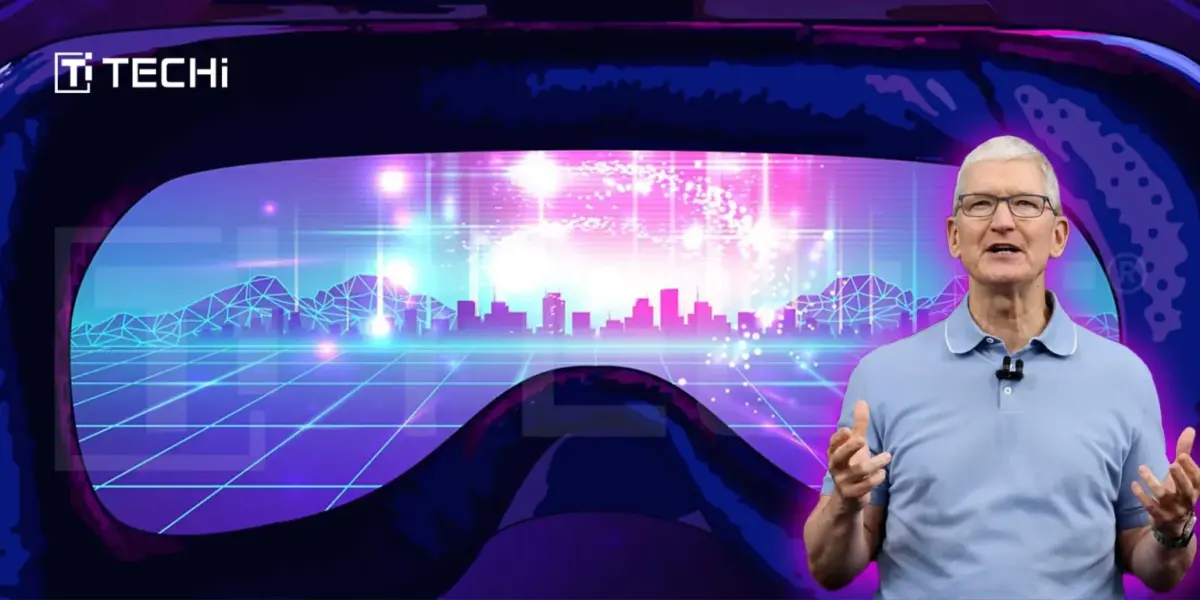
However, it still has its challenges. The Apple Vision Pro, which was previously marketed as the beginning of a new era of “spatial computing,” is now living a more quiet life, where the popularity has exceeded the need.
Vision Pro Turns Into a Stalemate
As per the sources of Financial Times, Apple has reduced the number of Vision Pro headsets by a large margin, due to its unexciting sales. The market analysis firm Sensor Tower also observed that Apple has dropped its marketing budget for the device by over 95% last year, which is quite shocking, since Apple is usually quite aggressive in its marketing tactics.
With Apple always selling millions of units each quarter for iPhones, iPads, and Macs, the Vision Pro is having a hard time getting into the right hands. At £3,199 ($3,499), the headset seems to be a tough battle not only for early adopters, but also for tech fans.
Sales Estimates Present a Gloomy Scenario
Although Apple has not made public the sales figures, the estimates from International Data Corporation points out that only about 45,000 units of Vision Pro were sold in the last quarter of the last year. IDC also claimed that Apple’s manufacturer, Luxshare, stopped production at the beginning of 2025, and the headset is only present in 13 countries, which is a very tiny market share according to Apple standards.
At the same time, Counterpoint Research predicts a 14% reduction in the sales of the global virtual reality headset market this year, which implies that the problem is not limited to Apple only.
Familiar Tech Industry Pattern
The challenges faced by Vision Pro have reminded people of Google Glass, the once-promising device that had many drawbacks that caused its downfall and silliness. The reviewers have given the Apple headset negative remarks such as it being a heavy, uncomfortable, and uninteresting device for everyday use.
The video clips of people who are driving, along with wearing Vision Pro, also contributed to raising safety issues and bad public opinion. Even the product’s supporters admit that the device is only for a certain group of people, because the very rich and great experience can be rather alienating than unifying.
Fewer Apps, Fewer Reasons to Buy
The lack of software is another major problem for the product. Apple claims that Vision Pro is compatible with roughly 3,000 apps, but this figure is still far from the very large app market that the iPhone launch created. As per the analysts, the lack of native applications for VisionOS is pointed out as a limiting factor for both the headset’s usefulness and even its attractiveness.
The analyst from Morgan Stanley, Erik Woodring, was really blunt about it. He mentioned that its expensive device, bulky nature, and non-existent app ecosystem are the main reasons for its failure to have broad acceptance.
What’s Next for its AI Wearables?
After all of this, Apple is definitely not forsaking its wearables market, and it hasn’t given up on the concept of wearable technology completely. It is said that the company has paused the development of the next Vision Pro headset and is now looking into AI-powered wearable devices, which might include a cheaper version of the headset release later in the year.
The change in direction is aligned with a major shift in the industry. Meta, whose popular Quest VR headsets account for approximately 80% of the VR market due to their significantly lower prices, has likewise acknowledged that it is diverting funds from the metaverse towards AI glasses and other smart wearables.
Bottom Line
Apple has not made any statements regarding the Vision Pro production reports, but in case it is true, it would be a rare commercial mistake for the firm. However, history shows that Apple usually takes a bigger learning lesson from its failures than from its successes.
The Vision Pro did not revolutionize computing right away, but it still might be a foundation for lighter, cheaper, and more practical AI-driven devices in the future. Currently, spatial computing is still an interesting concept but it is not the kind of technology that consumers are willing to pay for and wear on their faces at high prices.