
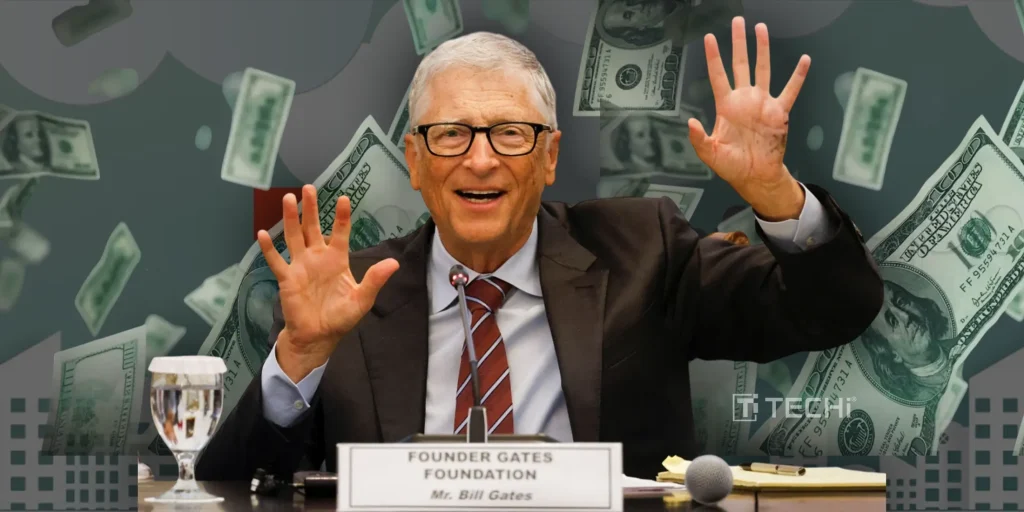
If Bill Gates was coding for his charitable legacy, he’s just inserted a self-destruct function. In a gesture that’s as audacious as it is selfless, the Microsoft founder has placed an expiry date on his $100-billion foundation. One of the planet’s most influential charities is shutting down in 20 years. The world’s biggest private philanthropic organization just received a countdown timer. Bill Gates, Microsoft co-founder and co-chair of the Bill & Melinda Gates Foundation, has stated that the foundation will diminish its activities and expend all of its endowment by 2045.
In a personal post on Gates Notes, the philanthropist revealed that the move comes at a time of great introspection. Gates wrote,
“This decision comes at a moment of reflection for me. In addition to celebrating the foundation’s 25th anniversary, this year also marks several other milestones: It would have been the year my dad, who helped me start the foundation, turned 100; Microsoft is turning 50; and I turn 70 in October.”
The 2045 Deadline 🔗
Earlier, the Gates Foundation was to be shut down two decades after Gates’ death. Since Gates remains in good health, this changes from a sudden shutdown to a definite end in 2045. This marks a drastic speeding up of the foundation’s giving plan.
In the course of the next two decades, Gates anticipates that the foundation will invest over $200 billion, twice the $100 billion it has invested since it was established in 2000. The foundation now spends approximately $6 billion per year and will boost that to $9 billion in the coming decades.
Global Impact 🔗
With a high level of concern in global health, development, education, and gender equity, the Gates Foundation is mostly identified with big level philanthropic action. Vaccine delivery, as well as disease control in malaria and polio, has seen the foundation providing resources where the public systems have not delivered at times, particularly in poorer countries.
The commitment also arrives in the context of a changing international aid environment, where big government donors such as USAID have seen budgets trimmed in recent years. Into that void, Gates’ commitment to giving away 99% of his fortune, which stands at an estimated $107 billion, is a gamble on private capital delivering public goods.
A Historic Move 🔗
Although Gates’ proposal is the second-largest philanthropic pledge in U.S history, the number one position belongs to longtime pal and Berkshire Hathaway chairman Warren Buffett. With an estimated net worth of $160 billion, Buffett has pledged to donate nearly his entire wealth, much of it to the Gates Foundation. Despite this, the timeline gives Gates’ $200 billion proposal an extraordinary sense of urgency. It also establishes a new standard for how philanthropists can structure a way of giving, not in eternity, but with a targeted, deadline-based impact strategy.
Offering Maximum Impact 🔗
Gates’ statement is not a financial pledge, it’s a philosophical one. At a time when most foundations are designed to endure forever, he’s choosing urgency, simplicity, and effect. It’s a rebuke to the notion that good works must extend indefinitely rather than focus where and when they’re most required. Whether others will catch on is unknown, if Gates succeeds his legacy won’t be in terms of decades, it’ll be in lives saved, educated, and transformed. That’s a timeline worth accelerating.