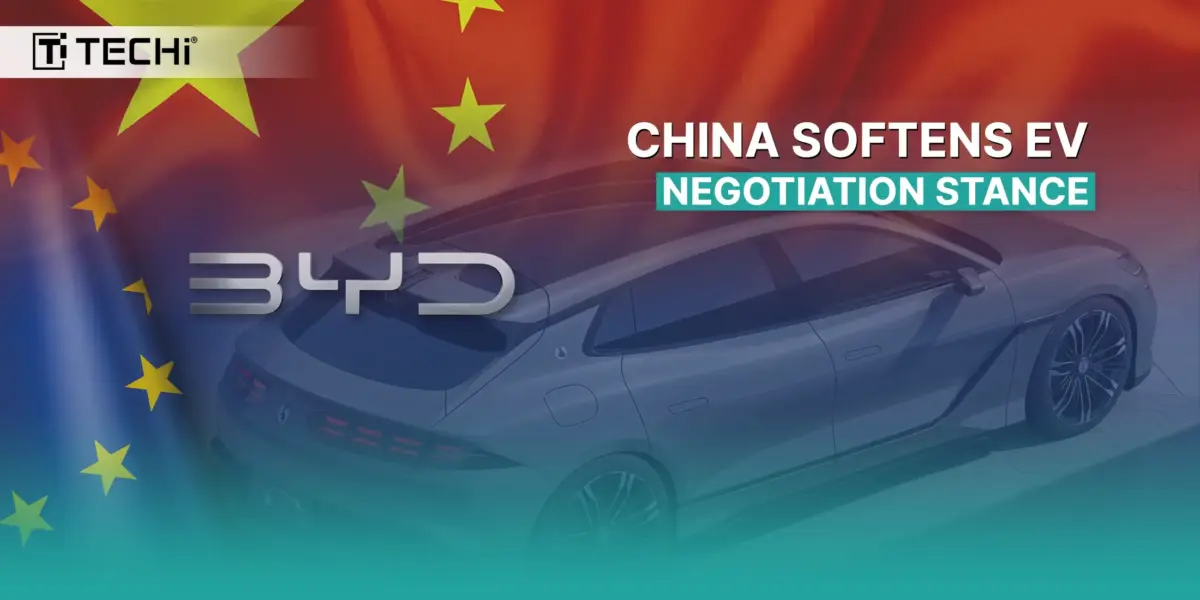
China is now pushing its local electric vehicle (EV) producers into bilateral deals with European companies on their own. Such a move that will mark a firm policy turnaround and may help defuse swirling trading hostilities.
In a briefing, given on 12 February 2026, by the representative of the Ministry of Commerce, He Yadong:
China is willing to maintain communication with the EU, and “both sides support Chinese EV makers to make good use of price undertakings
Effect of the Trade War on the bilateral relationships
The current process is taking place against the background of increasing the severity of trade friction. In 2024, the European Union added additional duties to electric cars produced in China after conducting a probe into subsidy practices with rates of 7.8% on Tesla to 35.3 % on SAIC on top of the already in place 10 % tariff.
These actions have been designed within the framework of a strong escalation in Chinese battery-electric vehicle (BEV) exports in the period 2020-2023. BEVs accounted for 15% of all vehicle sales (5.4% in Spain), far exceeding the 1.9% recorded in 2019 (0.7% in Spain).
In this heightened context, the fact that the European Union granted the Volkswagen Anhui the first tariff exemption under its recently established price-undertaking framework makes it a major breakthrough. Exempting the Cupra Tavascan SUV from a 20.7% countervailing duty that would otherwise have been paid.
Strategic Outlook
Looking ahead, other Chinese giants, including BYD and Nio can follow the lead of the Cupra model, seeking exemptions via quotas and setting up EU-based manufacturing plants.
However, enforcement risks also remain, since undercutting of subsidies may catalyze the complete implementation of tariffs, and thus put this practical truce to test during the European green initiative and the Chinese market leadership.