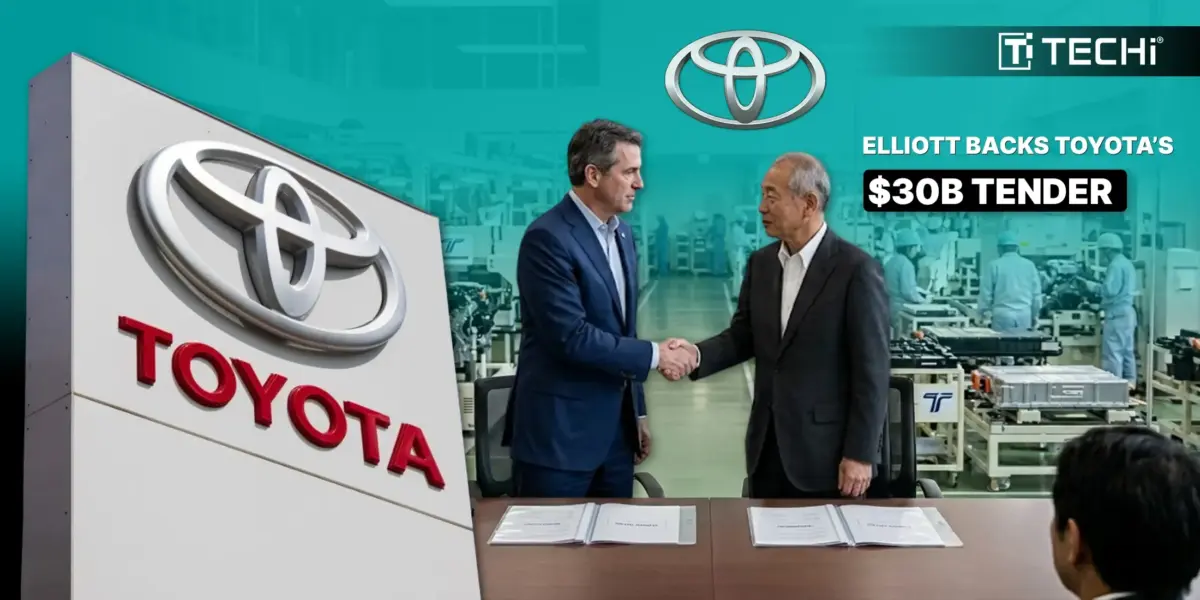
Elliott Investment Management purchased $30 billion worth of shares in Toyota Motor, following significant negotiations. Toyota Motor Corporation succeeded in its bid to privatize Toyota Industries for about $30 billion.
This came after activist investor Elliott Investment Management conceded, following months of high-intensity negotiations with shareholders and price discussions. The agreed offer, announced on 2 March 2026, was about 26% higher than the original bid auto.
Battle Of The Bids
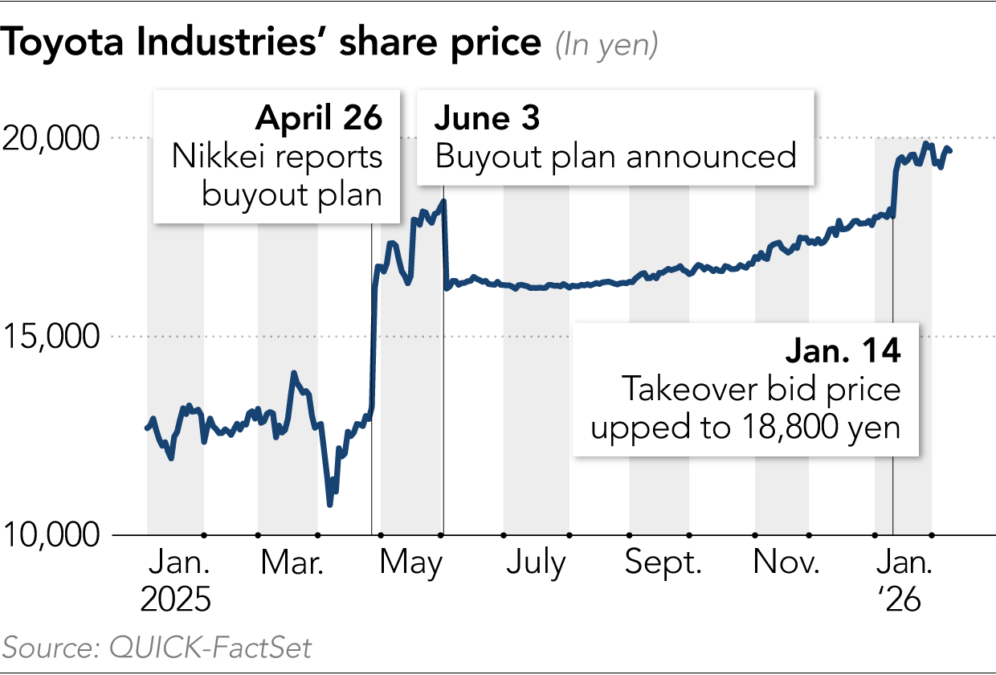
The bidding contest began in late 2024 when Toyota Motor first offered 16,300 yen per share for Toyota Industries (TSE:6201). Many investors felt this undervalued the company, given its 38% global market share in forklifts and its 9% stake in Toyota Motor.
Elliott Investment Management argued that the true value of Toyota Industries was over 85% more than the after-tax bid value, and pushed for a higher price above 26,000 yen per share. In January 2026, Toyota raised the bid to 18,800 yen, but Elliott continued to lobby other shareholders and pointed out issues with Japan’s cross-shareholding practices. Ultimately, the negotiated price was 20,535 yen ($132 at an exchange rate of 1 USD = 156.59 yen), resulting in a total of about $30 billion. Elliott described this as a better deal for minority shareholders.
Numerical Evidence To Support The Deal
Toyota Industries reported revenue of 2.8 trillion yen and a net income of 262.31 billion yen over the trailing twelve months. The company’s strong standing in automation and logistics has been further enhanced by the e-commerce boom.
Its earnings per share (EPS) are 856.96 yen, with a price-to-earnings (P/E) ratio of 21.17. The stock price increased by more than 48% in the last year, reaching around 18,400 yen before price adjustments. According to an Elliott spokesperson, this revision supports efforts to unwind cross-shareholdings in Japan and aligns with Tokyo’s broader goals for capital market efficiency.
Implications For The Future
Arrangements for bank loan guarantees are essential to ensure the transaction deadline is met on March 16. After the acquisition, Toyota plans to streamline operations and focus more on electric vehicle parts and AI-based logistics, eliminating the requirement for quarterly reporting. These changes are expected to boost the increasingly automated forklift market. Analysts view this as a governance success that could make it easier for the Toyota Group to achieve the proposed $42 billion supplier synergies, though implementation will depend on funding availability. Toyota will centralize its strategy and deliver significant returns to shareholders.