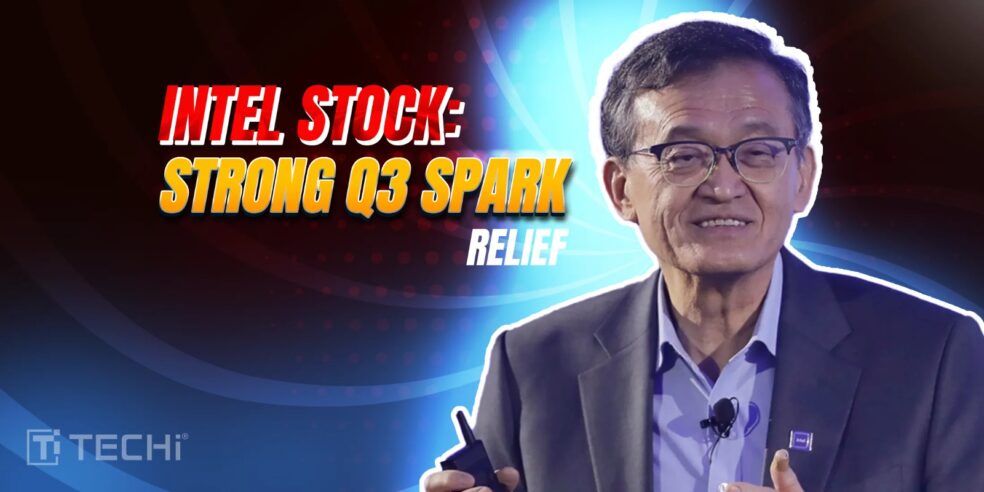

Intel’s latest quarterly performance has delivered a welcome boost for shareholders, but the optimism surrounding its Q3 results hides deeper structural questions. The company’s earnings beat expectations on both revenue and profit, driven largely by strength in client computing and early traction in its foundry services. However, analysts caution that some of this strength may not be sustainable, as the improvement was partly supported by temporary cost controls and favorable inventory adjustments rather than durable demand growth.
The broader context remains that Intel is still in the middle of a complex turnaround. Its push to regain manufacturing leadership through its “IDM 2.0” strategy involves massive capital spending and execution risk. Building advanced fabs in the U.S. and Europe aims to secure long-term competitiveness, but in the near term, these projects weigh heavily on margins and cash flow. The relief rally in Intel’s stock may therefore reflect short-term enthusiasm rather than evidence of a completed recovery.
Market reactions also highlight an important shift in investor sentiment. While the strong quarter temporarily reassured markets after several disappointing years, analysts at Invezz and other firms warn that Intel’s long-term story hinges on regaining process parity with TSMC and AMD. Even with solid Q3 results, Intel’s product roadmap remains under scrutiny, especially regarding the rollout of its “Arrow Lake” and “Lunar Lake” chips in 2025. Any delay or underperformance in these platforms could quickly erode recent gains.
Another area of concern is competitive pressure. AMD continues to expand its server market share with its EPYC line, while NVIDIA dominates the AI and data center space. Intel’s data center and AI group posted modest growth this quarter, but far below peers, raising questions about whether Intel can capture meaningful share in the AI hardware wave. Without a clear differentiator or a strong software ecosystem, Intel risks being left behind in high-performance computing and enterprise AI deployments.
Macroeconomic trends could further complicate Intel’s recovery path. While demand for PCs has stabilized, the broader semiconductor market remains cyclical, and any slowdown in enterprise or government spending could impact Intel’s foundry pipeline. Moreover, as the U.S. government’s CHIPS Act subsidies roll out slowly, Intel faces financing challenges for its aggressive expansion plans, especially amid high interest rates and investor caution.
For investors, the takeaway is nuanced. Intel’s fundamentals are improving, but the company is far from reclaiming its former leadership. The Q3 results are a positive signal of operational progress, yet they do not eliminate execution risk. Analysts’ warnings suggest that while the near-term relief rally is justified, the long-term upside depends on consistent delivery, competitive performance, and disciplined capital management. In essence, Intel’s latest quarter shows progress, not victory—a temporary reprieve in a demanding turnaround story.