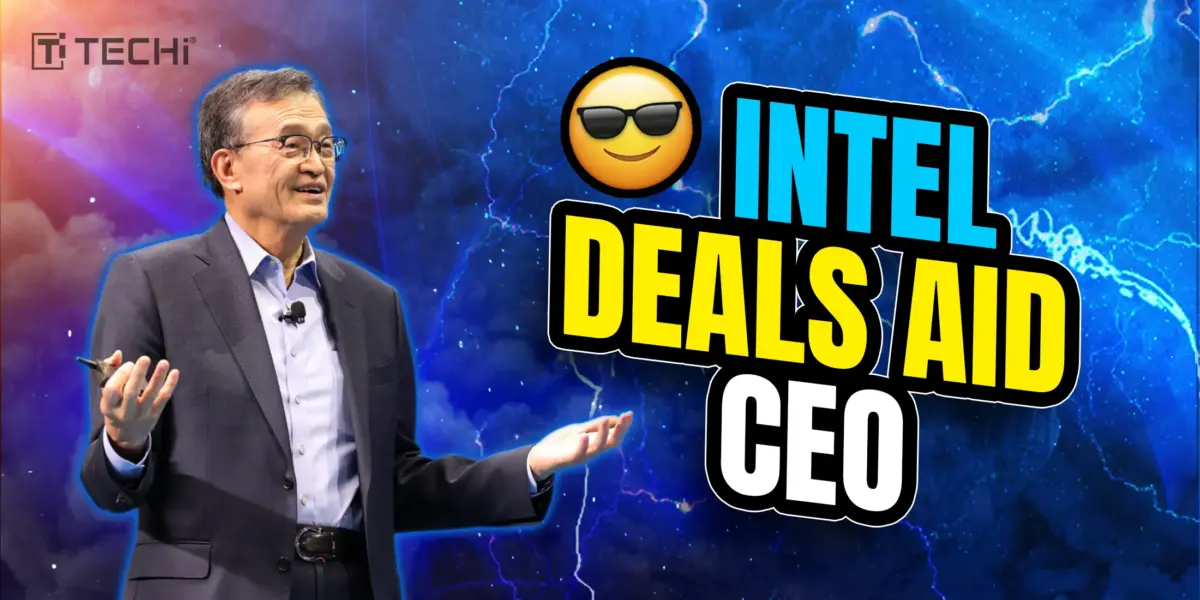
Lip-Bu Tan, the chief executive officer of Intel has come under the criticism of a number of business ventures that seem to benefit his personal fortunes.
The salient example is when Intel tried to buy the artificial-intelligence chip start-up Rivos, at the same time Tan is the chief executive officer of Intel and an investor in Rivos.
In the case where Tan brought the offer of the Rivos acquisition to the board in the summer of 2025, the board found a direct conflict of interest, as Tan had dual affiliations and the AI strategy was not sufficiently robust.
Nevertheless, Intel eventually placed an offer after the advent of social media megacorp Meta, which increased the valuation of the transaction, already pegged on a $2 billion initial round of fundraising, to a valuation of about $4 billion.
Intel was pressured by the competitive pressure of Meta but the scope of Tan personal financial profit is still unknown.
Tan believed Intel needed to buy Rivos because earlier in-house efforts to enter the AI chip market had failed, one of the sources said. In the statement, the Intel spokesperson said Tan was “advancing its AI strategy” and “revitalizing its engineering-centric, customer-first culture.”
Corporate Governance and Rules of Conflict 🔗
Since Tan joined Intel in March 2025, he has a background in venture capital, which has supported a stream of major investments, such as the $5 billion stake of Nvidia and the $2 billion capital infusion of SoftBank.
Following Lip-Bu Tan’s CEO appointment, one of the initial steps in Intel’s turnaround was to, as Mr. Tan put it, eliminate the “unnecessary bureaucracy that slows us down.”
Therefore, the board of Intel knowingly took the corresponding risk, as they believed that Tan, with his industry ties, would be capable of revitalizing a firm that suffered a $19 billion loss in 2024.
Researchers of corporate governance argue that the strange structure of having a CEO managing Intel Capital investments and at the same time maintaining a stake in target start-ups raises visible red flags even where strategic benefits can be made.
Projection on the Intel Strategy of AI 🔗
Tan is pursuing highly in the AI chip space, in particular, he is also in the process of acquiring SambaNova, another start-up which he has significant stakes in and at which he served as chairman.
Such acquisitions are the main hooks on which Intel bases its AI ambitions in order to transform its AI chip portfolio. A spokesperson said
“While we’re always exploring strategic options, our focus remains on accelerating the roadmap, delivering products to market, and supporting our customers,”
With regulatory requirements on related-party disclosures looming in spring 2026, greater disclosure is certain to be an imperative.
Lip-Bu Tan is seen as a ‘transformative’ leader who will move to cut costs. But both halves of Intel’s business require major fixes. With Lip-Bu Tan set to take over as Intel Corp.’s chief executive in a matter of days, investors now have a new “reason to hope,” according to Bernstein analyst Stacy Rasgon.
Since Tan was appointed, Intel has increased its stock more than two times, which indicates the optimism of the market regarding governance problems.
Nevertheless, the need to balance the long-term relationships that Tan has with a company with the threat of possible contradictions will conclusively inform the future development pattern and belief of Intel in the competitive semiconductor environment.