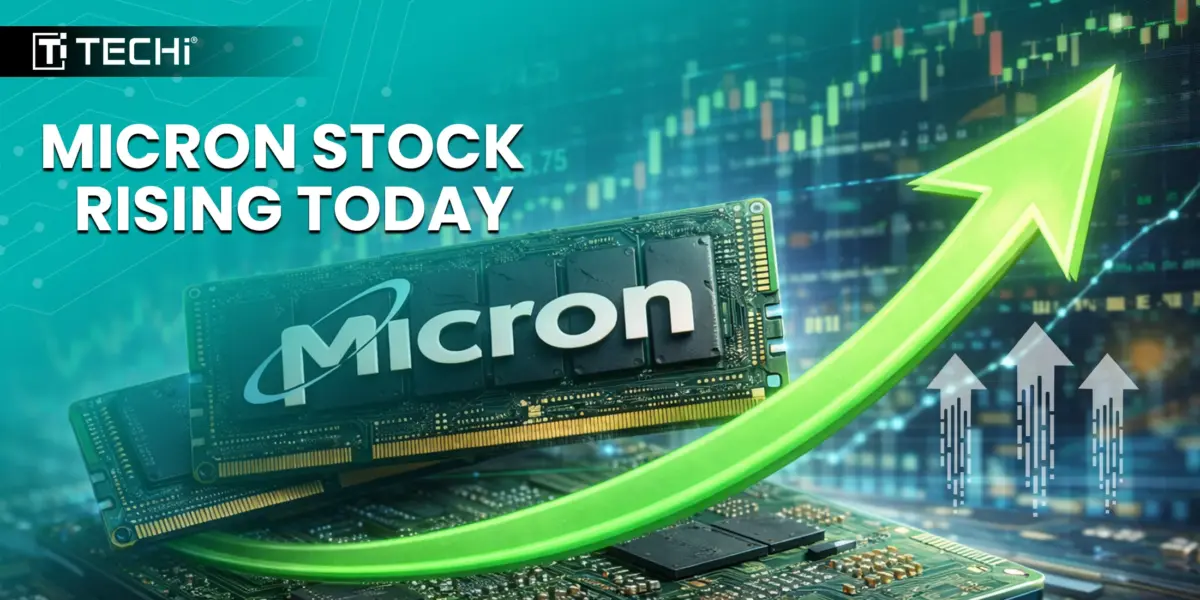
On Tuesday, the share of Micron Technology increased by over 5% as the investors became optimistic about a higher collaboration with Applied Materials, a leading supplier of chip-fabrication equipment, to speed up the process of developing next-generation memory in AI data centers.
It establishes Micron at the core of the AI hardware influx, especially with the high-bandwidth memory demand steadily exceeding the supply.
New Push in AI Memory
As part of the expanded structure, Micron and Applied Materials will collaboratively design innovative dynamic random-access memory (DRAM), high-bandwidth memory (HBM) and NAND-based systems that are designed to provide faster and more energy efficient AI systems.
Mixed engineering groups will work within Applied the EPIC Center at Silicon Valley and the Micron Boise research facility, performing research in innovative materials, technologies of processes and device design including advanced packaging technologies to raise bandwidth and cut power usage.
Money Movement and Investment Environment
The fundamentals of Micron are already displaying a sharp positive trend.
In its last quarter of financial reporting, the company experienced a 57% Y-O-Y growth in revenue, to a level of $13.6 billion, both due to higher pricing and an AI-related boom.
Highlights of Fiscal Q2 2025
GAAP net income of $1.58 billion, or $1.41 per diluted share; revenue of $8.05 billion compared to $8.71 billion for the previous quarter and $5.82 billion for the same period last year $1.78 billion in non-GAAP net income, or $1.56 per diluted share $3.94 billion in operating cash flow compared to $3.24 billion in the previous quarter and $1.22 billion in the same period last year.
What Comes Next for Micron?
The key issue is whether Micron has the ability to convert the present demand stresses into long-term increase in earnings as the AI workloads are growing and the rivals are attempting to raise the capacity of the HBM.
In the short run, tight supply, disciplined capital spending and Applied Materials alliance must encourage sound pricing and maximum utilization throughout Micron factory capacity.
In the longer run, the risk of implementation increases: a single error in the implementation of new nodes or a reduction in the AI server spending would squeeze the margins in an industry that is still cyclical.
However, Micron has attributes of technological leadership and aggressive capacity expansion in place with ecosystem alliances that put it in an excellent situation to be a major beneficiary of the next stage of AI hardware implementation.