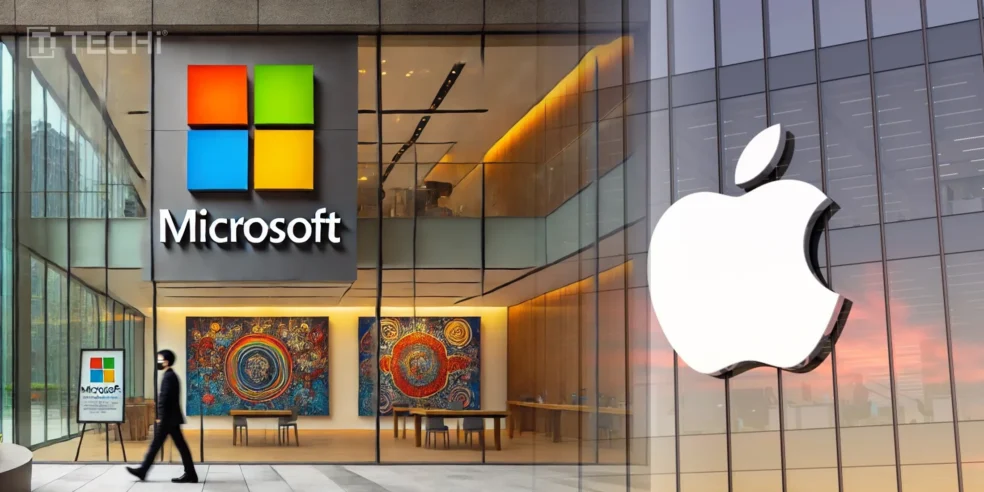

The comparison between Microsoft and Apple in the AI stock narrative highlights two very different strategies toward artificial intelligence integration and monetization. Microsoft’s advantage lies in early execution. Its investment in OpenAI, integration of generative AI into Office 365 and Azure, and rapid scaling of AI infrastructure have made it a first mover among large-cap tech firms.
The company is already converting AI capabilities into subscription revenue, particularly through its Copilot suite and Azure AI services, which have attracted enterprise clients across sectors.
Apple, on the other hand, is pursuing a slower and more consumer-focused path. Its “Apple Intelligence” rollout, expected to expand across iPhones, Macs, and iPads, emphasizes privacy and on-device processing rather than cloud-based generative AI.
This approach fits Apple’s brand identity and ecosystem strategy but delays near-term monetization. While Microsoft’s AI investments are already contributing to its revenue mix, Apple’s gains will likely materialize once users upgrade devices capable of supporting its new AI features.
From a market perspective, Microsoft’s early AI dominance has already driven valuation premiums. Its cloud revenue is tied to the growth of generative AI applications, providing recurring income that scales with demand.
However, high expectations also create pressure to maintain momentum. The firm’s profitability depends on sustaining enterprise adoption and managing infrastructure costs as AI workloads expand. If AI demand slows or competition from Amazon Web Services and Google Cloud intensifies, Microsoft’s margins could narrow despite strong topline growth.
Apple’s position is more defensive but also more stable. The company’s primary risk is hardware saturation, not AI missteps. By embedding AI into its device ecosystem, Apple could reignite upgrade cycles and reinforce brand loyalty.
Its integration strategy means users are more likely to stay within Apple’s ecosystem, indirectly supporting revenue across services such as iCloud, Apple Music, and App Store sales. Unlike Microsoft, Apple’s AI revenue will be more diffuse, spread across product lines rather than concentrated in enterprise software.
Investor sentiment currently favors Microsoft because its AI roadmap is quantifiable and visible in quarterly earnings. Yet, Apple’s long-term potential should not be underestimated. Once AI-enhanced devices reach critical mass, Apple could benefit from delayed but strong consumer adoption. The market often undervalues such delayed reactions until product demand confirms them.
In the broader context, this competition underlines a split in how AI innovation drives value: through enterprise infrastructure and software (Microsoft) versus consumer hardware and user experience (Apple).
Both paths have merit but appeal to different investor profiles. Microsoft offers growth through immediate AI utility, while Apple offers resilience and eventual upside as adoption matures.
Overall, Microsoft appears to be the stronger AI play in 2025, with measurable financial impact already visible. Apple’s AI story is still in development, but its vast installed base provides a strong foundation for future monetization.
The contest between the two illustrates how AI is reshaping both business models and investor expectations across the technology sector.