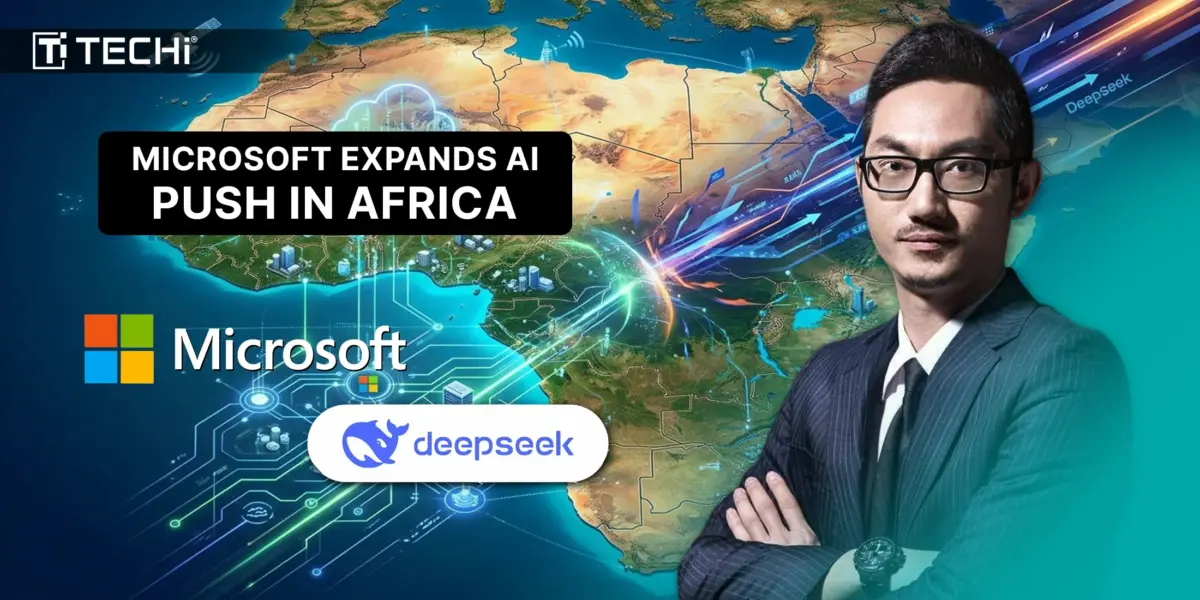
Microsoft is ramping up its AI projects in Africa, training millions of users to embrace its AI applications amid deep rivalry with the Chinese open source platform, DeepSeek. The world of AI domination could change with the help of this technological competition, as Africa is home to 1.4 billion people, the youngest and fastest growing population worldwide.
Microsoft Bold Push
The company is set to educate 3 million Africans on AI this year by targeting major markets, including South Africa, Kenya, Nigeria, and Morocco, in conjunction with institutions of learning. The company has collaborated with the largest telecommunications operator in Africa, MTN Group, which serves an estimated 300 million subscribers, to integrate Microsoft 365 applications and its Copilot assistant.
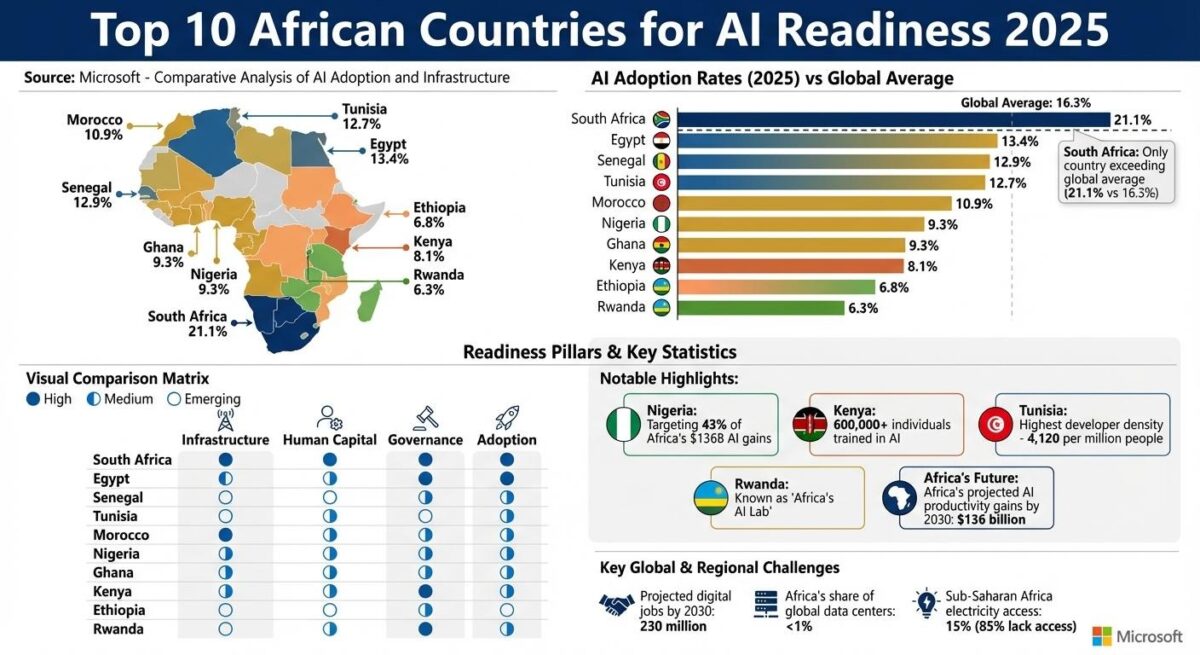
This plan builds on Microsoft’s previous undertakings, such as investing $300m dollars in AI and cloud facilities in South Africa, to be completed by 2027. Already, South Africa has an industry leader, 21.19% of working-age adults have used generative AI technologies such as Copilot by the end of 2025, already far ahead of the rest of the neighbors.
DeepSeek’s Sneaky Surge
DeepSeek, a free and open-source Chinese AI platform, had secured a market share of 16% to 20% in Ethiopia, Tunisia, Malawi, Zimbabwe, and Madagascar by the end of 2025, and 11% to 14% in Uganda and Niger. Its zero-cost model, enhanced by alliances with Huawei and telecommunications companies, has reduced entry barriers, whereas Western solutions typically require payment or credit card details. Microsoft’s internal analysis notes:
The success of DeepSeek shows a growing Chinese presence throughout Africa, which is bound to accelerate in 2026.
The Stakes and Stats
In Africa, the AI market generated in the year 2025 had a revenue of $4.92 billion dollars, which is expected to increase to $16.5 billion dollars in the year 2030, a year that is seen as a compound annual growth rate of 27%, which will be driven by the demand in the fields of finance, health, and agrotechnology.
Nonetheless, the adoption process is not in full bloom, with only a handful of nations like South Africa having a lot of uptakes despite the prevailing infrastructure shortages. As Lillian Barnard, President of Microsoft Africa, adds: With the provision of AI competencies, youths will be able to compete in the global arena and turn Africa into an economic giant. Additionally, DeepSeek has a geopolitical position that has thrived in jurisdictions negatively affected by U.S. sanctions, thereby threatening Microsoft’s premium strategy. Although free access will attract customers fast, the richness of the Microsoft ecosystem may ensure customer loyalty in the long run.
Road Ahead
AI could add $1.5 trillion to Africa’s GDP and create 230 million jobs if inequalities are reduced. To compete with DeepSeek, Microsoft must expand free pilot programs and infrastructure to prevent China from leading Africa’s AI sector and capturing the next billion users.