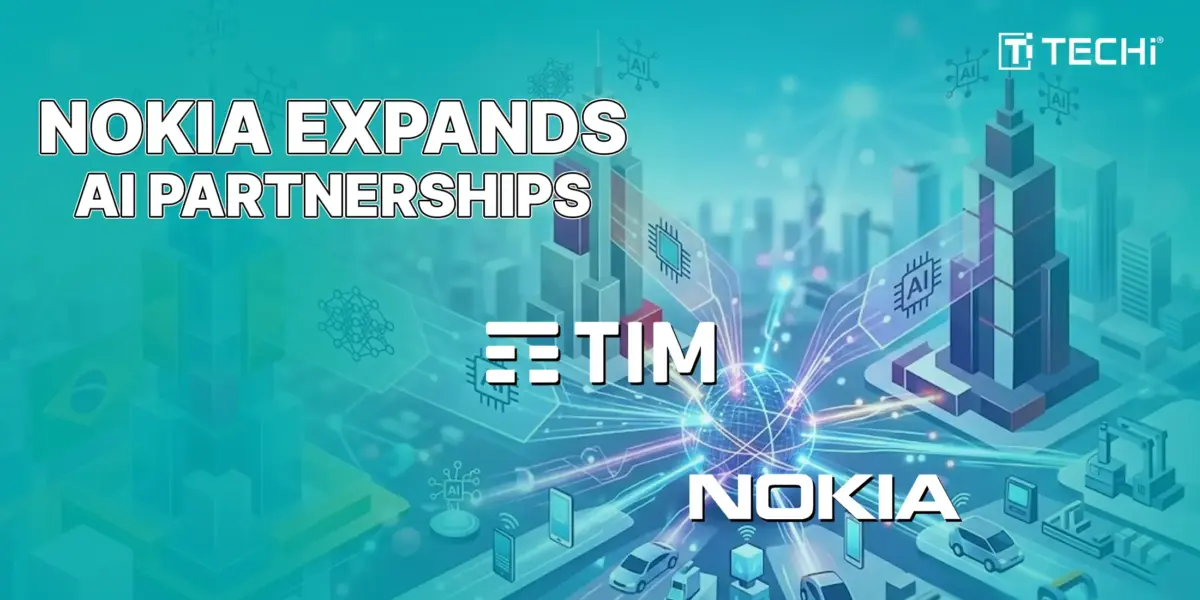
The Implication of Nokia Artificial Intelligence Initiatives on Telecommunications in the world. Nokia is moving ahead in its strategic positioning in the artificial intelligence space, and has been able to forge high-profile deals with TIM Brazil and Deutsche Telekom that are likely to enable them to hasten network upgrades to the stipulated new technological needs.
Strategic Alliances
Nokia has introduced these developments on top of an agreement that it recently signed with Telefonos to run data centers in Spain on a multi-year basis. Having built on its partnership with TIM3.SA (TIMS3.SA) on the 5G upgrades in São Paulo to outreach twelve other states and four regions in Brazil, Nokia is currently offering its services to 42% of the Brazilian population, which amounts to 216 million people. This growth allows the implementation of AI-based services to businesses via the platforms of AI-RAN technology of Nvidia (NVDA.O), using the equipment of Nokia and the semiconductor offerings of Nvidia after the company invested 1 billion dollars in it and acquired 2.9% of its shares last October.
The involvement of Deutsche Telekom is to speed up the implementation of AI-native cloud-based RAN technologies. It is expected that the programmable networks which will be anticipated will help in minimizing the operational complexity, increasing the transmission speeds, and bringing the escalating amounts of data produced by artificial intelligence applications under better control.
Strategic Backbone
The current rejuvenation in the telecommunications industry by Nokia is a reminder of the company’s transformation that took place after the mobile phone industry. The recent acquisition of Infinera took advantage of the use of optical networking that could support AI-related data flows to mitigate the constraints of 5G throughput. Ericsson (ERICb.ST) faces similar market environments, but what Nokia has done by shifting to artificial intelligence is different; since 75% of all 5G capital spent in the world is moving towards artificial intelligence infrastructure, industry monitors show.
According to telecom analyst Sarah Chen of Forrester, Nokia is known as the provider of its strategically important solution in the area of artificial intelligence transformation. It is projected that global traffic based on AI can hit 175 zettabytes per year by 2026, which underscores the need for Nokia Network stacks in an optimized state.

Market Momentum
The Nokia shares went up by 8% after the Nvidia deal and are at or close to a decade of top valuations. TIM Brazil already projects an increase in the enterprise AI services by 20%, whereas Deutsche Telekom identified a goal of a 30% gain in the efficiency of RAN.
Future Edge
Analysts predict that Nokia can win 25% of the AI-RAN market share by 2027, outstripping competitors in an expected $240billion-dollar worldwide investment in artificial intelligence in telecommunications. Such contractual agreements will mark the beginning of a significant change: artificial intelligence is developing it into something more than a fad and making Nokia a leader that is here to stay. To determine the contribution of revenue occurring as a result of such strategic expansions, investors need to pay attention to first-quarter earnings.