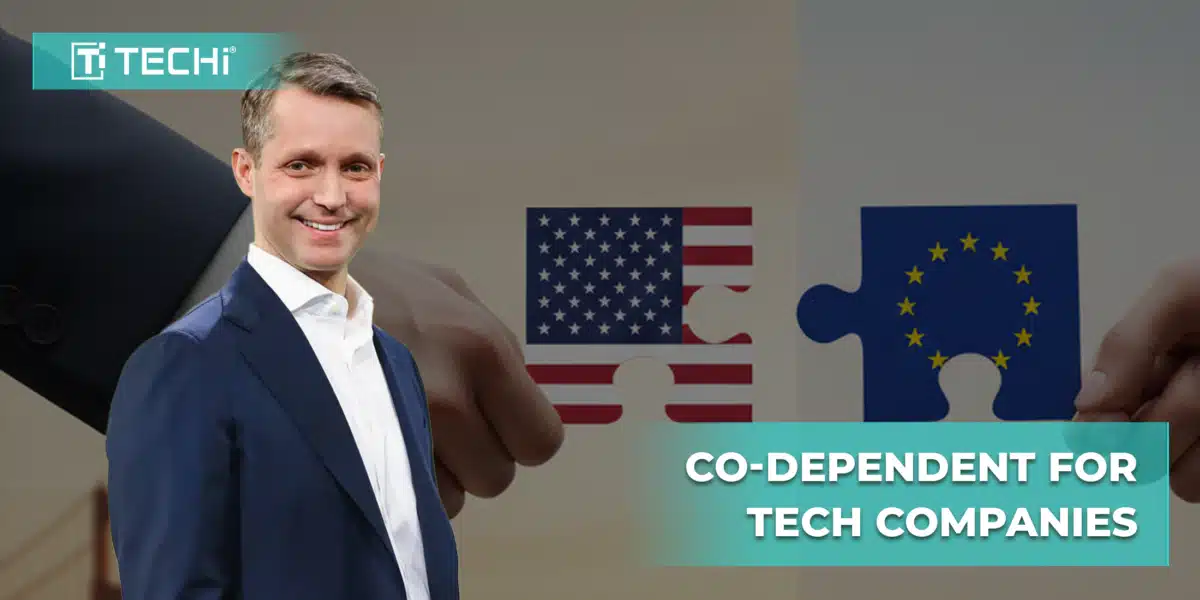
Europe and the United States are locked in a high-stakes tech partnership that neither side can afford to break, Nokia CEO Justin Hotard warned, as Brussels sharpens its push for homegrown champions.
Every single one of us cannot subsist on one continent or the other. We need both.
Hotard told Reuters in an interview.
Particularly in technology, where the window and the right to win is dictated by that technology cycle, it’s really critical that you have as big a market access as possible.
Transatlantic tech lifeline 🔗
As governments reevaluate their exposure to Chinese suppliers, Nokia and its Swedish rival Ericsson have been highlighting their credentials as reliable Western providers of network equipment. In order to lessen its dependency on other nations, such as the United States, Europe is simultaneously working to increase its own technological capabilities.
This presents a difficult balance for Nokia and Ericsson, as both businesses make significant profits from both sides of the Atlantic. The European and American markets for scale are essential to all businesses in Europe and the United States. There is a substantial codependence if you simply do the analysis, Hotard continued.
Security squeeze on Chinese vendors 🔗
Washington’s bans on Huawei and ZTE have effectively left U.S. carriers reliant on Nokia, Ericsson and Samsung for radio and core network gear.
Earlier this month, the European Commission proposed phasing out “high-risk vendors” from critical sectors, including 5G, a move that could further erode Huawei’s position and drive multi-billion-euro replacement cycles over the next several years.
Hotard welcomed the shift but pressed Brussels to turn voluntary guidance into binding obligations, saying.
He said.
Europe needs to support its business champions. That’s not just in tech, but in other areas.
Outlook for Nokia, Ericsson and Europe 🔗
With 5G investment in Europe lagging the U.S. and parts of Asia and operators under margin pressure, analysts see any mandated rip-and-replace as a rare growth lever in an otherwise sluggish capex environment.
If EU policymakers move faster on high-risk vendor bans and coordinated funding, Nokia and Ericsson could see rising 5G and 5G-Advanced orders from both sides of the Atlantic between 2026 and 2028, while a fragmented or politicized approach risks ceding ground to non-European players despite the rhetoric on strategic autonomy.