
NVIDIA has formed an artificial intelligence alliance with key telecoms to fully integrate AI into 6G network infrastructure, creating a wireless system responsive to the demands of AI workloads. Announced on 1 March 2026, the project aims to deliver next-generation connectivity that is not only faster but also smart by design, according to NVidia news.
Alliance Power Players
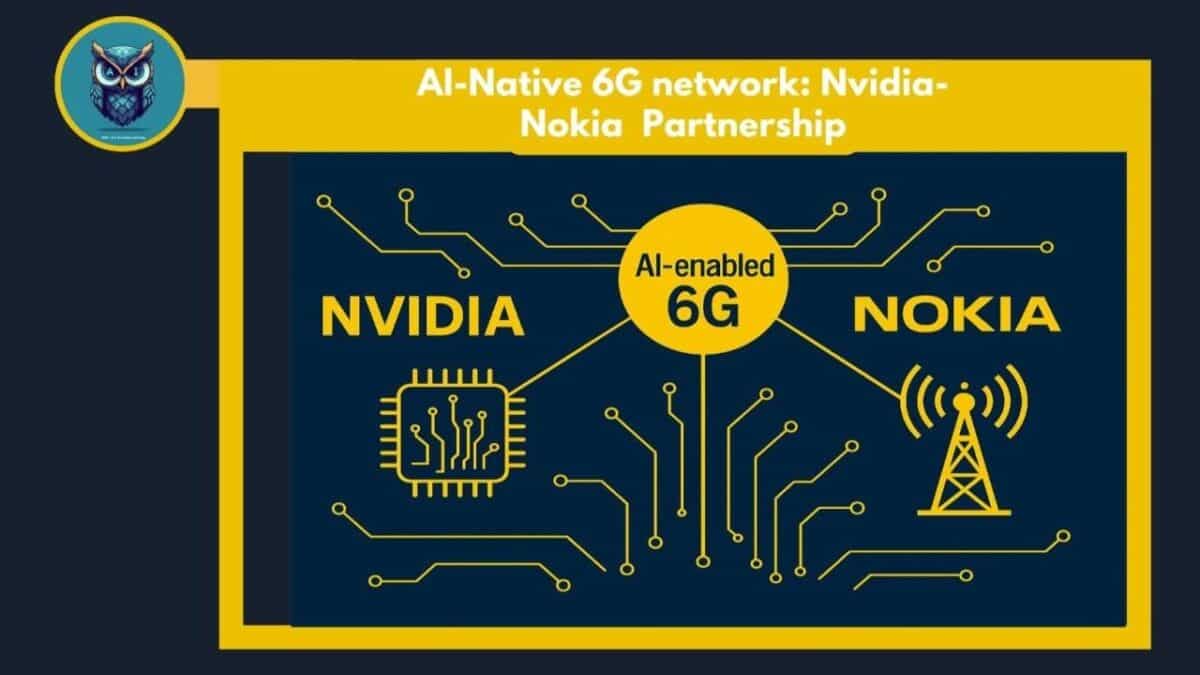
NVIDIA has collaborated with T-Mobile, Nokia, Cisco, MITRE, ODC and Booz Allen Hamilton to enhance the features of its AI Aerial platform via software-defined radio access networks (RANs). In this alliance, T-Mobile is building its AI-RAN Innovation Center whereas Nokia is implementing the NVIDIA Aerial RAN Computer Pro- 6G-ready system that combines connectivity, computing, and sensing.
Such partnerships focus on AI-based stacks that can triple the baseline spectral efficiency as state of the art Trials relating to SoftBank-NVIDIA make use of 16-layer MU-MIMO on graphics processing chips.
Why Now
The global 6G market is projected to have a valuation of US 11.4 billion in 2030, up to US 110 billion in 2036, and the compound annual growth rate is projected at 46%. This growth is based on the terahertz frequency links that can support up to 1Tbps and the lowest latency below 1ms.
In a survey of telecom operators by the NVIDIA-led team of 2026, it is noted that 89% are boosting AI budgets, this being an improvement of 65% a year earlier, a 77% of those planning to deploy AI-native networks before the complete 6G network goes live. NVIDIA CEO Jensen Huang stated that next-generation wireless networks will be groundbreaking, with extreme spectral efficiency, and that T-Mobile’s head of marketing, Mike Sievert, said they will make the network behave like the next generation of experiences.
Market Edge
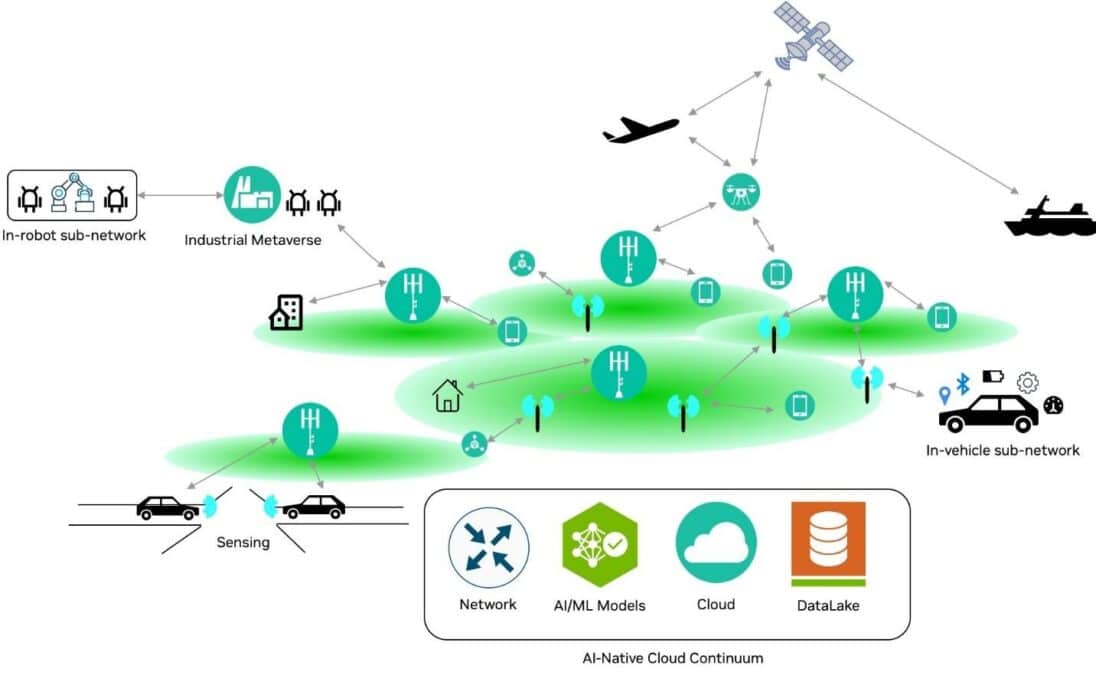
AI-RAN architecture combines a combination of artificial intelligence with radio access networks in one infrastructure, with an average bandwidth use of 50-60% to more than 97% using NVIDIA Spectrum-X. This results in huge savings in energy costs and new sources of revenue related to edge AI.
As 90% of telecommunications operators record revenue growth as a result of AI, the alliance makes NVIDIA the market leader, as AI traffic, which is already expected to eclipse existing 5G volumes, will require dynamic spectrum sharing and see-through sensing.
Critical Outlook
Even though the project itself is not just speculative, initial experiments have already validated the throughput gains by several folds. The success of it will depend, however, on the creation of open systems and effective security systems against foes, duties which are currently managed by Booz Allen. Estimates In 2030, AI-native 6G would decrease migration costs by 2030, compared to 5G upgrades by 20% to 30%, which would enable Industry 5.0 via Feed-forward Massive MIMO (FeMBB) to support immersive AI applications. Field tests will see the light of 2026 and help to create a smooth transition to 6G by the end of the decade, and turn such areas as unmanned aerial vehicles, wearable AR, and agentic AI into accessibility.