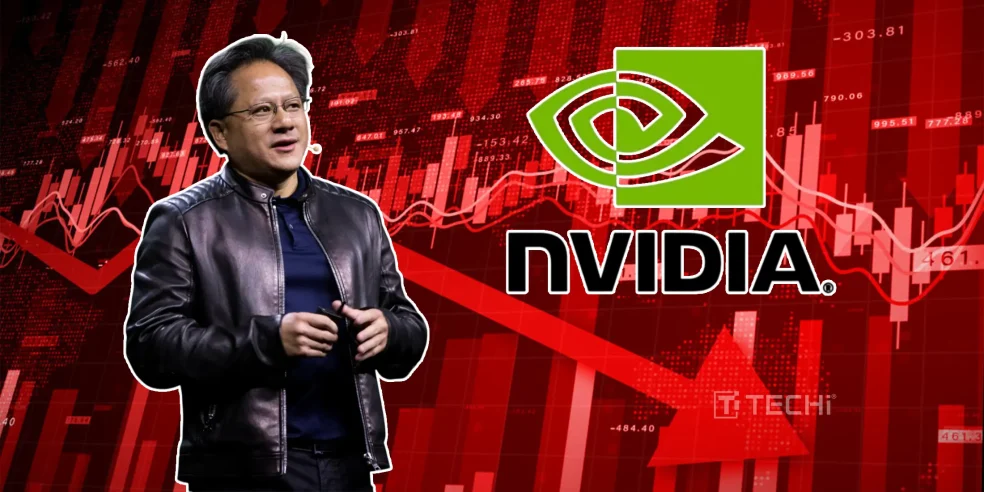
Nvidia shares took a dip early Friday, reflecting a broader market pullback amid rising geopolitical tensions. Despite the drop, the chip giant’s momentum in artificial intelligence remains robust, and recent strategic moves in Europe signal a bullish long-term trajectory.
Market Jitters Hit Tech Stocks
Nvidia stock fell 1.3% to $143.04 in early trading on June 13, 2025, tracking losses in the Nasdaq Composite and S&P 500, which slipped 0.8% and 0.7%, respectively. The sell-off was triggered by news of Israel launching a wide-ranging attack on Iran overnight, prompting investors to shift into a risk-off mode and pare exposure to high-flying tech names. This risk aversion affected not only Nvidia but also peers like AMD, Broadcom, and Marvell Technology, as well as the broader semiconductor sector, with the iShares Semiconductor ETF down 1.6%.
Competitive Pressures and AI Leadership
While Advanced Micro Devices (AMD) unveiled a new AI chip this week, aiming to challenge Nvidia’s dominance, the impact was muted. Analysts note that Nvidia still commands about 90% of the AI GPU market, thanks to its entrenched technology ecosystem and the widespread adoption of its CUDA programming platform. AMD’s latest Instinct MI325X chip offers some technical advantages, but Nvidia’s lead in both market share and developer loyalty remains formidable. AMD shares also dropped 2.4% in morning trading, underscoring that competitive threats alone are not driving Nvidia’s stock movement.
European Expansion and Strategic Partnerships
Nvidia CEO Jensen Huang announced plans to launch at least 20 new AI factories across Europe, including five gigafactory-scale sites equipped with high-performance GPU clusters. The initiative, unveiled at the VivaTech conference in Paris, aims to close Europe’s computational power gap and accelerate the region’s AI infrastructure. Nvidia also expanded its partnership with French startup Mistral AI, reinforcing its position in the European market and signaling a tenfold increase in regional AI computing capacity within two years.
Recent Performance and Broader Context
Despite Friday’s pullback, Nvidia shares remain flat over the past week and are up for both the month and the year, trading less than 5% below their all-time high of $149.43 set on January 6, 2025. However, the recent strong earnings from Oracle and bullish forecasts for cloud infrastructure growth have also sustained sentiment around AI-linked stocks, further supporting Nvidia’s outlook.
Looking Ahead
Nvidia’s fundamentals remain strong, with AI momentum and strategic expansion underpinning its growth prospects. The current dip appears to be a reaction to external geopolitical shocks rather than company-specific weakness. As the company continues to invest in next-generation technologies and expand globally, investor focus is likely to return to Nvidia’s leadership in AI hardware and software.
Author’s opinion:
This drop looks more like a temporary market reaction than a sign of weakness. Nvidia’s long-term story in AI remains compelling, especially with its aggressive global expansion and dominant market share.