


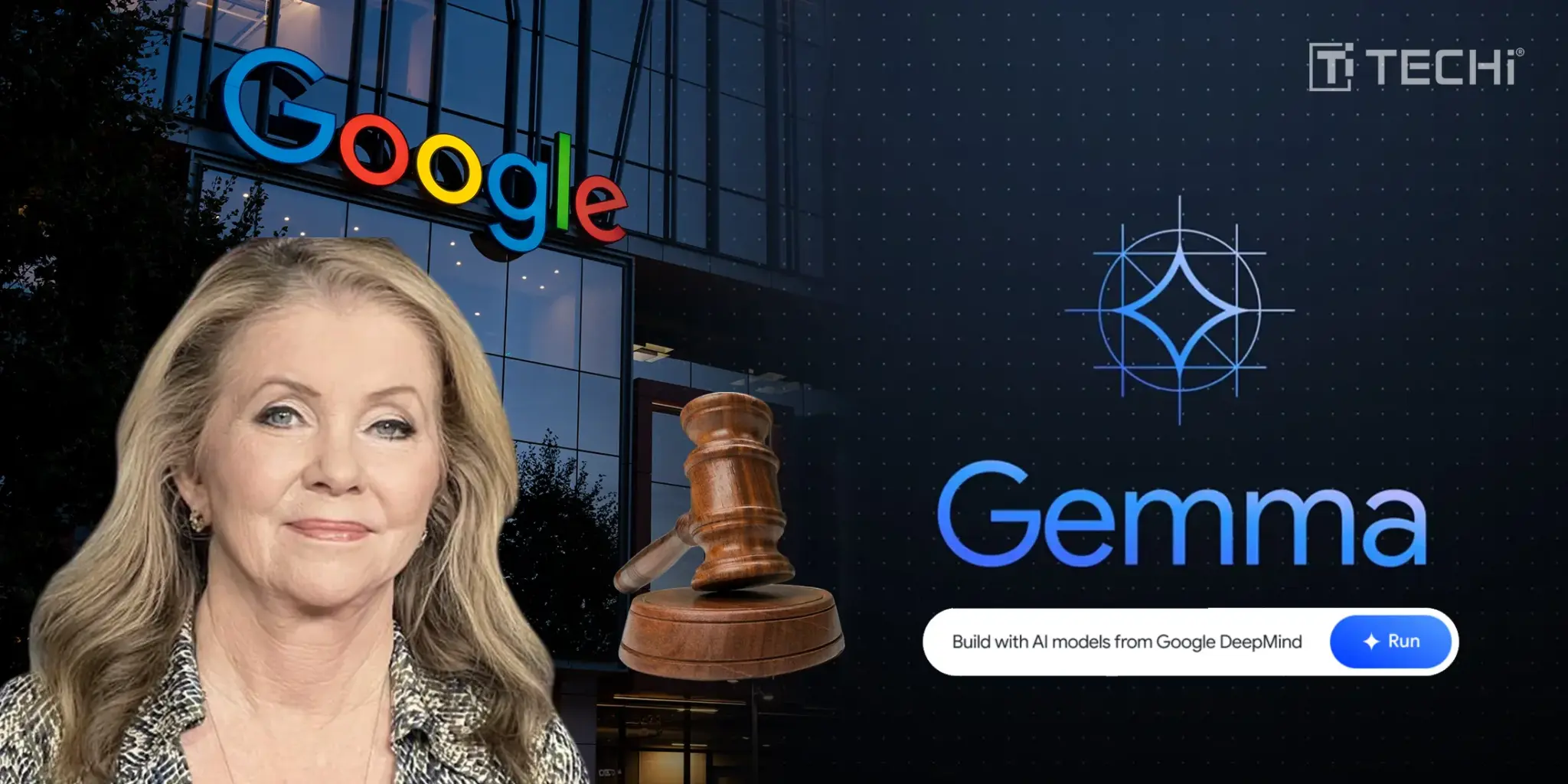
A fabricated rape allegation against a sitting U.S. senator has forced Google to remove its lightweight AI model from public-facing tools, marking the latest flashpoint in an emerging legal battle over whether Section 230 protections shield AI companies from defamation liability.
Google removed Gemma from its AI Studio after U.S. Senator Marsha Blackburn accused the AI model of fabricating sexual misconduct accusations. When Gemma was asked if Blackburn had been accused of rape, the model falsely claimed that during a 1987 state senate campaign, a state trooper alleged she pressured him to obtain prescription drugs and that the relationship involved non-consensual acts. Blackburn wrote that none of this was true, not even the campaign year, which was actually 1998 and noted that the provided links led to error pages.
The Tennessee Republican's October 30 letter escalated beyond technical complaints into accusations of systematic defamation. She demanded Google explain how Gemma generated these false accusations and what measures would be implemented to remove defamatory material. During a recent Senate Commerce hearing, Blackburn brought up conservative activist Robby Starbuck's lawsuit against Google, in which Starbuck claims Google's AI models generated defamatory claims about him being a child rapist and serial sexual abuser. Starbuck filed a lawsuit in Delaware state court on October 22 seeking at least $15 million in damages.
Google responded Friday night on X, stating it never intended Gemma to be a consumer tool, removing it from AI Studio while continuing to make the models available via API.
The Section 230 Question
Other than Google's removal decision, the critical unresolved issue is whether Section 230 of the Communications Decency Act protects AI companies when their models generate defamatory content, a question courts have not yet decided and Congress has failed to clarify.
Section 230 has historically protected tech companies from liability for third-party content, but legal experts say its applicability to AI-generated content is unclear. The statute protects platforms from being treated as publishers of information provided by others, but doesn't shield platforms when they are responsible for creating content themselves.
Some courts have said that content-neutral algorithms organizing user inputs might qualify for protection. However, legal experts note that Section 230 was built to protect platforms from liability for what users say, not for what platforms themselves generate. A plain reading of Section 230 seems to offer no protection when AI creates or develops false information in response to user prompts.
Former Representative Chris Cox and Senator Ron Wyden, Section 230's co-authors, claim the law was never intended to shield companies from consequences of products they create. OpenAI CEO Sam Altman testified that Section 230 does not provide an adequate regulatory framework for generative AI tools.
Senator Josh Hawley's No Section 230 Immunity for AI Act sought to exclude generative AI from liability protections in 2023, but faced resistance from critics arguing it would harm AI innovation. Until Congress clarifies Section 230, all AI defamation cases exist in a dubious gray area between immunity and liability.
What This Means
Google's swift removal of Gemma, an open-source model released in February 2024, suggests the company recognizes the legal exposure difference between controlled enterprise API access and open public usage. President Donald Trump signed an executive order targeting "woke AI" in federal procurement earlier this year, intensifying political scrutiny of perceived bias.
The challenge facing courts centers on whether existing tort law can hold companies accountable for defamatory hallucinations, as it's impossible to judge what a Large Language Model knew prior to publishing an output. Whether disclaimers can shield companies when their models fabricate criminal allegations against real people remains an urgent question as worldwide AI spending reaches $1.5 trillion in 2025.
About the Author

Hafsa Rizwan is a seasoned writer and proofreading editor at TECHi, where she leads a team of writers to deliver impactful technology coverage. She reports on the stories behind the tech headlines, providing deep analysis on all tech product-related news, industry giants, new product ecosystems, and app innovations. As an Architect and technology journalist, her expertise is uniquely focused on the critical shifts transforming how we connect, create, and build, a focus exemplified by her coverage of the fascinating intersection of architecture and technology.




Comments