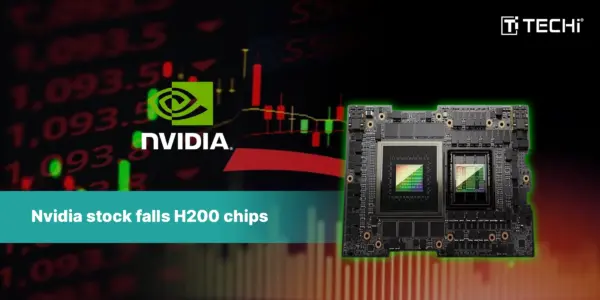
Nvidia’s stock can be compared to someone who doesn’t care about any dramatic situation around them, and they just focus on themselves, while enjoying a cup of coffee or tea. Nvidia’s shares were steady for the week after Wolfe Research reiterated its Outperform rating with a $250 price target for the stock, along with the announcement of a 25% tariff on certain advanced semiconductors by the Trump Administration.
However, a current price point of about $183 still means a considerable upside of 36%, which indicates that the analysts are still very much in the bullish consensus, as their price targets range from $140 to $352. On the other hand, InvestingPro claims that at current levels the stock is slightly below fair value.
Complicated Tariffs
The entire tariff situation here is expected to mostly disturb Nvidia’s H200 AI chip sales to China, and the whole scenario is quite complicated. As per Wolfe Research, the U.S government would take the payments from Nvidia in return for allowing the chipmaker to export. So, this becomes less of a tariff in the traditional sense and more of a geopolitical fee for entry.
Nevertheless, China has not decided upon signing on these imports yet, which implies that the final decision will be influenced by the general U.S–China trade negotiations rather than Nvidia’s quarterly earnings calls.
A Probable Surprising Upside
Nvidia previously implied the possibility of the China shipments being worth between $2 billion-$5 billion every quarter, which is roughly 5% of its current quarterly revenue. This is not an amount that one would easily overlook, even if it is a company like Nvidia.
However, the figures are not included in the consensus, which means that any possible approval in the future would be treated as a surprise upside rather than a disappointment. Analysts regard it as the type of versatility that the investors love, where the possibility of the gains arrive without any prior expectations.
Intense Competition
Wolfe points out that the same scenario could happen with AMD, if it chooses to export to China. However, the management of AMD does not seem very interested, which points towards limited capacity, along with looking for other alternatives to invest.
On the other hand, Nvidia is still the one who manages to attract all the attention during the competition, which is becoming more and more intense.
The multibillion-dollar deal of OpenAI with Cerebras has definitely raised speculations, and it indicates that the big AI companies might want to move away from Nvidia’s hardware. Even so, one partnership cannot take down someone like Nvidia, who is the one that is located at the very heart of the AI compute universe.
Bullish Sentiment
Further adding to the optimistic mood, RBC Capital has just this week initiated coverage on Nvidia with the same Outperform rating and a $240 price target. It also referred to it as a sustained cloud spending for the next year or two.
The regulatory burden has eased up a bit as well, with the U.S government allowing the export of H200s to China, but under a new testing regime. So, now the chips must be cleared by a third-party before they can be shipped. This process may sound rigid, yet for Nvidia it is better this way than total prohibition.
Bottom Line
Nvidia is going through a difficult path that is full of tariffs, trade discussions, and increasing competition. However, the company’s stock performance has been a rollercoaster ride, which indicates that the investors are willing to take the risk for the long-term AI story of the company.
In the light of analysts’ continued optimism, the potential revenue from China is still there, and there is no indication that the demand for cloud will slow down. So, Nvidia seems to be taking a relaxed approach, where it is letting the chaos run its course, while continuing to do its job and be confident.