
Nvidia has also created a new location-checking capability of its new artificial-intelligence chips. The technology will be instrumental in trying to ensure that high-value processors do not make it to jurisdictions where the United States has placed export bans. The feature has not been released, but Nvidia has given demonstrations privately. This has come as international pressure to be more stringent with the spread of sophisticated chips that form the basis of modern AI systems increases.
How the Technology Works 🔗
The verification tool uses the secret computing of the graphical processing units (GPUs) developed by Nvidia. Such hardware-based systems are clearly created in order to protect data and secure the chip. Nvidia will make the location check an optional software update, which can be installed by data-center operators.
The tool uses the capabilities of the GPU telemetry to track the performance and health indicators. The software is able to deduce the geographic area that a chip is functioning in by comparing the delay between a chip and the Nvidia servers themselves.
This is not another typical global positioning system; however, within this approach, enough information is retrieved to conclude whether a chip has high chances of being active in a limited country. Nvidia argues that the goal is to help their customers track their processor fleets and not to spy on end users.
The option will first be introduced with the new Blackwell chips. These processors have increased security and attestation features compared to previous Hopper and Ampere processors. Nvidia also tries to find out whether earlier generations can accommodate the update.
The U.S. Wants Chip Location Tracking. Why? 🔗
The Washington location checks have gained momentum with the authorities trying to prevent the purchase of the state-of-the-art AI chips by the Chinese. The U.S. legislators across the board have been lobbied to take tougher steps against these smuggling activities. The Department of Justice has already launched an action against organisations that are said to be trying to export millions of dollars of restricted Nvidia chips to China.
The Biden and the Trump administrations have seen AI chips as strategic assets. These processors bring a lot of benefits to the military development, intelligence, and advanced computation. Therefore, ensuring their withdrawal to China has become a major focus of technology policy in the U.S.
Chinese Concerns and New Political Tensions 🔗
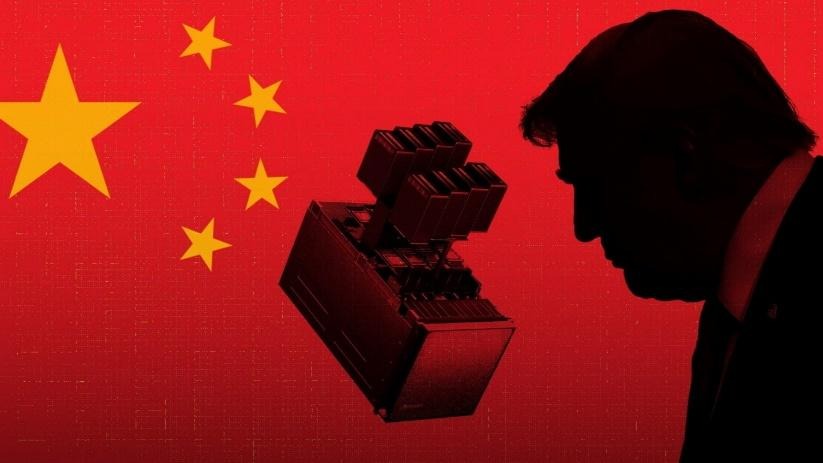
China has reacted violently to these. Its principal cybersecurity overseer just requested Nvidia to clarify whether it has any backdoor secrets that would allow the U.S. to have a smooth entry into secure systems. Nvidia refutes such claims. Software experts also argue that the location capability can be done in a manner that does not interfere with the integrity of security.
The situation was worsened when the outgoing President Donald Trump proposed to license Nvidia to sell its H200 chips to China. Analysts are not convinced that China could accept such an offer, with fears of hidden controls or the U.S. spying. This situation makes the new verification tool of Nvidia exceptionally delicate in the existing geopolitical environment.
Nvidia and Global Tech have a High-Stakes Moment 🔗
Nvidia has taken a leading role in an international race on AI. The company has to work around U.S. security needs, Chinese pressure, and the needs of its global customer base. The next potential location verification system is a case in point of how strong technology companies are becoming more involved in the geopolitical wars. The way Nvidia handles this dilemma could impact future regulatory standards of the overall industry of AI chips.