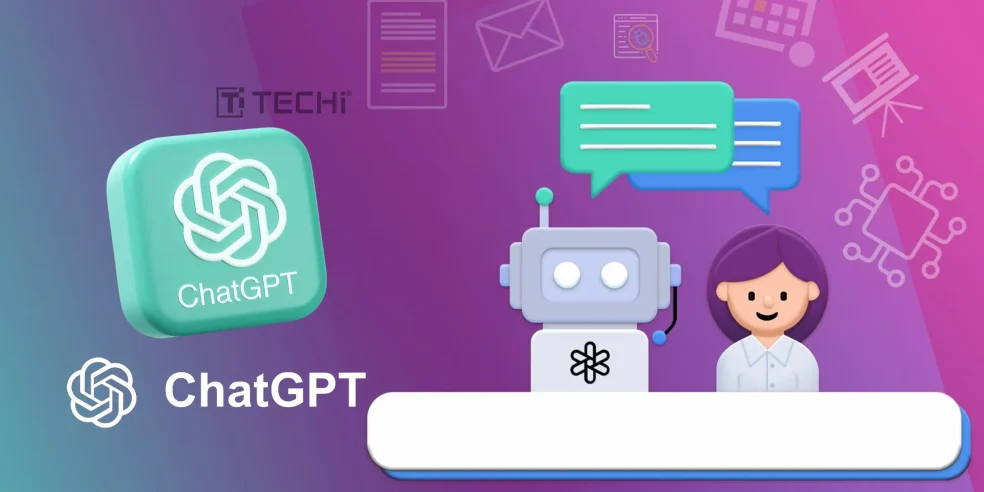
OpenAI just flipped the switch on the future of work. With the launch of the ChatGPT Agent, your AI assistant doesn’t just think, it acts. And it acts for you.
AI isn’t just growing, it’s exploding. According to Precedence Research, in 2024, the global artificial intelligence market was already massive at $638.23 billion. But hold on, by 2025, it’s expected to stay at that mark as momentum builds. Fast forward to 2034, and it’s projected to skyrocket to a jaw-dropping $3.68 trillion. That’s nearly 6x bigger in just a decade, and it’s growing at an unstoppable 19.2% every year. The future of AI is charging ahead at full speed.
OpenAI’s latest rollout, the ChatGPT Agent, marks one of the most important upgrades in the platform’s history. This chatbot comes with a better memory, acting as your autonomous assistant. It doesn’t matter if it’s writing an email, fetching files, searching the web, or updating project boards, the Agent can now take your request and figure out what actually needs to be done.
For the first time, ChatGPT acts like a co-worker, not just a digital note-taker. It understands multi-step commands, and will also keep you informed as it works through tasks. It’s almost as if you’re outsourcing real work.
What Changed? From Passive Chatbot to Active Assistant 🔗
The launch of ChatGPT Agent represents the fusion of several major capabilities that OpenAI had previously developed independently. “Operator” was the system that allowed ChatGPT to navigate the web like a human, while “Deep Research” gave it the ability to comb through dense information and generate quality summaries. These two systems worked well, but separately. Now, with the introduction of the agent, OpenAI has integrated them into one intelligent workflow that can research, decide, and act.
And the transition is more than technical. The AI no longer waits passively for a question. It collaborates, clarifies, adapts, and executes. It’s a shift from language model to actionable assistant.
Tools and Services It Works With 🔗
The new ChatGPT Agent works with all the tools you already use like Google Docs, Sheets, Gmail, Microsoft 365, Notion, Slack, Zapier, and even your browser. It can pull info from a file, create a presentation, share it in Slack, and send a follow-up email all without you jumping between apps.
Everything happens in one place and that is your chat window. There’s no more opening a dozen tabs. No more copying and pasting. It’s like turning a simple conversation into a full-on control centre to get tasks done in no time.

The Pros of ChatGPT Agent 🔗
The biggest benefit is speed. Tasks that used to take 20 minutes can now be completed in one request. You don’t have to switch between six apps or structure your own to-do list. It also learns from your preferences over time. So the more you use it, the better and faster it gets at completing tasks your way.
This is productivity without micromanagement. You delegate it once, and the rest just happens.
Limitations You Should Know About (For Now) 🔗
As powerful as it is, the ChatGPT Agent still has boundaries. It can’t run as a background service or execute recurring tasks on its own yet. It also doesn’t have native access to your local desktop, unless you manually upload a file.
Security-wise, everything happens in a closed and cloud-based sandbox. That means no surprise access to personal files unless explicitly shared. It also doesn’t yet support long-term memory retention across sessions for task history unless that is enabled through a separate system.
But even with these current constraints, the Agent is already ahead of traditional AI assistants.
Why This Signals a Bigger Shift in AI 🔗
This update, more than being about convenience, shows a major shift in how AI is used. Until now, generative AI has been mostly passive. But ChatGPT Agents are interactive and productive. They know what you want and they do it.
This bridges the gap between research-grade AI and consumer-grade usability. AI doesn’t remain limited to being just a tool. It’s a moment that brings us closer to artificial general intelligence (AGI) in form, if not yet in complexity.
Final Thoughts 🔗
According to The Verge, the AI agent does more than just follow commands; it takes initiative, executing complex tasks through a powerful “virtual computer.” But here’s the best part: even as it runs the show behind the scenes, you remain in full control.
Seems now that we truly will have robotic assistants to do everything for us.