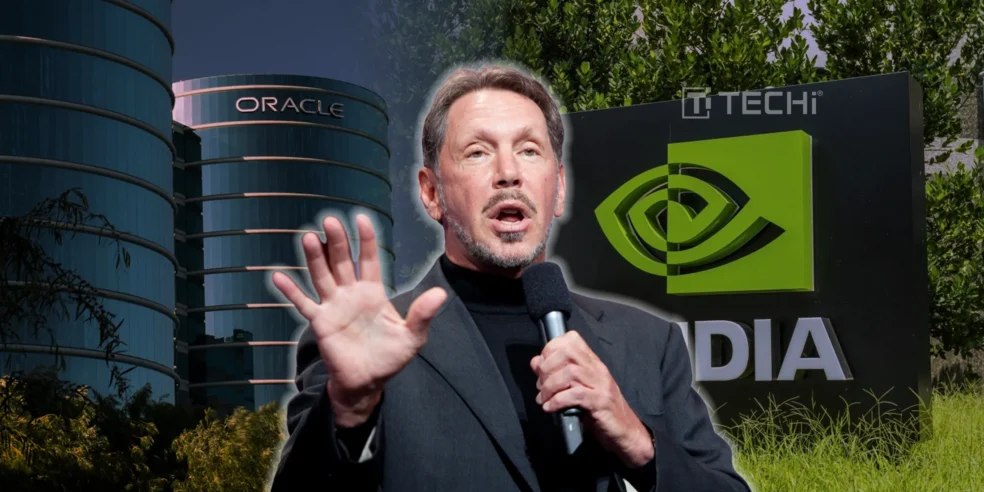

For decades, Oracle was a legacy tech company, quite solid but hardly glamorous. Now, in the midst of the AI revolution, it has somehow rebranded itself as a growth behemoth. A 112% increase in only six months is not a coincidence, rather it’s a product of a company beating directly at one of the most revolutionary technology changes around, which is the need for AI-cloud infrastructure.
While certain investors will laugh at Oracle matching Nvidia’s momentum, the reality is that Oracle’s place in the AI ecosystem, which provides the digital backbone instead of the showy chips, could make it significant in the long term.
What is going on with Oracle is not hype, rather its cloud bookings were much better than what analysts anticipated, which stimulated Wall Street to rethink Oracle’s growth narrative. The firm’s multicloud approach, which enables Oracle services to interoperate with AWS, Azure, and Google Cloud, has been a game-changer in reducing customer friction and expanding adoption.
In contrast to Nvidia, which relies on hardware demand cycles, Oracle has the advantage of recurring contracts and multi-year commitments. That predictability lends more substance to its rally. Nevertheless, there are downsides. At 45 times forward earnings, the stock is not inexpensive, and if AI expenditures slow or do not fulfill exaggerated projections, Oracle’s rally can reverse rapidly. But for the time being, the company has the momentum, the contracts, and the investor spotlight to keep going up.
Oracle should be viewed as a high-reward, high-risk play rather than a sure bet. Oracle’s upsurge has been nothing less than phenomenal, and it shows how far investor sentiment has changed. Whether it reaches $400 or more will depend on how high AI demand really goes and if Oracle can continue performing at this scorching rate. In the meantime, Oracle isn’t just pursuing the AI boom, rather it’s shaping it.