

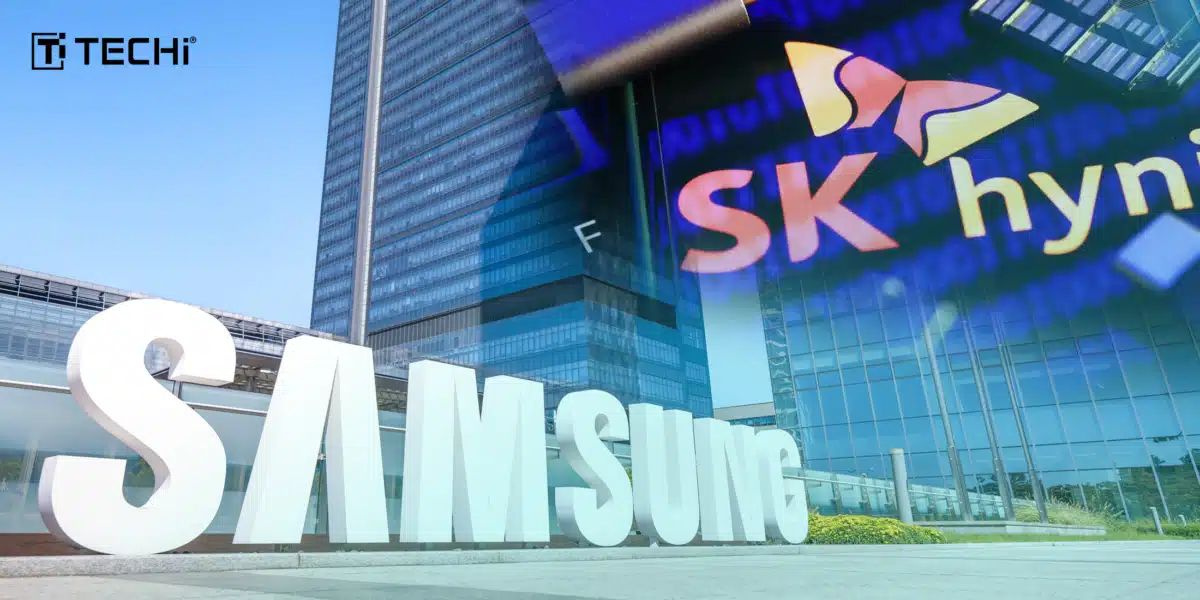
Samsung Electronics and SK Hynix, which are the top manufacturers of semiconductors in South Korea, have made a very strong warning that memory chip supply is being rapidly depleted by artificial intelligence thus exerting strain on the producers of personal computers and smart phones.
Both the biggest world DRAM companies are now focusing more on high-bandwidth memory (HBM) in AI servers, which lower conventional DRAM supply and increases the cost of the devices used by a regular consumer. This is not just a technological shift but a live re-invention of the world electronics supply chain.
Why is Shortage getting Hard? 🔗
There are two prominent market players (Samsung and SK Hynix) holding about two-thirds of the global DRAM market with a global reach to Apple, Lenovo, Dell, and each of the major smartphone brands.
According to the latest reports on earnings, both companies are reworking their production lines to fit HBM parts, which will be used to build AI accelerators like the Nvidia GPUs.
As a result, there has been a reduction in the supply of standard DRAM which is used in iPhones, laptops, mid-range Android phones, etc.
Park Joon Deok, head of DRAM marketing at SK Hynix, told analysts on a post-earnings call.
PC and mobile customers are having difficulties securing memory supplies, as they are being directly and indirectly affected by supply constraints and strong demand for server-related products.
Statistics Speaks for Themselves 🔗
It is already noticeable in terms of market projections. IDC now forecasts a minimum of a contraction of 4.9% of the world PC market in 2026, compared to the 8.1% growth it has recorded last year.
Both Counterpoint and IDC forecast at least 2% decrease in global shipments of smartphones this year in contrast to the previous year with slightly positive growth expectations. DRAM prices have gone through the roof, and contract prices of PC DRAM have experienced an extreme rise in the late 2025 and early 2026.
SK Hynix acknowledged that with the recent spike of memory chip prices, PC and mobile customers are modifying their purchase volumes, with some of them being more conservative in shipments of the chips, or lowering memory specifications in price-sensitive models.
What lies ahead? 🔗
The disequilibrium will continue up to 2027. SK Hynix has indicated that it will maintain its dominating edge in next-generation HBM4 chip-based, thus guaranteeing that the demand of AI will not change production priorities.
To PC and smartphone manufacturers, it will mean continuous pressure on margins, a reserved approach to product planning, and more design tradeoffs, like reduced RAM in the entry-level product, to deal with the increased cost of memory.
Although the rise of AI memory is beneficial to Samsung and SKHynix, to the rest of the technology industry, 2026 will be a year filled with constrained supply and hard decision making.