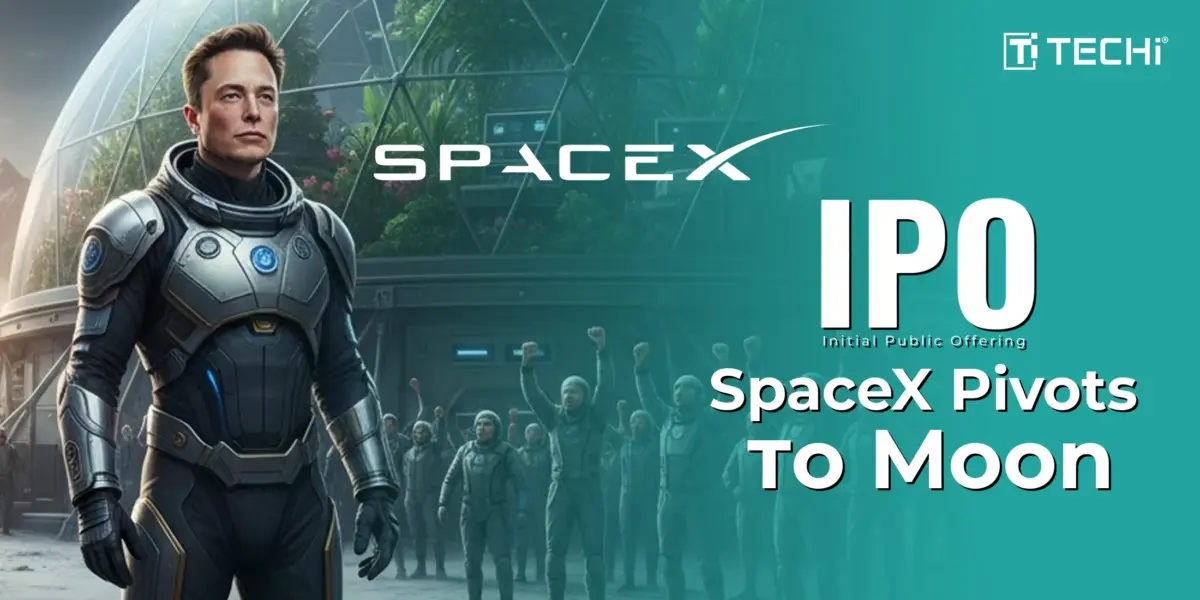
Something massive is happening in the world of finance and space this week. SpaceX — Elon Musk's rocket and satellite juggernaut — is filing its IPO prospectus with the SEC in March 2026, targeting a historic $75 billion raise at a $1.75 trillion valuation. That would make it the largest initial public offering in human history, eclipsing Saudi Aramco's then-record $29.4 billion listing in 2019 by an astronomical margin.
If you've been watching tech stocks and space plays, this is the moment you've been waiting for. Here is everything you need to know right now.
SpaceX IPO: What We Know Right Now
According to reporting from the Financial Times, The Information, and CNBC, SpaceX's S-1 filing is imminent. The company has engaged Morgan Stanley and Goldman Sachs as lead underwriters for what insiders are calling the most anticipated public market debut since Facebook in 2012.
- Filing timeline: S-1 prospectus expected this week or in early April 2026
- Target raise: $75 billion in the offering itself
- Valuation: $1.75 trillion at IPO price
- Lead underwriters: Morgan Stanley and Goldman Sachs
- Projected listing date: June 2026 on NYSE or NASDAQ
- Retail allocation: SpaceX is reportedly considering a 30% retail investor allocation — three times the Wall Street norm
CNBC reported that space sector stocks surged on the IPO news, with Rocket Lab (RKLB) and other publicly traded space companies seeing immediate lift as institutional money began rotating into the sector ahead of the listing.
SpaceX Valuation Timeline: From $46 Billion to $1.75 Trillion in Six Years
SpaceX's valuation growth is arguably the most dramatic wealth-creation story in private market history. Here is how the numbers evolved:
- 2020: $46 billion — Post-Crew Dragon success, NASA contracts accelerating
- 2021: $100 billion — Starlink subscriber base crossing 100,000; first centibillionaire company in space
- 2022: $137 billion — Starship development milestones, Starlink revenue scaling
- 2023: $180 billion — Starlink global rollout, 1 million+ subscribers, profitability thesis proven
- 2024: $350 billion — Secondary market trades reflected explosive Starlink growth
- Early 2025: $800 billion — Buyout round; institutional demand far outstripped supply
- February 2026: $1.25 trillion — Post-xAI merger valuation reset
- March 2026: $1.75 trillion — IPO target valuation
That trajectory — nearly 38x growth in six years — dwarfs the public-market gains of Nvidia over the same period, and it happened entirely in private markets. Investors who got in at $46 billion are now sitting on paper gains measured in billions.
Who Owns SpaceX? The Major Investors
SpaceX has been a magnet for the world's most sophisticated capital since its early days. Here is a breakdown of the key stakeholders ahead of the IPO, based on investor disclosures and reported funding rounds:
- Elon Musk: Approximately 42% voting control with roughly 54% economic stake. He retains ironclad operational authority and has structured the capitalization specifically to maintain that control through the IPO.
- Google / Alphabet: Invested $900 million in 2015 as part of a joint round with Fidelity. That stake is now worth an estimated $15 billion or more — a 16x return over 11 years.
- Fidelity Investments: Has participated in multiple funding rounds. Depending on the tranche, Fidelity investors are looking at 5x to 10x returns.
- Baillie Gifford: The Scottish investment firm that famously held Tesla through its highest-growth years was an early institutional backer of SpaceX as well.
- Sequoia Capital: Has deployed over $500 million across multiple rounds. Sequoia's SpaceX position is one of the largest venture bets in the firm's portfolio history.
- Founders Fund (Peter Thiel): One of SpaceX's earliest institutional backers, in from the ground floor when the company was still considered a quixotic long shot.
- Andreessen Horowitz (a16z): Participated in later-stage rounds as SpaceX's commercial trajectory became undeniable.
- Valor Equity Partners: Antonio Gracias' firm has been one of SpaceX's longest-tenured institutional investors, alongside its Musk-adjacent portfolio.
- xAI investors: Following the February 2026 merger, investors who held xAI equity — including a16z, Sequoia, and others who backed the AI company — now have indirect SpaceX exposure through the combined entity.
How Much Have SpaceX Investors Made?
The returns on SpaceX private equity are staggering by any measure in venture or institutional investing.
- Google's $900M ⇒ $15B+: A 16x return over 11 years, or roughly 27% annualized. For context, the S&P 500 returned about 12% annually in that same window.
- Fidelity's multi-round positions: Estimated 5x to 10x depending on the round. The 2021 round participants are near 10x; those who came in at 2024 secondary prices are at roughly 5x with the IPO target valuation.
- Early seed and angel investors: Those who backed SpaceX in its earliest rounds — when Musk was considered reckless for spending his PayPal windfall on rockets — are sitting on 100x or more. The $1.75 trillion IPO valuation means anyone in at sub-$20 billion is looking at extraordinary outcomes.
- Secondary market buyers (2023–2024): Even investors who bought SpaceX shares on private secondary markets at $150 to $250 per share ranges in 2023 are at 5x to 7x paper gains at the current IPO pricing.
These returns explain why every institutional investor on Earth wants an allocation in the IPO. The question is whether retail investors will finally get their seat at the table.
Starlink: The Revenue Engine Powering the Valuation
Starlink is the single most important financial story inside SpaceX, and it is the primary reason the company commands a $1.75 trillion valuation. For years, critics argued SpaceX was a capital sink masquerading as a business. Starlink proved them wrong in spectacular fashion.
- Revenue (2025): Approximately $10 billion from Starlink alone
- Profit (2025): $8 billion+ — making Starlink one of the most profitable satellite operations ever built
- Subscribers: 5 million+ globally across residential, maritime, aviation, and government tiers
- Geographic reach: Active in 70+ countries, with coverage expanding to previously underserved markets across Africa, Southeast Asia, and Latin America
- T-Mobile partnership: Direct-to-cell capability is being rolled out in partnership with T-Mobile, allowing Starlink satellites to serve as cell towers for existing mobile devices — a potential multi-billion dollar revenue stream
- Separate IPO possibility: Musk has previously floated the idea of spinning Starlink off as a separate public entity once SpaceX itself goes public. If Starlink traded at SaaS multiples, it could be valued at $150 billion to $200 billion as a standalone company.
Starlink is also a key reason SpaceX is relevant to discussions about AI stocks — the low-latency global internet infrastructure it is building is fundamental to the next wave of edge AI deployment.
The xAI Merger Factor: SpaceX Gets Into AI
In February 2026, SpaceX completed one of the most consequential corporate transactions in the tech sector's recent history: the acquisition of xAI, Elon Musk's artificial intelligence company, at a combined valuation of $1.25 trillion. xAI was valued at approximately $250 billion in the deal.
The strategic rationale is clear: Grok AI models are now being integrated into SpaceX operations, Starlink network management, and the broader data infrastructure that underpins the company. SpaceX gains access to one of the world's most powerful large language model stacks. xAI investors gain SpaceX equity in a structure that dramatically accelerates their path to liquidity.
The SEC is scrutinizing the deal's disclosure implications. Regulators want to ensure the S-1 filing provides adequate transparency around how xAI's intellectual property, liabilities, and revenue are being represented inside the combined entity. This regulatory review is one of the primary reasons the IPO filing, originally targeted for late February, has slipped into late March 2026.
For investors, the xAI integration transforms SpaceX from a pure-play launch and satellite company into a vertically integrated space-AI infrastructure business. That narrative shift partly explains the valuation jump from $1.25 trillion (post-merger) to $1.75 trillion (IPO target) in just six weeks.
30% Retail Investor Allocation: Breaking Wall Street's Unwritten Rules
Perhaps the most surprising element of the SpaceX IPO structure is its reported approach to retail allocations. According to Motley Fool reporting, SpaceX is considering directing 30% of the IPO shares to retail investors — individuals like you, using brokerage accounts.
That number is extraordinary. Standard IPO practice allocates 5% to 10% of shares to retail, with the vast majority going to institutional buyers — hedge funds, pension funds, sovereign wealth funds, and asset managers. A 30% retail slice on a $75 billion raise would mean approximately $22.5 billion worth of shares available to the general public at IPO price.
- Why it matters: Most retail investors who wanted Tesla, Nvidia, or other high-growth names got in after the institutions did, missing the IPO pop. SpaceX's approach would let Main Street participate from day one.
- Musk's populist angle: This fits a consistent pattern. Musk has publicly criticized Wall Street gatekeeping and has structured previous ventures to maximize retail participation.
- Practical challenge: Demand for SpaceX shares at IPO price will likely be 10x to 20x oversubscribed. Even a 30% retail allocation may result in each individual investor receiving only a fraction of their requested amount.
The expected mechanism: retail investors will apply through major brokerages — Fidelity, Charles Schwab, Robinhood, and others — during the IPO subscription period. Shares will be allocated proportionally based on demand.
Why SpaceX Waited This Long to Go Public
SpaceX has been IPO-ready from an operational standpoint for years. Gwynne Shotwell, the company's President and COO, has spent the better part of a decade building the reporting infrastructure, compliance systems, and corporate governance frameworks required of a public company. So why did the IPO wait until 2026?
- Musk's control imperative: Going public means quarterly earnings scrutiny, activist shareholders, and the risk of losing strategic direction to short-term market pressure. Musk watched what happened with Tesla — the volatility, the short sellers, the analyst circus — and was in no hurry to repeat that experience with SpaceX until it was financially necessary.
- Capital was never the bottleneck: Private markets were willing to fund SpaceX at increasingly generous valuations. There was no capital crisis forcing an IPO. The company could raise billions in private rounds without ceding any public transparency.
- Regulatory complexity: SpaceX operates under ITAR (International Traffic in Arms Regulations), holds billions in classified U.S. government defense contracts, and works under FAA launch licensing. Disclosing financials in a public S-1 required careful coordination with national security and regulatory authorities.
- Starlink's profitability milestone: The IPO makes far more sense now that Starlink is printing $8 billion in annual profit. A pre-profitability SpaceX IPO would have forced heavy discounting. Today, the company can command premium multiples.
SpaceX vs Competitors: Where It Stands in the Space Economy
SpaceX dominates the commercial launch market with over 60% global market share, but it exists within a competitive landscape that is worth understanding for investors.
- Blue Origin (Jeff Bezos): Bezos' New Glenn rocket has entered commercial service, positioning Blue Origin as SpaceX's most credible long-term rival for heavy-lift launches. Blue Origin remains private, with no current IPO timeline disclosed.
- Rocket Lab (RKLB): Already publicly traded, Rocket Lab has carved out a strong position in small-satellite launch. Its Neutron rocket program targets the medium-lift market that SpaceX Falcon 9 dominates. RKLB stock rose sharply on SpaceX IPO news as investors rotate into the sector.
- United Launch Alliance (Boeing/Lockheed JV): ULA's Vulcan Centaur rocket is certified for national security missions, making it SpaceX's primary competitor for U.S. government contracts. However, SpaceX's Falcon 9 pricing advantage is significant.
- Virgin Galactic: Focused on space tourism rather than orbital launch. A fundamentally different market. The SpaceX IPO may draw renewed investor attention to space tourism plays, but Virgin Galactic operates in an adjacent rather than competing segment.
According to TechStartups, SpaceX's $1.75 trillion target valuation would make it the most valuable company in the space economy by a factor of roughly 200x, relative to the next-largest publicly traded pure-play space company.
What Happens After the SpaceX IPO
The ripple effects of a successful SpaceX IPO will extend far beyond the company itself.
- NYSE or NASDAQ listing: SpaceX is expected to list on one of the two major U.S. exchanges. Given the size and tech-adjacency of the business, NASDAQ is the leading contender, though NYSE has been actively courting the company.
- Space sector rally: Every publicly traded space company — Rocket Lab, Planet Labs, Spire Global, Maxar Technologies — stands to benefit from the legitimization and institutional attention a SpaceX IPO brings to the sector.
- ETF reshuffling: Major tech and growth ETFs will need to add SpaceX. A $1.75 trillion market cap company triggers automatic inclusion in most major indices. The passive buying pressure from index funds alone could be substantial in the weeks following the IPO.
- Defense sector impact: SpaceX's defense revenue — from Starshield, national security launches, and Starlink military contracts — will draw defense-focused institutional investors into the stock, potentially creating competitive pressure for traditional defense contractors.
- S&P 500 inclusion: To be included in the S&P 500, a company must be profitable for four consecutive quarters. SpaceX qualifies. Expect index inclusion discussions to begin within 6 to 12 months of the IPO, triggering another wave of mandatory institutional buying.
When will SpaceX IPO?
SpaceX is expected to file its S-1 prospectus with the SEC in late March or early April 2026, with a target listing date of June 2026. The IPO will be on NYSE or NASDAQ, pending regulatory review of the company's S-1 disclosure, particularly around the xAI merger and defense contract sensitivities.
What is SpaceX's valuation?
SpaceX is targeting a $1.75 trillion valuation for its IPO in 2026. The company's valuation has grown from $46 billion in 2020 to its current target, driven primarily by Starlink's profitability ($8 billion+ in 2025 profit), expanding launch market dominance, and the February 2026 acquisition of xAI.
Can retail investors buy SpaceX stock?
Yes, once SpaceX completes its IPO, retail investors will be able to buy shares through any major brokerage. Before the IPO, SpaceX is reportedly considering allocating 30% of IPO shares directly to retail investors — three times the Wall Street standard. Investors can sign up for IPO alerts through brokerages like Fidelity, Schwab, and Robinhood.
Is Starlink going public separately?
Elon Musk has previously suggested Starlink could eventually IPO as a separate company after SpaceX goes public. As of March 2026, there is no confirmed timeline for a Starlink standalone IPO. The satellite internet business generates approximately $10 billion in annual revenue and $8 billion in profit, which would support a standalone valuation of $150 billion or more at market-rate SaaS multiples.
How much is Elon Musk's SpaceX stake worth?
At the $1.75 trillion IPO valuation, Elon Musk's approximately 54% economic stake in SpaceX is worth roughly $945 billion. This would make his SpaceX stake alone larger than the market cap of every publicly traded company except Apple, Microsoft, Nvidia, and Amazon. His total net worth, combining SpaceX, Tesla, X (Twitter), and other assets, would exceed $1.2 trillion at these valuations.