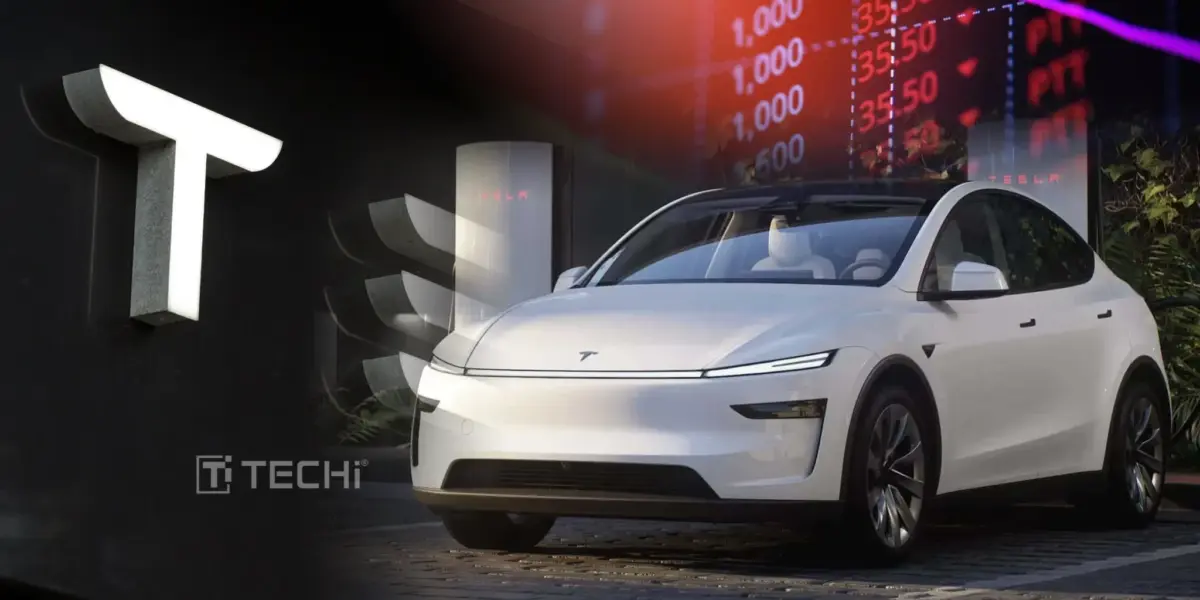
Tesla has made yet another noticeable step towards the long-promised autonomous future by starting the robotaxi testing in Austin without safety monitors. The update, which was shared by company executives, indicates that they have more confidence in the Full Self-Driving technology developed by Tesla and it is in line with the management’s roadmap to introduce robotaxi services in various U.S cities by the end of the year.
The cities being considered for the pilot program include Las Vegas, Phoenix, Dallas, Houston, and Miami, with Austin likely to get rid of safety observers entirely by the end of this year.
Goldman Sees Progress 🔗
In reaction to the news, Goldman Sachs affirmed its Neutral rating and maintained the $400 price target for Tesla shares. This target is significantly lower than the current trading level of the stock, which is around $475, even though Tesla is trading close to its 52-week high.
Goldman, although acknowledging that the removal of safety monitors is a significant milestone, indicates that it will not be holding the stock for gains due to operating without safety monitors, until clear evidence regarding the growth and profits comes out.
Profitability is a Concern 🔗
From Goldman’s viewpoint, the impact of the technology’s validation will prevail over the commercial aspect of Tesla’s autonomous push. The company’s trailing twelve-month gross margin is slightly above 17%, and the firm calls profitability the key factor for investors to pay attention to.
Tesla could eventually see autonomy through both Full Self-Driving subscriptions and robotaxi services, which will become a long-term growth engine. However, Goldman predicts that the impact on the financials will be limited due to the rising competition that will eventually put a cap on margin expansion.
Stock Priced for Perfection 🔗
Valuation of Tesla has always been a cause of complication for the investment cases. It is presently above the $1.6 trillion market cap, and has a forward price-to-earnings ratio of 330, where the greater part of the autonomous future earnings has already been absorbed in the stock.
The so-called neutral position of Goldman reflects its fear that market execution, regulatory restrictions, and pressures from competitors could obstruct Tesla in its path to completely fulfill the expectations of the market during the current pricing period that is about to end.
Mixed Signals Across Global Markets 🔗
Besides the self-driving issue, Tesla’s primary car sector is generating mixed signals around the world. The manufacturer has rolled out a cheaper version of its Model 3 in Europe in order to trigger demand. However, the number of registrations has decreased compared to last year in the UK and Spain. In the meanwhile, Tesla is growing rapidly in China, where the shipment for November has increased by almost 9.9%, and in Norway, where it has set a new record for the year.
The unevenness in performance blatantly showcases the tight-rope walking situation that Tesla is in, as it supports its artificial intelligence and autonomy visions, while at the same time it is dealing with the ups and downs of different regional demands.
Bottom Line 🔗
Testing of robotaxis without safety supervisors by Tesla is a significant technical advancement. However, the response from Goldman Sachs indicates that such progress is not sufficient enough to explain upside at current levels.
Until Tesla proves that the implementation of self-driving technology is profitable and sustainable, the stock will find itself torn between groundbreaking innovations and complicated valuation demand, which is an unresolvable math issue. For the time being, Goldman is keeping its distance, anticipating that future delivery will be on par with, if not exceeding, the current market expectations.