We love our gadgets. Let’s be honest, who doesn’t? A tiny device in your pocket can call a cab, translate any foreign language, monitor your heart rate, and let you binge an entire season of your favorite show. It’s like having a genie from Aladdin, minus the awkward 3 wish limits. This is the shiny face of technology we parade around. Progress. Convenience. Efficiency.
But as with most things in the world, the shinier the surface, the more curious you should be about what’s hiding behind it.
Technology has revolutionized how we live, however, it has quietly introduced a tangled mess of consequences we don’t always like to talk about. Mental health struggles linked to digital addiction. An alarming decay of privacy. Growing piles of e-waste. Windening of the social divides that technology promised to bridge. And then there’s artificial intelligence, which deserves its own private wonderment.
This article isn’t here to bash technology. I’m here to deeply examine what we often miss out of the shiny events and fancy product demos. Even though Innovation looks dazzling, we’ll explore how it carries hidden costs that impact our minds, our rights, our planet, and our societies. Especially now, as artificial intelligence emerges into the spotlight, we have a lot to unpack.
Ready? Let’s flip the stone over.
The Paradox of Progress 🔗
Let’s be honest, we live in a time when our great-grandparents would consider pure magic. You can talk to anyone across the world while sitting in your lounge, have a robot vacuum cleaning your floor while you drink your coffee, and let AI write your last minute assignment to save your grade. Technology has made life faster, easier, and sometimes even surreal.
In this article, we will uncover some of these less flattering parts of our shiny tech world. We’ll look at how our mental health is taking a hit from digital addiction, the disturbing ways our personal data is harvested and sold, the rise of cybercrime and security threats, and we’ll give artificial intelligence (AI) the long, hard look it deserves.
Progress is wonderful, but progress without reflection? That’s where things start to get dangerous.
Mental Health and Social Isolation 🔗
We were promised connection. Technology was supposed to bring us closer. And in many ways, it has. The world shrunk. Everyone was right there, just a tap away. But oddly enough, many of us have never felt more alone.
Enter what we now call technology addiction. That little dopamine hit you get from a notification? It’s no accident. Smartphones, social media platforms, and even video games are meticulously designed to hook you in and keep you there. The longer you stay, the more money advertisers make. It’s not a conspiracy theory. It’s the business model.
According to a 2021 article from Medical News Today, excessive screen time has been directly linked to a spike in mental health issues. The mental health effects of technology are becoming harder to ignore. Depression, anxiety, attention disorders, and even sleep disruption are on the rise, especially among younger users who’ve never known life without a glowing screen. One study cited by Medical News Today found that teenagers who spend more than seven hours a day on screens are twice as likely to be diagnosed with anxiety or depression compared to those with limited screen time. Seven hours might sound extreme, but if we’re being honest, it adds up quicker than you think.
What makes this particularly insidious is how sneaky it all feels. You’re not inhaling toxic smoke or injecting harmful substances. You’re scrolling. Liking. Clicking. Harmless, right? Until you realize you’ve spent your entire evening watching videos you don’t even remember, feeling oddly empty afterward.
Gaming, too, deserves its own mention. Competitive online games, virtual rewards, endless updates are all designed to keep you playing. The World Health Organization has even recognized “gaming disorder” as a real condition, marking a sobering shift in how seriously we’re starting to take technology addiction.
Of course, none of this means we should burn our devices and move into the woods (though, some days, it’s tempting). Technology isn’t the villain. But pretending there aren’t serious consequences would be naive. Our glowing screens offer us instant gratification at the cost of long-term well-being. And unless we start acknowledging the mental health effects of technology, the toll will only grow.
As we scroll deeper into this digital age, the question isn’t whether technology can connect us. It’s whether we can stay connected to ourselves while using it.
Also Read: Glasses With HUDs Just Became A Little More Affordable
Privacy Erosion and Data Exploitation 🔗
Once upon a time, privacy was as simple as closing your curtains. Today, even that feels optimistic. In the age of digital surveillance, closing your curtains does very little if your phone, smartwatch, smart TV, and even your fridge are quietly taking notes.
We live in what’s now called the surveillance economy. It’s not some underground conspiracy. It’s the business model that powers the internet as we know it. Every click, swipe, search, purchase, and even hesitation is recorded, analyzed, and filed into the sprawling archives of big data exploitation. Companies aren’t just selling products anymore. They’re selling you, or at least, a highly detailed version of you that’s worth a fortune to advertisers.
Few events exposed the true danger of big data exploitation like the Cambridge Analytica scandal. In 2018, it was revealed that the personal data of millions of Facebook users had been harvested without consent and used and weaponized for political manipulation. Personal fears, biases, and emotions were exploited by crafting targeted political ads. Elections weren’t just influenced by debates and rallies anymore, they were being quietly shaped and manipulated behind the scenes by mountains of personal data stolen.
And it doesn’t stop there. Our phones track our location, apps eavesdrop by accessing our microphones, and fitness trackers monitor our heart rates. Even smart home devices like google and alexa collect patterns about when we sleep, cook, or leave the house. Digital surveillance has become so normalized that a lot of people don’t even question it anymore.
And the worst part is that we often hand over this data willingly. We click “accept” on long-winded privacy policies just to access an app or service. Over time, these small choices create a digital version of ourselves that is disturbingly comprehensive.
Environmental Costs of Technology 🔗
The environmental impact of technology is very real, and it’s growing faster than most of us like to or care to admit.
Let’s start with the mountain of stuff we keep buying. We gotta have the latest model of the new iPhone. Need to buy a slimmer laptop and throw the old one in a drawer. The so-called e-waste dilemma is fueled by this ongoing swirling. According to the Global E-Waste Monitor, the world generates over 50 million metric tons of electronic waste in a single year. That’s roughly the weight of every commercial airliner ever built, dumped on the planet every twelve months.
And it’s not just the sheer volume, the disposal of these devices is hazardous. These devices contain toxic elements like lead, and mercury, which can seep into soil and water if not handled properly. Only a fraction of this waste is recycled responsibly, while the rest piles up in landfills or gets shipped off to developing countries where workers dismantle devices in unsafe conditions breathing in toxic fumes.
Of course, the harm doesn’t begin at disposal. The lifecycle cost of gadgets starts long before you unbox them. Mining rare earth minerals for batteries, processors, and screens tears up ecosystems and often relies on exploitative labor practices. Manufacturing processes release tons of CO2 and chemical waste into the environment. Every shiny phone in your pocket has left a trail of pollution before you even turned it on.
And once these devices are powered up and connected? The real power drain begins. The energy consumption of the tech industry is staggering. Data centers, those giant warehouses filled with servers that keep our cloud storage, streaming services, and AI models running, consume enormous amounts of electricity. In fact, some estimates suggest global data centers use about 1 to 2 percent of the world’s total energy supply, a number that keeps climbing.
Then there’s cryptocurrency mining, which takes this to absurd levels. Bitcoin alone consumes more electricity annually than some entire countries. For a digital currency that exists purely online, its physical footprint is shockingly heavy.
Also Read: 5 Reasons That Social Media May Never Die
The Dark Sides of Artificial Intelligence 🔗
5.1 The Rapid Rise of AI 🔗
You’ve probably noticed. Artificial Intelligence is everywhere. From chatbots that handle your customer complaints to smart assistants that answer your weird late-night questions, AI has officially gone mainstream. What started as a niche field of computer science is now steering entire industries. Medical diagnoses, stock trading, content creation, self-driving cars, the rise of artificial intelligence feels unstoppable.
But with every shiny promise comes a shadow. As AI seeps into every corner of our lives, the AI risks are stacking up fast.
5.2 Ethical Concerns 🔗
AI doesn’t just learn, it absorbs. It absorbs our biases, blind spots, and buried prejudices, all baked into the data we feed it. The problem is that these systems do more than just replicate our flaws, they magnify them.
The cruel irony is that we call it objectivity. Machines don’t hate, but they inherit our history, and without intervention, they’ll automate inequality faster than we ever could. The real question isn’t whether AI is biased, but whether we’re brave enough to fix what we’ve built.
5.3 Job Displacement and Economic Disruption 🔗
For decades, we’ve worried about robots stealing jobs. Well, here they come. AI automation is replacing human labor at a pace that’s starting to make entire industries nervous. Manufacturing jobs have been under threat for years, but now white-collar professions are feeling the heat too. Legal research, journalism, financial analysis, even parts of healthcare, roles once considered
5.4 Deepfakes and Disinformation 🔗
Social media already makes it hard to know what’s true. Now AI is making it worse. Fake videos look so real you can’t tell the difference. Politicians seem to say things they never said. Famous people get blamed for scandals that never happened. Even the news you watch might be completely made up. The truth doesn’t feel solid anymore.
This isn’t another weird internet problem. It’s dangerous. When bad actors use AI to spread lies, it can swing elections, start protests, and break trust in governments. The real damage is that people stop believing anything. Some get so suspicious they reject real facts, trusting crazy theories instead. Once that happens, society starts to fall apart.
5.5 Autonomous Weapons and Military AI 🔗
Disinformation is scary, but AI in war? That’s something else. Countries are already building killer robots, drones, and missiles that find and attack targets automatically. No human needed to pull the trigger. Just machines deciding who dies. Doesn’t that keep you up at night?
There are no rules for this. No one agreed where to stop. Every country is racing ahead, building smarter weapons while the rest of us hope nothing goes wrong. But what if a drone makes a mistake? What if the AI starts a fight nobody meant to start? This isn’t some future problem. It’s happening now. And once these weapons are out there, we can’t take them back.
5.6 Regulatory Gaps and Governance Challenges 🔗
And here’s the kicker. Despite all these risks, global AI governance is almost nonexistent. Nations have wildly different views on what is ethical, legal, or acceptable. Tech companies race ahead, driven by profit and competition, while regulators struggle to even understand how the technology works, let alone craft meaningful rules.
This lack of global consensus on AI governance leaves us in a dangerous spot. The tech is moving faster than our ability to control it. If we want any hope of benefiting from AI without being consumed by its darker potential, we need serious, coordinated, responsible AI development, and we need it fast.
The Social Divide and Technological Inequality 🔗
Tech promised to connect us by providing information and opportunities for anyone online. But the harsh reality is there is a growing divide between those plugged in and those left behind.
If you’ve got good Wi-Fi and a smartphone, life’s at your fingertips. Remote jobs, online doctors, digital classrooms. But for millions without access, they’re just falling behind, they’re being locked out.
Kids without devices struggled through Zoom school while others clicked into class. Telemedicine works great unless your town treats broadband as a luxury. Job markets now demand skills some never had a chance to learn. This has become more than just about gadgets, it’s about entire futures splitting apart.
And it’s not just “poor countries.” Even in wealthy nations, rural areas and struggling neighborhoods watch from the sidelines as the tech elite race ahead. The digital revolution was supposed to lift all boats. Instead, it’s building yachts for some while others drown.
This divide isn’t an accident. It’s the cost of progress that forgot people. And the scariest part? The gap keeps growing.
Cybersecurity Threats and Global Vulnerability 🔗
Tech promised to protect us, but it created new vulnerabilities instead. Our hyper-connected world has become a playground for threats. Every day, cybercriminals target the personal information we once thought was secure.
Let’s take government hacking, for example. Countries attack each other’s power grids, banks, and communication networks. They plant malware just in case they need to cause chaos later. The alarming part is we don’t even know who’s already inside our systems.
And it’s not just about systems. It’s about people. Every week, another company leaks our data. Banks, airlines, social media. You start wondering: Will my identity get stolen? Will my money disappear while I drink my coffee? It’s like leaving your wallet open and praying no one takes anything.
The worst part? You can do everything right like strong passwords or two-factor authentication and still get hacked because some random company you’ve never heard of messed up.
We are not talking just about frozen computers or spam emails, we’re talking about the whole world running on systems that can be broken from anywhere. We built everything to connect, but now one crack can bring it all down.
The Unseen Psychological Manipulation 🔗
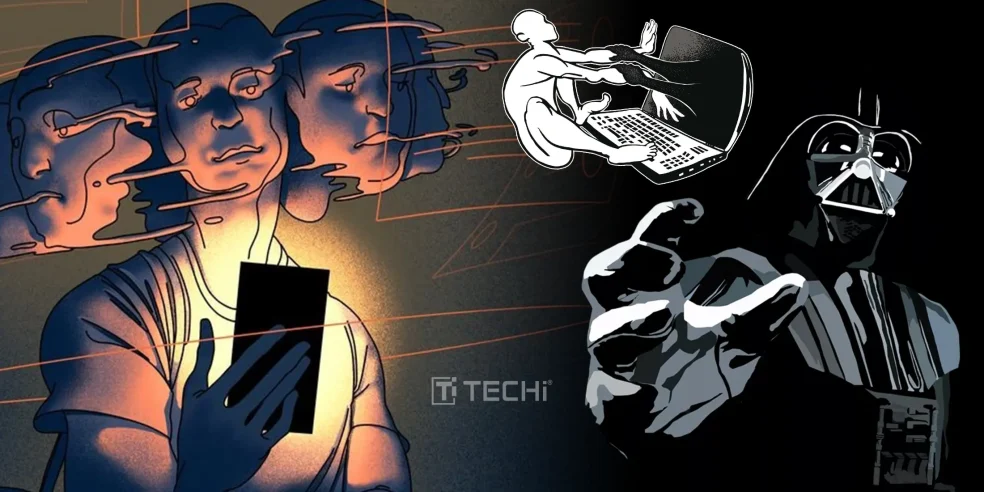
We’re living in the attention economy, where your focus isn’t just wanted, it’s hunted down. Every app, every platform survives by keeping you hooked. Not for your benefit, but because your eyeballs mean money. More scrolling equals more ads, more data, more profit. This isn’t accidental. It’s by design.
These algorithms know you better than you do. They study your habits, feed your biases, and push your emotional buttons to keep you craving that next little hit. Psychologists call it dopamine hacking. You know it as that itch to check notifications, refresh feeds, chase likes. What feels like choice is often just you reacting exactly how they planned.
The damage is real. Shorter attention spans, compulsive scrolling, trouble making decisions. Our brains weren’t built for this constant barrage. As we let algorithms choose what we see and think, we’re losing more than time, we’re losing our ability to think deeply at all.
The most worrisome part is that it happens without you noticing. No force, just gentle nudges until you wake up wondering how you got here. Your attention didn’t wander. It was stolen.
Toward Responsible Innovation 🔗
Let’s be real, tech has given us superpowers. FaceTiming someone across the world, working in pajamas, Googling anything in seconds. But unfortunately, the side effects are piling up like unread notifications. Our attention spans? Wrecked. Privacy? Basically a myth. And don’t get me started on how those sleek devices are trashing the planet while we swipe mindlessly.
Now AI’s here to complicate everything. Algorithms that discriminate without meaning to, robots taking paychecks, fake videos that make reality meaningless. And while we’re distracted, whole neighborhoods can’t even get decent WiFi. Oh, and remember when “getting hacked” meant your MySpace got punked? Now it could take down hospitals and power grids.
I’m not saying we should go full Amish. But come on – we’re building this plane while flying it. We need rules that actually keep up. Companies that care about more than shareholder meetings. And maybe, just maybe, we should think twice before inventing every damn thing we possibly can.
Tech’s just a tool. The real test is not whether we can build something, but whether we can handle it without losing the beautiful part of us that makes us human.
Also Read: Why Tech’s Future Depends on Gender Diversity